Industrialization is key to economic development, and agriculture—supplying raw materials for processing and value addition—is an essential component of that process. Comprising more than 40% of national GDP and producing the overwhelming majority of the Ethiopia’s food, smallholder farmers are at the centre of the country’s recent economic success. So declared the director general of the International Livestock Research Institute (ILRI), Jimmy Smith, in an agriculture panel discussion, this week, organized by the Economist magazine and held at the Sheraton Hotel in Addis Ababa. Continue reading
Monthly Archives: October 2015
Aflatoxin levels in cow milk and feed in the Addis Ababa milk shed—New study
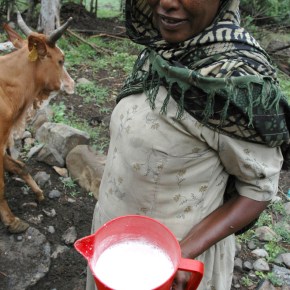
Ethiopian farmer with fresh milk from her cow (photo credit: ILRI/Apollo Habtamu). This article is written by ILRI scientists Dawit Gizachew, Barbara Szonyi, Azage Tegegne, Jean Hanson and Delia Grace Editor’s note: A statement in the article below, comparing various levels of risk, offended some of our readers. We thank those readers who let us … Continue reading
ILRI’s Corporate Report 2014–2015 is out: Twenty-one stories of better lives through livestock
The board of trustees, management, scientists and support staff of the International Livestock Research Institute (ILRI) take pleasure in announcing publication of the institute’s corporate report for 2014 and 2015. Continue reading
Unlocking the potential of Africa to scale livestock development, high-level conference
Improved livestock genetics, health and feed—guided by policies geared towards enabling a sustainable and business-friendly environment—are key to unlocking the potential of agriculture in Africa, Continue reading
The sharp divide: Do we need animals to feed this world?
Livestock, the fastest-growing, highest-value and a highly controversial agriculture sector, is at a crossroads. Following a new set of 17 sustainable development goals, the current and potential roles of livestock systems in food and nutrition security and other aspects of sustainable development, including the environment, human health and livelihoods, continue to be debated. Opinions are sharply divided in the industrialized world between those who consider animals to be more part of the solution and those who consider them to be more part of the problem. Continue reading