Reducing the vulnerability of dryland pastoralism
Expert opinion agrees that the best way to tap into the potential of the drylands is to build on the foundation of their livestock economies rather than ignoring them or seeking to replace them.
For people living in absolute poverty and chronic hunger, the solution is not to rid the world of livestock, but to find ways to farm animals more efficiently and more sustainably
Mixed crop-and-livestock farms will, more than the traditional breadbaskets and rice bowls of the past, feed the developing world over the next few decades.
Making smallholder production more competitive is a powerful tool to reduce poverty, raise nutrition levels and improve the livelihoods of rural people in many developing countries
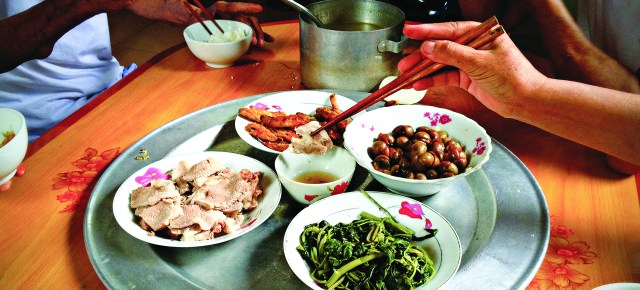
A new research paper by scientists at the International Livestock Research Institute (ILRI) and partner organizations confirms that milk, meat and eggs are widely consumed by poor people in Kenya’s capital city of Nairobi: these animal-source goods make up nearly 40% of the food budget and half of this is spent on dairy products. Economic analysis revealed a high propensity to consume animal-source foods and elasticities showed that, if their prices could be lowered, consumption of animal-source foods would rocket, benefiting both the nutritional status of poor consumers and the livelihoods of small-scale livestock producers. Continue reading
A new paper on the consequences of land fragmentation and fencing on rangelands outside Nairobi, Kenya, formerly rich with wildlife and critical for the functioning of Nairobi’s famed national park, has been published. All of the authors are former staff, and one former partner, of the International Livestock Research Institute (ILRI), where this research work was conducted. Continue reading
Insurance that pays out when forage coverage drops—known as index-based livestock insurance—is an elegant idea. Andrew Mude, an economist and principal scientist at ILRI, last month was awarded the Norman Borlaug Award for Field Research and Application. The award, a major prize in agricultural research, is given by the World Food Prize Foundation and financed by the Rockefeller Foundation. Tina Rosenberg covers the story in the New York Times. Continue reading
Discussants at this event unpacked the tensions inherent between developing livestock markets to meet economic goals of the poor and meeting the nutritional needs of poor households raising livestock. Continue reading
What might seem like a silver bullet to reduce greenhouse gas emissions risks undermining other development goals such as ending hunger, improving health and eliminating poverty. We cannot ignore the important role that animal-source foods play, especially in developing countries, when we talk about tackling climate change. Instead we need to find a middle ground. Continue reading
Peter Doherty, an Australian veterinarian surgeon and researcher working in the field of medicine, who with his colleague Rolf Zinkernagel won the Nobel Prize for Physiology or Medicine in 1996 and who today serves as a patron of ILRI, also supports the integrated work—and the tearing down of disciplinary silos—that One Health approaches demand. Continue reading
A first look at a revamped ILRI program: Policy, Value Chains and Livelihoods Continue reading