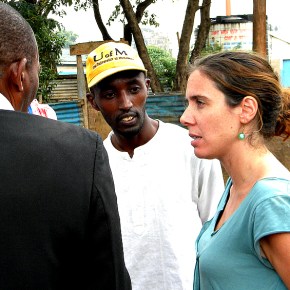
CGIAR livestock scientists are working actively to help the world meet the SDGs. We are intentionally tailoring our livestock-related knowledge products, technologies, institutional arrangements and policy support to provide new options for meeting specific SDGs by addressing developing world livestock problems and opportunities. Continue reading
Category Archives: Consumption
Foods available to African farm households increase with market access and off-farm work
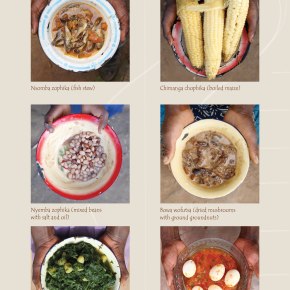
Common foods of Khulungira village, in central Malawi: Nsomba zophika (fish stew), chimanga chophika (boiled maize), nyemba zophika (mixed beans with salt and oil), bowa wofutsa (dried mushrooms with ground groundnuts), nkhwani wophatikiza ndi maungu anthete ndi kachewere wophika (pumpkin leaves, pumpkin blossoms and potatoes) and mazira ophika ndi phwetekere, anyezi, mafuta ndi mchere (boiled … Continue reading
Limiting use of antibiotics in livestock production to stem growing antimicrobial resistance in human pathogens
A commentary published in The Lancet last month supporting a series of five papers on antimicrobials recommends prohibiting use of antibiotics critically important for human medicine to promote the growth of livestock or to prevent routine livestock disease. The commentary was written by Tim Robinson, a principal scientist in spatial analysis at the International Livestock Research Institute (ILRI), and colleagues in partner organizations. Continue reading
Can we eat meat and still reduce greenhouse gas emissions?
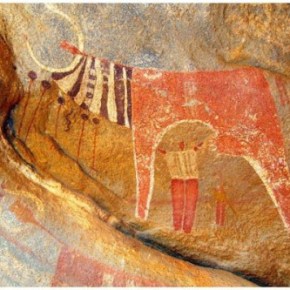
Cattle and figures, Laas Geel cave complex, Somaliland, Somalia. This opinion piece is written by Alain Vidal, director of strategic partnerships at CGIAR. Our global food production system—which includes, in addition to crop farming, raising livestock and deforesting lands to grow livestock feed and other crops—is responsible for about a quarter of the greenhouse gases produced … Continue reading
A couple of ‘missings’ for the Paris climate talks
In the days leading up to the start of the climate change talks in Paris (COP21) this week (30 Nov–11 Dec 2015), we at the International Livestock Research Institute (ILRI) have been busy responding to recent articles in the press advocating that ‘the world’ eat less meat to reduce greenhouse gases and other livestock ‘bads’. … Continue reading
Aflatoxin levels in cow milk and feed in the Addis Ababa milk shed—New study
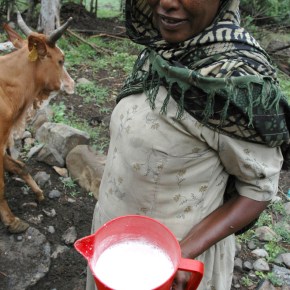
Ethiopian farmer with fresh milk from her cow (photo credit: ILRI/Apollo Habtamu). This article is written by ILRI scientists Dawit Gizachew, Barbara Szonyi, Azage Tegegne, Jean Hanson and Delia Grace Editor’s note: A statement in the article below, comparing various levels of risk, offended some of our readers. We thank those readers who let us … Continue reading
Ways forward for food safety in countries bearing the brunt of the world’s food-borne diseases
A new paper on food safety in low- and middle-income countries was published today by ILRI’s Delia Grace. The paper is based on a longer learning resource commissioned for the UK Department for International Development (DFID), which will be out shortly. Both publications reflect what ILRI and its partners have learned over the last 10 years since adopting a framework of risk analysis for assessing, managing and communicating about food safety. Continue reading
Towards professionalizing—not criminalizing—informal sellers of milk and meat in poor countries
Researchers from ILRI and partners have developed and piloted an institutional innovation—a training, certification and branding scheme for informal value chain actors—with good potential to improve the safety of animal-source foods sold in informal markets. Past development policy often focused on formal markets, which at best meant neglect of informal markets and often resulted in harassment and penalties for informal agents. Continue reading
Reducing human exposure to aflatoxins in poor countries: Towards new technologies and practices
A new paper describes and assesses the strength of a theory of change for how adoption of farm-level technologies and practices for aflatoxin mitigation can contribute to reductions in aflatoxin exposure among consumers in a market context. Continue reading
Designing practical ways to help the urban poor make choices that improve their nutrition
To improve interventions in food systems of the urban poor, scientists at the International Livestock Research Institute (ILRI) are investigating urban food and nutritional choices in two slums in Nairobi, Kenya. Their aim is to develop interventions that help people make food choices that improve their nutrition while staying within their low household food budgets and access. Continue reading