ILRI scientists Lillian Wambua and Abel Gari have received the Future Leaders – African Independent Research (FLAIR) fellowship award. Continue reading
Category Archives: Zoonotic Diseases
Bird flu and other diseases transmitted from animals to humans
Global diagnosis – one health approach necessary
The acclaimed Indian novelist Arundhati Roy has written that the ongoing tragedy of COVID-19 is a sort of global X-ray, exposing the weak or broken elements under the surface of the world’s economic and health systems. One of those elements, arguably, is a failure to bring enough financial and institutional resources to bear on One … Continue reading
The straw that might break the camel’s back: exploring the link between COVID-19 and antibiotic resistance in low- and middle-income countries
Antibiotics play a pivotal role in a pandemic both as prophylaxis – to prevent bacterial infections – as well as pre-emptive treatment. The emergence and rapid spread of COVID-19 highlights the importance of diagnostic testing, which is also important for antibiotic resistance and successful treatment outcomes Continue reading
ILRI’s response to the pandemic: A deepening engagement with the press and policymakers
ILRI is launching an initiative to share, as broadly as possible, its research on issues related to COVID-19 with the media, policymakers and the public, and to make its experts available to comment on fast-moving developments in the field. Continue reading
ILRI computing capacity made available to COVID-19 vaccine developers
While the ILRI campuses in Nairobi and Addis Ababa are uncharacteristically empty, the institute’s servers are working away at top speed, contributing to the first essential steps in developing a vaccine against COVID-19. Continue reading
Africa’s growing risk of diseases that spread from animals to people
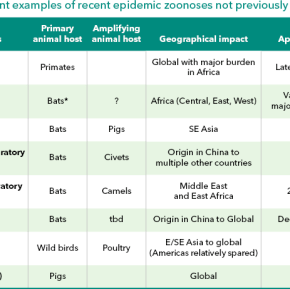
In this post, Bernard Bett, Delia Randolph and John McDermott argue that not only are pandemics not over, they may be increasing in frequency; and while most originated in Asia in the past, Africa may be poised to become an important source of so-called ‘zoonotic pathogens’—with its population growth, rapid urbanization and rising global integration offering promising vectors for outbreaks. Continue reading
Livestock route mapping for improved health of humans, animals and the environment
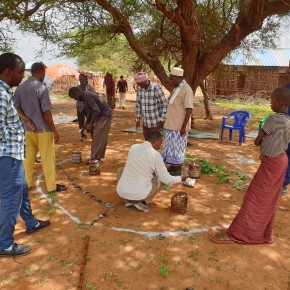
ILRI and partners carried out a participatory mapping of livestock routes in the intervention areas in Somali and Oromia regions of Ethiopia as a first step in the planning of the HEARD and HEAL projects. Continue reading
We need a new approach, or another coronavirus is inevitable
‘Until we start thinking of human and animal health as linked, another coronavirus is inevitable’, warns Jimmy Smith, the International Livestock Research Institute’s (ILRI) director general in an op-ed published 26 February in the Independent. Continue reading
Viral flash points? Poor urban settlements are highly vulnerable to the risk of the new coronavirus
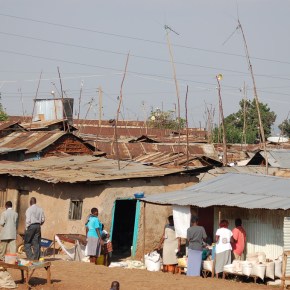
A new guest blog article published yesterday (27 Feb 2020) on the website of the International Institute for Environment and Development (IIED) argues that weak infrastructure would leave urban settlements in low-income countries highly vulnerable should the rapid spread of COVID-19 continue. Continue reading
New Tick Cell Biobank Outpost at ILRI to support research in Africa on ticks and tick-borne diseases
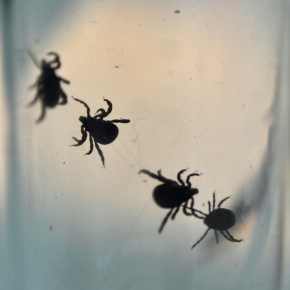
ILRI’s Tick Unit has been selected as Africa’s first outpost for the Tick Cell Biobank. The parent Tick Cell Biobank at the Institute of Infection and Global Health, University of Liverpool, houses a collection of approximately 55 cell lines derived from argasid and ixodid ticks, which are of both veterinary and medical importance. Funded by the UK Biotechnology and Biological Sciences Research Council (BBSRC) Global Challenges Research Fund, the Biobank Outpost project will facilitate access of the tick cell lines by researchers in low- and middle- income countries in Africa, South East Asia and South America. The countries selected for the Outposts include Kenya, Malaysia and Brazil. Continue reading