U.S resolution recognises that One Health is ‘essential to combating and strengthening the surveillance of emerging and reemerging disease’ and calls for integrating efforts by professionals from several disciplines—including health, science, technology and engineering—to address increasing threats posed by emerging diseases at the human-animal-environmental interface. Continue reading
Author Archives: Ekta Patel
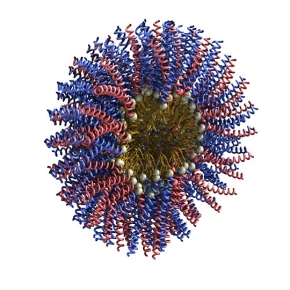
ILRI scientists are applying advanced ‘nanovaccinology’ in development of new vaccines against devastating tropical livestock diseases
Smaller than 100 nanometres in diameter—about 60 times smaller than the width of human hair and comparable in size to microscopic structures within cells—synthetically produced nanoparticles are readily incorporated into biological systems. These ‘ultrafine particles’, which can be produced using several methods, are of increasing scientific interest. Very stable and harmless to plants and … Continue reading
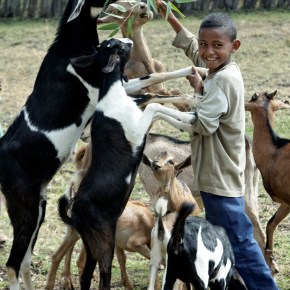
Animal health experts on the ‘goat plague’ known as PPR chart ways forward for better controlling a widespread disease harming the world’s small-scale sheep and goats producers
Peste des petits ruminants (PPR), also known as ‘goat plague’, is a viral disease related to rinderpest of sheep as well as goats. This contagious transboundary disease hurts the livelihoods of millions of small-scale livestock farmers, threatening food security with estimated economic losses exceeding USD1.5 billion per year. The disease threatens 80 per cent of … Continue reading
Antimicrobial Resistance through the eyes of the journalists in Kenya
In the lead up to the World Antibiotic Awareness Week 2019 (#WAAW2019), which is celebrated every year in November, the CGIAR AMR Hub at the International Livestock research Institute (ILRI) jointly with Kenya’s ministries of Health and Agriculture, Livestock, Fisheries and Irrigation hosted, at the ILRI campus in Nairobi, a media sensitization on raising antimicrobial resistance (AMR) … Continue reading
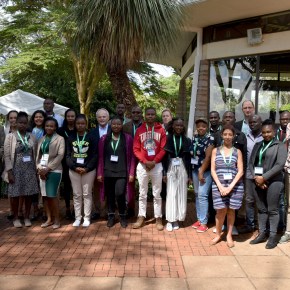
Building capacity of African researchers in genomics to play key role in boosting productivity of livestock systems
A week long training of 26 researchers from 14 different African countries in the field of genomics to ensure that information is widely shared. Continue reading
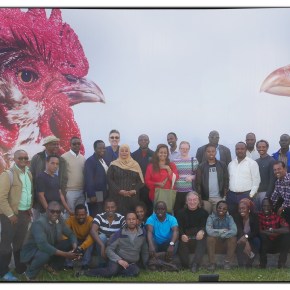
ILRI and China’s Nanjing Agricultural University commit to deepen collaboration for livestock research and capacity development
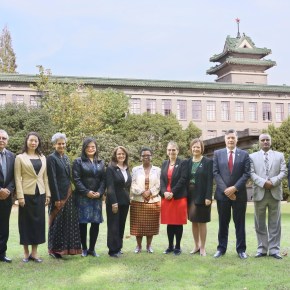
Over the past two months ILRI and Nanjing Agricultural University (NAU) have had a number of engagements that culminated in the signing of a memorandum of understanding between the two institutions on 30 October 2019. Continue reading
ONE HEALTH FOR AFRICA: Germany’s BMZ initiates a new ‘One Health Research, Education and Outreach Centre for Africa’
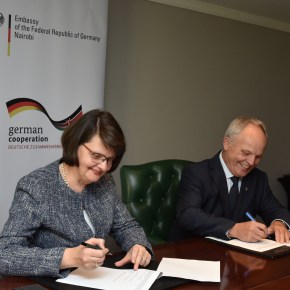
Today, the German Federal Ministry for Economic Cooperation and Development (BMZ) and ILRI signed a letter of intent to establish a ‘One Health Research, Education and Outreach Centre for Africa’ (OHRECA) to be hosted by ILRI, which is headquartered in Nairobi, Kenya. Continue reading
OneHealthDay is this Sunday: Join ILRI in collaborative work for healthier people, animals and lands
ILRI researchers have been investigating diseases that afflict both people and animals in an ecosystem context for more than 40 years. ILRI’s animal health and environmental scientists have found One Health approaches to highly useful in their work. Continue reading
World Bank report says ‘AMR-smart’ solutions needed to beat superbugs and ensure a healthier future
The report urges the development community to
go beyond technical solutions that focus exclusively on the
misuse of antimicrobials. We need to redirect development
efforts more broadly, so that they become ‘AMR-smart.’ Continue reading
Centre for Tropical Livestock Genetics and Health celebrates five-year milestone and plans for its future
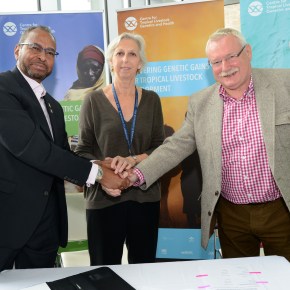
The Centre for Tropical Livestock Genetics and Health (CTLGH) had a double celebration on 27 September 2019 as it celebrated the achievements made in the first five years of its existence and the signing of a collaborative framework agreement between its founding partners to underpin its future for the next five years. Continue reading