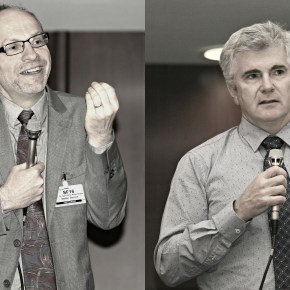
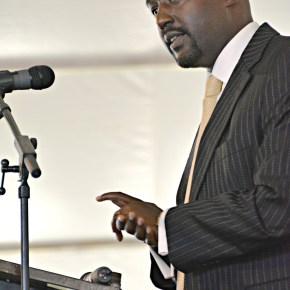
Andrew Mude, an economist and principal scientist at ILRI, is being presented with the 2016 Norman Borlaug Award for Field Research and Application today, 12 Oct 2016, for his work leading an innovative livestock insurance program that employs satellite data to help protect livestock herding communities in the Horn of Africa from the devastating effects of drought. Continue reading
Category Archives: CGIAR
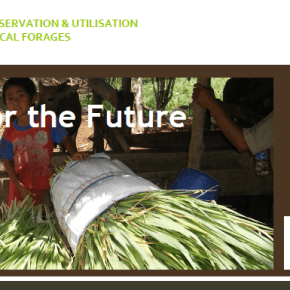
Elite cultivars of the livestock feeding kind–‘FORAGES for the FUTURE’
Just announced: Publication of the first issue of a newsletter produced by the Global Crop Diversity Trust that is a first step in fulfilling on a new strategy for tropical and subtropical forage diversity and use. Continue reading
Agricultural research, rural poverty and climate change—(Some of) the weakest links
We’ve been a bit quiet recently on the ILRI blog front as we focused on covering the Science Forum 2016 organized by the Independent Science and Partnership Council (ISPC) of CGIAR, held in Addis Ababa, Ethiopia, 12–14 Mar 2016. Below are links to a couple of the more challenging presentations. Continue reading
2016 Science Forum: Rethinking agricultural pathways to inclusive development
In the lead up to the 2016 Science Forum, steering committee members and invited speakers answered a few questions related to the Forum’s focus on agricultural research pathways to inclusive rural development. Below are excerpts of their responses. You’ll find all the responses on the SF2016 blog site. Continue reading
Livestock and the Sustainable Development Goals
CGIAR livestock scientists are working actively to help the world meet the SDGs. We are intentionally tailoring our livestock-related knowledge products, technologies, institutional arrangements and policy support to provide new options for meeting specific SDGs by addressing developing world livestock problems and opportunities. Continue reading
Ethiopia-CGIAR country consultation meeting identifies five action areas for enhanced collaboration
Five concrete areas of collaboration have been recommended in a meeting of CGIAR centres and national partners and key stakeholders in a move to better align CGIAR activities with the national Growth and Transformation Plan II (GTP 2015-2020). Continue reading
Can we eat meat and still reduce greenhouse gas emissions?
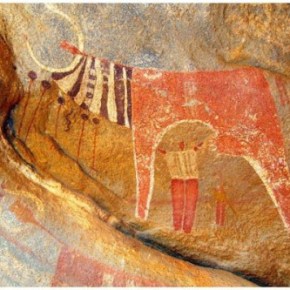
Cattle and figures, Laas Geel cave complex, Somaliland, Somalia. This opinion piece is written by Alain Vidal, director of strategic partnerships at CGIAR. Our global food production system—which includes, in addition to crop farming, raising livestock and deforesting lands to grow livestock feed and other crops—is responsible for about a quarter of the greenhouse gases produced … Continue reading
CGIAR and ILRI research in Ethiopia showcased to Swiss Development Cooperation visitors
On 16 July 2015, a high-level delegation from Switzerland visited the International Livestock Research Institute’s (ILRI) campus in Ethiopia. The short visit aimed to give the Swiss visitors some insights into research taking place on the campus, by ILRI and other CGIAR centres. Continue reading
Aflatoxins in Kenya’s food chain: Overview of what researchers are doing to combat the threat to public health
Aflatoxins are toxic chemicals produced as by-products by fungi (moulds) that grow on maize, groundnuts and other food crops. These toxins also affect feedstuffs, which then contaminate milk, meat and eggs. The toxins occur everywhere in the world, but pose particularly high risks in tropical developing countries where certain staple foods, such as maize and sorghum, comprise a large part of the diets of the poor. Continue reading
Anthony Beattie, distinguished former British civil servant conducting CGIAR funding review, visits Nairobi research-for-development institutions
Anthony Beattie has been commissioned by the CGIAR Fund Office to assist with a significant study, ‘A CGIAR Resource Mobilization Approach and Strategy: Possible ways forward and their implications.’ He visited the ILRI campus in Nairobi on 13 Mar 2014. Continue reading