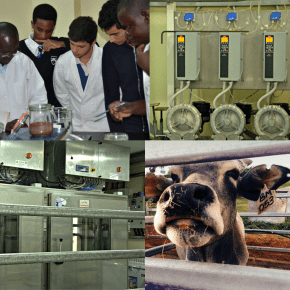
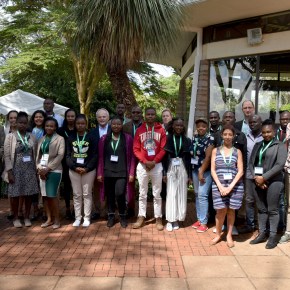
In the lead up to the World Antibiotic Awareness Week 2019 (#WAAW2019), which is celebrated every year in November, the CGIAR AMR Hub at the International Livestock research Institute (ILRI) jointly with Kenya’s ministries of Health and Agriculture, Livestock, Fisheries and Irrigation hosted, at the ILRI campus in Nairobi, a media sensitization on raising antimicrobial resistance (AMR) … Continue reading
Category Archives: East Africa
More vaccination, not antibiotics, needed for Kenyan livestock—Straight talk by Sidai Chair Christie Peacock
An interview with Christie Peacock, founder and chairman of Sidai Africa, Ltd., a Kenyan company that provides livestock services and crop inputs to farmers across the whole of Kenya. Continue reading
ONE HEALTH FOR AFRICA: Germany’s BMZ initiates a new ‘One Health Research, Education and Outreach Centre for Africa’
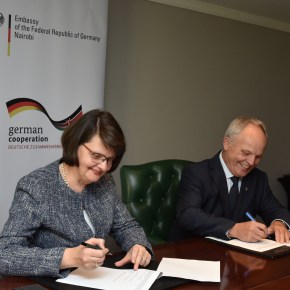
Today, the German Federal Ministry for Economic Cooperation and Development (BMZ) and ILRI signed a letter of intent to establish a ‘One Health Research, Education and Outreach Centre for Africa’ (OHRECA) to be hosted by ILRI, which is headquartered in Nairobi, Kenya. Continue reading
Workshop inaugurates surveillance project on human and animal diseases in Kenya
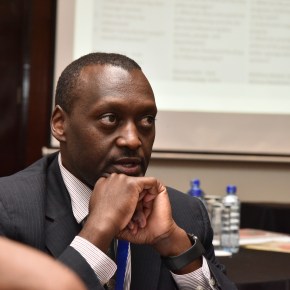
Recently, a consortium of Kenyan and international institutions launched a three-year surveillance project on three of those five priority zoonotic diseases with an inaugural workshop held on 3 September 2019, in Nairobi, Kenya. Continue reading
Index-based livestock insurance: Reflecting on success
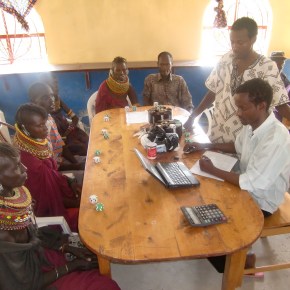
One of the International Livestock Research Institute’s (ILRI’s) major success stories in recent years has been the development of an index-based livestock insurance program (IBLI), which protects livestock keepers in drought-prone arid and semi-arid lands from climate-related losses. Continue reading
Boosting Uganda’s action plans on livestock development – BMZ-funded project to tackle animal health challenges
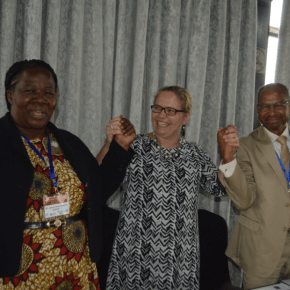
In early June this year, policymakers, researchers, government and private sector representatives from Kenya, Germany and Uganda met in Kampala to launch the BuildUganda project. Funded by the German government, BuildUganda is a research for development collaboration to prevent and tackle animal diseases and zoonoses in Uganda. Its focus on ‘healthy animals for healthy food and healthy people’ reflects the importance of livestock in the lives and livelihoods of Uganda’s population. Continue reading
ThrowbackThursday Video—Misku and Gebremichael’s stories
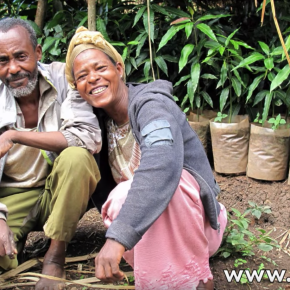
Don’t miss these two superb and VERY short videos describe how new ideas in animal husbandry are transforming Ethiopian incomes, animal pastures and livestock livelihoods. Continue reading
ILRI’s Jimmy Smith promotes ‘low-carbon’ and ‘climate-smart cows’ at the Africa Food Security Leadership Dialogue, in Rwanda
Jimmy Smith, director general of the International Livestock Research Institute (ILRI), speaks at the Africa Food Security Leadership Dialogue today, which is being held in Kigali, Rwanda. Smith discussed some of the major research and development impacts that ILRI is making to mitigate the emissions from livestock, including a new methodology to determine, for the first time, the quantities of greenhouse gases emitted by African smallholder livestock systems. Continue reading
Epidemiology and control of peste des petits ruminants in East and West Africa
To launch research activities in support of controlling peste des petits ruminants (PPR) in West Africa, a workshop held last month in Ouagadougou, Burkina Faso, outlined a roadmap for the implementation of the project at national and regional levels covering the livestock movement corridors between Burkina Faso, Mali and Senegal. There are approximately 160 million … Continue reading
Minimizing the risks of Rift Valley fever in Uganda – BuildUganda project to build national surveillance and response capacities
In early June this year, the BuildUganda research for development project was launched at a workshop with stakeholders. One of the four components of the project is focused on controlling Rift Valley fever (RVF) in Uganda. This component specifically aims to minimize the impacts of RVF by improving capacities for surveillance and response at national and community levels, leading to better risk prediction, evidence-based disease control policies, and improved awareness about the disease. Continue reading