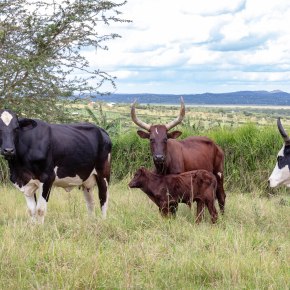
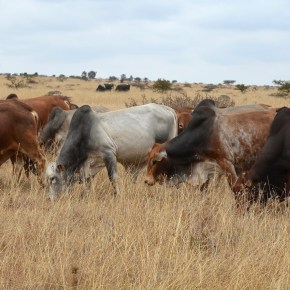
Scientists from ILRI, UK, US, Australia and Tanzania have been working together since 2016 to test an experimental vaccine for malignant catarrhal fever (MCF). They tested an attenuated vaccine strain of MCF (AlHV-1 C500) at ILRI’s Kapiti Research Station. Continue reading
Category Archives: AHH
Animal and Human Health program
Boosting Uganda’s action plans on livestock development – BMZ-funded project to tackle animal health challenges
In early June this year, policymakers, researchers, government and private sector representatives from Kenya, Germany and Uganda met in Kampala to launch the BuildUganda project. Funded by the German government, BuildUganda is a research for development collaboration to prevent and tackle animal diseases and zoonoses in Uganda. Its focus on ‘healthy animals for healthy food and healthy people’ reflects the importance of livestock in the lives and livelihoods of Uganda’s population. Continue reading
Epidemiology and control of peste des petits ruminants in East and West Africa
To launch research activities in support of controlling peste des petits ruminants (PPR) in West Africa, a workshop held last month in Ouagadougou, Burkina Faso, outlined a roadmap for the implementation of the project at national and regional levels covering the livestock movement corridors between Burkina Faso, Mali and Senegal. There are approximately 160 million … Continue reading
Minimizing the risks of Rift Valley fever in Uganda – BuildUganda project to build national surveillance and response capacities
In early June this year, the BuildUganda research for development project was launched at a workshop with stakeholders. One of the four components of the project is focused on controlling Rift Valley fever (RVF) in Uganda. This component specifically aims to minimize the impacts of RVF by improving capacities for surveillance and response at national and community levels, leading to better risk prediction, evidence-based disease control policies, and improved awareness about the disease. Continue reading
Eradicating Peste des Petits Ruminants in Uganda – BuildUganda project to reinforce national disease control capacities
In early June this year, the BuildUganda research for development project was launched at a workshop with stakeholders. The component on controlling and eradicating Peste des Petits Ruminants (PPR) in Uganday aims to support Uganda’s national PPR control and eradication strategy by developing a socio-economic framework to assess the impact of PPR interventions, updating the epidemiological status of PPR to allow assessment of control options, and assess capacity development gaps in the implementation of the strategy. Continue reading
Reducing antimicrobial use in Uganda’s poultry value chain – BuildUganda project aims to manage risks through tested interventions
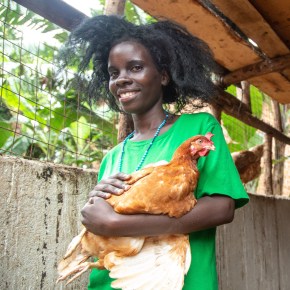
In early June this year, the BuildUganda research for development project was launched at a workshop with stakeholders. The component on antimicrobial use (AMU) in Uganda’s poultry sector aims to understand current antimicrobial use in poultry value chains, assess risks to humans from poultry-associated antimicrobial resistance (AMR), support evidence-based policy dialogue for antimicrobial surveillance and AMR strategies and build capacities of value chain actors, implementers and researchers. Continue reading
Boosting Uganda’s investments in livestock development – healthy animals for healthy food and healthy people
Today, policymakers, researchers and academics, donors, civil society, as well as government and private sector representatives from Uganda, Kenya and Germany meet to boost investment in Uganda’s livestock. Continue reading
Today is World Food Safety Day—Watch why safe food matters are life-and-death matters to poor people worldwide
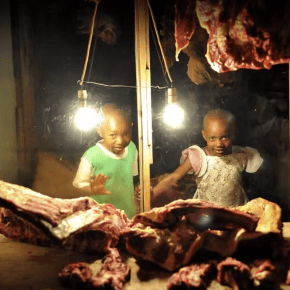
Here, on World Food Safety Day, for your pleasure and instruction, are three short videos highlighting Delia Grace, a veterinary epidemiologist at ILRI, on the importance improving the safety of foods, particularly livestock-derived foods (meat, offal, milk and eggs) produced, sold and consumed by poor people across the developing world. Continue reading
Development policy and practice – a case study in disruptive innovations
In partnership with Kenya’s Directorate of Veterinary Services, ILRI embarked on a 12-month long research project that culminated in the creation of a diagnostic tool to develop improved vaccines for infectious bursal disease. Continue reading
More research on African swine fever is urgently needed: No cure, no vaccine and no treatment yet exists for this lethal pig disease
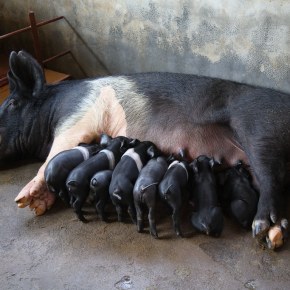
At ILRI, African swine fever research began in early 2000 with a focus on the epidemiology and socio-economic impacts of the disease. ILRI scientists and partners are currently working on developing vaccines for the disease using the CRISPR-cas genome editing system. Continue reading