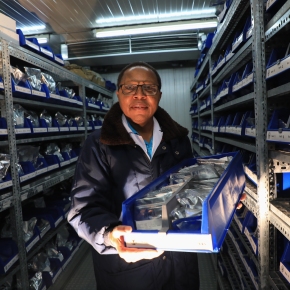
For the third time, ILRI last month shipped a set of its forage genebank collection, comprising 302 accessions representing 74 species and 30 genera, to the Svalbard Global Seed Vault. Continue reading
Category Archives: ILRI
Viral flash points? Poor urban settlements are highly vulnerable to the risk of the new coronavirus
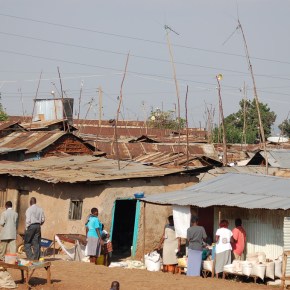
A new guest blog article published yesterday (27 Feb 2020) on the website of the International Institute for Environment and Development (IIED) argues that weak infrastructure would leave urban settlements in low-income countries highly vulnerable should the rapid spread of COVID-19 continue. Continue reading
A tool for all seasons: A ‘lean’ household survey system for ‘minimal effort, maximum information’ comes of age
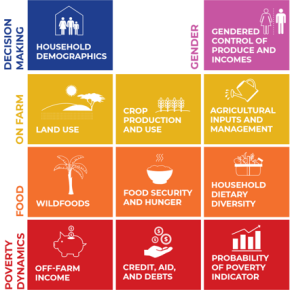
Out this week is the first public release of a huge dataset generated by recent surveys of more than 13,000 households in 21 countries using RHoMIS, a novel tool that makes household surveys efficient, robust and comparable. Continue reading
New Tick Cell Biobank Outpost at ILRI to support research in Africa on ticks and tick-borne diseases
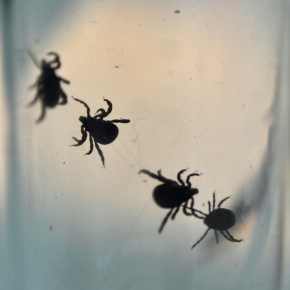
ILRI’s Tick Unit has been selected as Africa’s first outpost for the Tick Cell Biobank. The parent Tick Cell Biobank at the Institute of Infection and Global Health, University of Liverpool, houses a collection of approximately 55 cell lines derived from argasid and ixodid ticks, which are of both veterinary and medical importance. Funded by the UK Biotechnology and Biological Sciences Research Council (BBSRC) Global Challenges Research Fund, the Biobank Outpost project will facilitate access of the tick cell lines by researchers in low- and middle- income countries in Africa, South East Asia and South America. The countries selected for the Outposts include Kenya, Malaysia and Brazil. Continue reading
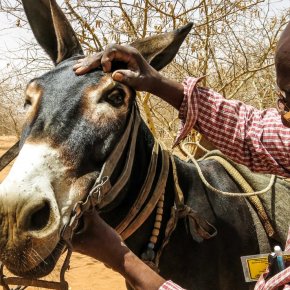
‘Invisible livestock’ – On the central roles of working horses, donkeys and mules on the smallholder farms that feed the world
It is time that working horses, donkeys and mules received the recognition that they deserve. Without it, decision-makers cannot fully claim they are listening to the 500 million smallholder farmers that feed and secure livelihoods for some of the poorest communities around the world. Continue reading
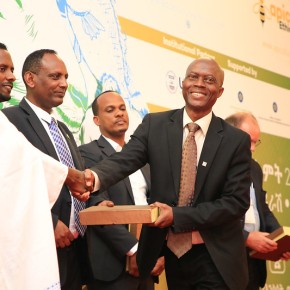
ILRI technology upscaling program recognized for supporting the Ethiopian poultry sector
The Ethiopian Poultry Producers and Processors Association recognized the ILRI led-Technologies for African Agricultural Transformation (TAAT) project for its role in strengthening the Ethiopian poultry sector. Continue reading
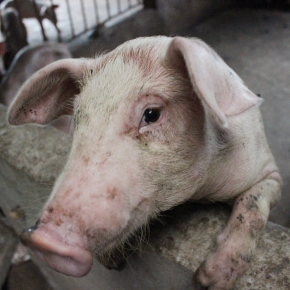
African swine fever ten years on: the lessons learned and the way forward
An interview with Dirk Pfeiffer, François Roger, Linda Dixon and Dieter Schillinger to better understand existing knowledge gaps between research findings managing the spread of African swine fever and actionable solutions. Continue reading
Tribute to Azage Tegegne, leading Ethiopian livestock scientist
It is with as much shock as sorrow that we report the untimely death of Azage Tegegne, a leading Ethiopian livestock scientist at the International Livestock Research Institute (ILRI) who retired from ILRI just last June after more than 30 years of distinguished service to the institute. Azage died after a short illness in his home country, Ethiopia, on 12 January 2020. Continue reading
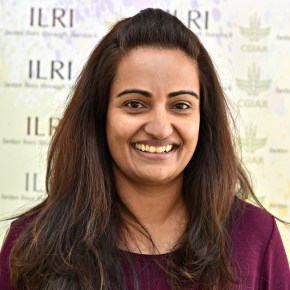
Livestock story-telling at ILRI—Part 2: Ekta Patel, Maasai ‘Fly Girl’
My name is Ekta Patel. I’m communications manager for ILRI’s Bioscience Directorate. I’m an unusual species. I come from an Indian background, but while most Indians in East Africa go into business, I had a passion for molecular biology and became a scientist. Continue reading
Livestock story-telling at ILRI—Part 1: Introduction, ‘Descending into the particular’
The 2019 institutional program meeting of ILRI tried out something new. Nine staff members were asked to present to the 200 hundred or so ILRI staff attending the meeting a short, personal story about how they were helping ILRI to achieve one of its five ‘critical success factors’. Continue reading