The #CelebrateBecA event brought together global, regional and local actors in agricultural biosciences research for development to mark the Hub’s achievements and deliberate on further ways to scale its programs and impacts to advance African agriculture and food and nutritional security. Click through the story pages above to get an overview of the celebrations and plenary presentations, or view the same storify on ILRI’s Storify site. Continue reading
Author Archives: Susan MacMillan
Vaccine development breakthrough for Rift Valley fever—new Nature Scientific Reports paper
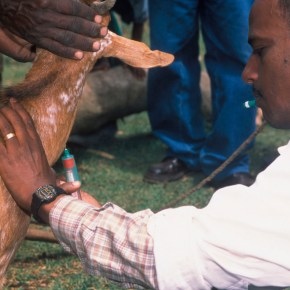
With colleagues from the Jenner and Pirbright institutes in the UK, Nairobi’s Strathmore University and institutions in Saudi Arabia and Spain, scientists and technicians in a vaccine biosciences program of the International Livestock Research Institute (ILRI) in Nairobi, Kenya, have recently published a paper in Nature announcing a breakthrough in development of a ‘One Health’ vaccine that could protect both people and livestock from Rift Valley fever. Continue reading
The BecA-ILRI Hub celebrates 15 years of biosciences in and for Africa
Coming up next week is an event marking the 15th anniversary of the Biosciences eastern and central Africa-International Livestock Research (BecA-ILRI) Hub, located in Nairobi, Kenya, and working with partners across the continent as well as with bioscience institutions worldwide. Continue reading
Vaccination proclamation: India protects the neglected ’living assets’ of its remote pig farmers
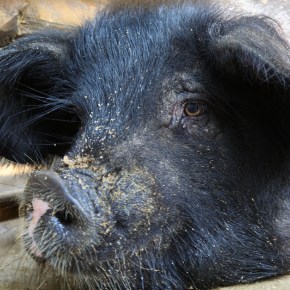
ILRI research to better control classical swine fever, also called hog cholera and pig plague, a highly contagious viral disease of pigs of all ages, usually killing the animals within two weeks of infection. The disease is endemic in the states of northeast India, where pig husbandry and meat eating are ubiquitous among the tribal communities that inhabit this remote region, isolated from the rest of India except through a slender corridor flanked by foreign territories. This article, one of a series being posted on the ILRI News blog, is one of 21 stories published in the ILRI Corporate Report 2014–2015, which you’ll find here: http://hdl.handle.net/10568/68631 Continue reading
Some of ILRI’s top livestock slide presentations in 2015
A few of the top livestock slide presentations made by ILRI staff in 2015 Continue reading
A look back at some of ILRI’s top livestock stories of 2015
Links to some of ILRI’s top stories of 2015 Continue reading
Foods available to African farm households increase with market access and off-farm work
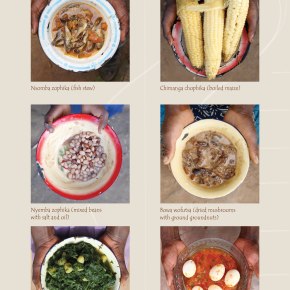
Common foods of Khulungira village, in central Malawi: Nsomba zophika (fish stew), chimanga chophika (boiled maize), nyemba zophika (mixed beans with salt and oil), bowa wofutsa (dried mushrooms with ground groundnuts), nkhwani wophatikiza ndi maungu anthete ndi kachewere wophika (pumpkin leaves, pumpkin blossoms and potatoes) and mazira ophika ndi phwetekere, anyezi, mafuta ndi mchere (boiled … Continue reading
What we talk about when we talk about ‘evidence-based’ advocacy communications
This year, a group of staff of the International Livestock Research Institute (ILRI) has started to think through more intentionally, and with more discipline, than before kinds of communications likely to be most effective in influencing decision-makers in livestock development. The latter is one of ILRI’s three strategic long-term goals (the other two are changing practices and increasing capacity)—but this is still relatively new territory for the research institute. Continue reading
Limiting use of antibiotics in livestock production to stem growing antimicrobial resistance in human pathogens
A commentary published in The Lancet last month supporting a series of five papers on antimicrobials recommends prohibiting use of antibiotics critically important for human medicine to promote the growth of livestock or to prevent routine livestock disease. The commentary was written by Tim Robinson, a principal scientist in spatial analysis at the International Livestock Research Institute (ILRI), and colleagues in partner organizations. Continue reading
Is the ‘Third Epidemiological Transition’ upon us?
Zoonoses—diseases transferred from animals to humans—have been with humanity throughout history. But today’s growing scale of livestock production in developing countries to feed their fast-growing and fast-urbanizing populations is sparking debate about whether the livestock sector is contributing to a fundamental a shift in global disease mortality, something known as an ‘epidemiological transition’. If so, it would be the third such transition in human history. Continue reading