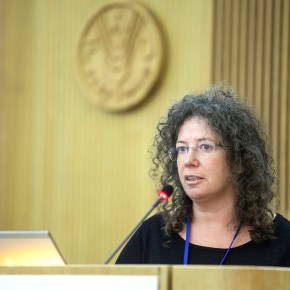
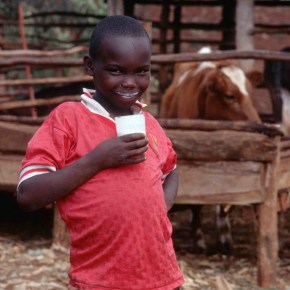
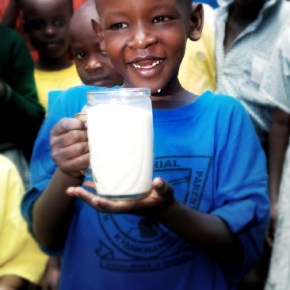
The experience of the International Livestock Research Institute (ILRI) and partner scientists in 2015–2016 unmistakably identifies the potential benefits to smallholder farmers and consumers of research into livestock and human health. Smallholder farmers could potentially save hundreds of millions of US dollars annually, following breakthroughs in the development of vaccines for contagious bovine pleuropneumonia and Rift Valley fever, the latter posing a serious threat to human as well as animals. However, it was the participation in high-level fora and implementation strategies which are likely to deliver the rapid life changes for smallholder farmers on the ground. Continue reading
Category Archives: A4NH
CRP on agriculture for nutrition and health
Making livestock foods safe—Lessons from Vietnam on what works—and what doesn’t
The experiences of developed countries, which now have relatively safe food, is that command-and-control approaches to food safety, which rely mainly on inspection and punishment, are less effective than approaches in which stakeholders are empowered and encouraged to self-regulate, motivated by the realisation that this is more profitable in the long term. Continue reading
New Nutrition Knowledge Bank gives direct access to expert nutritional advice via mobile phones
A new open-access Nutrition Knowledge Bank has been created as part of a GSMA mNutrition initiative to help tackle malnutrition in Africa and Asia. This collection of content on good nutritional practices includes factsheets and mobile messages for anyone to download and use. Funded by the UK Department for International Development (DFID), the mNutrition project aims to deliver nutrition information to 3 million people in 12 developing countries. Continue reading
Confronting the rising threat of antibiotic resistance in livestock
The article, originally published on Cambridge Core blog, was written by Tim Robinson of the International Livestock Research Institute (ILRI). Resistance to antimicrobials is developing faster than ever before due to decades of abusing these important drugs. A ‘post-antibiotic’ world looms as a result, the consequences of which would be many people and farm animals sickening and dying of what, until now, have been preventable or treatable infections. Continue reading
Access vs excess to antibiotics: The dual antimicrobial resistance issue facing the world
This opinion piece, written by ILRI scientist and program leader Delia Grace, was originally published by Devex on 16 Dec 2016. The numbers when it comes to drug resistance are apocalyptic. Already responsible for up to 700,000 deaths a year, the number of victims could reach 10 million by 2050, making superbugs a bigger killer than cancer is today if urgent action is not taken. Continue reading
What stops greater consumption of meat, milk and eggs in low-income areas of Nairobi? Price, mostly
A new research paper by scientists at the International Livestock Research Institute (ILRI) and partner organizations confirms that milk, meat and eggs are widely consumed by poor people in Kenya’s capital city of Nairobi: these animal-source goods make up nearly 40% of the food budget and half of this is spent on dairy products. Economic analysis revealed a high propensity to consume animal-source foods and elasticities showed that, if their prices could be lowered, consumption of animal-source foods would rocket, benefiting both the nutritional status of poor consumers and the livelihoods of small-scale livestock producers. Continue reading
Unpacking the tensions between the nutritional and economic goals of pro-poor livestock development
Discussants at this event unpacked the tensions inherent between developing livestock markets to meet economic goals of the poor and meeting the nutritional needs of poor households raising livestock. Continue reading
Improving food safety and human health through agricultural research: CGIAR future plans
A useful summary of the future plans of the CGIAR Research Program on Agriculture for Nutrition and Health (A4NH), led by the International Food Policy Research Institute (IFPRI), based in Washington, DC, has been published. Two of the five flagships of this multi-institutional research program are led or co-led by the International Livestock Research Institute (ILRI), based in Nairobi, Kenya. Future work of these two flagships is described below. Continue reading
Apocalyptic numbers: Antibiotic resistance as the classic ‘One Health’ (and classic ‘One World’) planetary issue
In the lead up to the High-Level Meeting on Antimicrobial Resistance to be held in the margins of the 71st session of the United Nations General Assembly, attended by heads of state and government at the UN’s New York City headquarters on 21 Sep 2016, scientists from ILRI and partner organizations have published a must-read article on the ‘One Health’ as well as ‘One World’ aspects of the rapid rise of antimicrobial resistance in pathogenic organisms. Continue reading
Pandemic proofing the world: An epidemiologist in Nairobi on preventing the next Zika virus
As the world becomes more well, people — particularly people in the West — seem to be more worried about health and disease, especially about the possibility of global pandemics (that is, widespread outbreaks) of newly emerging infectious diseases. Are these first-world fears? Or is there good reason why everyone should be concerned about coming plagues? And, if so, what should we be doing differently to protect ourselves better from newly emerging diseases? Continue reading