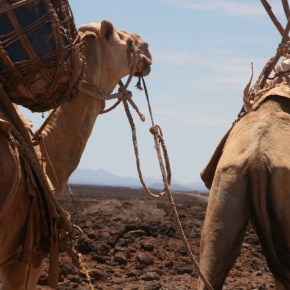
Two new papers on MERS (Middle Eastern respiratory syndrome) coronavirus and camels in Eastern Africa have been published in the science journal ‘Emerging Infectious Diseases’; three of the authors are ILRI scientists. Continue reading
Category Archives: East Africa
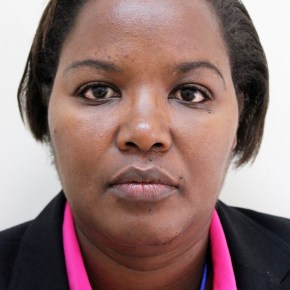
Gerardine Mukeshimana, BecA-ILRI Hub plant researcher, appointed minister of agriculture and animal resources in Rwanda
Gerardine Mukeshimana, a plant researcher working at the BecA-ILRI Hub, has been appointed minister of agriculture and animal resources in Rwanda. Continue reading
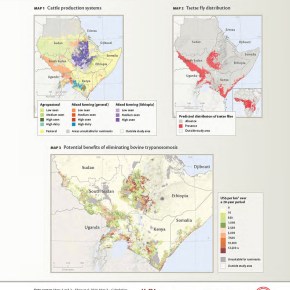
New map: Benefits of controlling trypanosomosis in the Horn of Africa
Using the Horn of Africa as an example, the maps illustrate different steps in a methodology developed to estimate and map the economic benefits to livestock keepers of controlling a disease (Shaw et al. 2014). Cattle are first assigned to different production systems as shown in Map 1, illustrating for example, where mixed farming is heavily dependent on the use of draft oxen in Ethiopia, areas of Sudan and South Sudan where oxen use is much lower, and the strictly pastoral areas of Somalia and Kenya. Continue reading
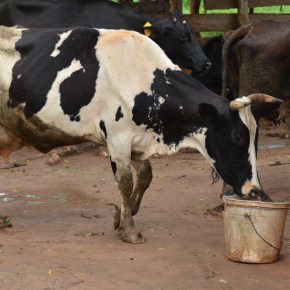
Tanzanian dairy film: The workings of a successful dairy platform
This 5-minute film tells the story of the Tanzanian Tanga Dairy Platform, which is helping dairy farmers in Tanzania to improve their milk production and sales. Continue reading
Tanzanian dairy film: Making a living from urban cows
This short film tells the story of Sheha Saidi, a dairy farmer from Dar es Salaam, Tanzania, who compares her experiences of keeping dairy cattle in Tanzania’s largest city with the experiences of her sister who lives and keeps dairy cows in Pongwe, Tanga.
Continue reading
Tanzanian dairy film: A farmer’s experiences in coastal Tanga
In the film, Faustina Akyoo, a small-scale dairy farmer, explains how she learnt dairying from her parents in Arusha before moving to the coastal town of Tanga where she continued keeping cows in addition to taking up employment. She is now retired, and her five dairy cows are an important source of income for her family. Continue reading
Realpolitik–Nairobi ‘Community of Practice’ communicators get real practice impacting policymakers
A community of practice for communications staff in research and development organizations (DevComms CoP) based in Nairobi participated in a ‘Science Communications for Policy Impact’ workshop following a conference, ‘Landscapes for People, Food and Nature’, at ICRAF on 3 July 2014. Continue reading
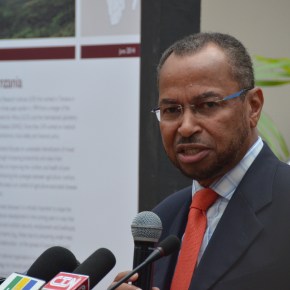
ILRI-Tanzania country office opens in Dar es Salaam
The Minister for Livestock and Fisheries Development in Tanzania, Hon Titus Mlengeya (MP) officially opened the ILRI-Tanzania country office on Friday 13 Jun 2014 in Dar es Salaam. Continue reading
New UK funding for disease surveillance will improve health and farming in Kenya
The University of Liverpool has been given funding to start a surveillance program to reduce the incidence of diseases transmitted between people and livestock in western Kenya. The £3.6 million grant will train veterinary and medical technicians to monitor farms, markets and slaughterhouses. They will use a mobile data collection system to generate a comprehensive database of the prevalence and economic impact of these diseases. The information generated will be used to provide evidence for government health policy in the area. Continue reading
Aflatoxins in Kenya’s food chain: Overview of what researchers are doing to combat the threat to public health
Aflatoxins are toxic chemicals produced as by-products by fungi (moulds) that grow on maize, groundnuts and other food crops. These toxins also affect feedstuffs, which then contaminate milk, meat and eggs. The toxins occur everywhere in the world, but pose particularly high risks in tropical developing countries where certain staple foods, such as maize and sorghum, comprise a large part of the diets of the poor. Continue reading