This opinion piece, written by ILRI scientist and program leader Delia Grace, was originally published by Devex on 16 Dec 2016. The numbers when it comes to drug resistance are apocalyptic. Already responsible for up to 700,000 deaths a year, the number of victims could reach 10 million by 2050, making superbugs a bigger killer than cancer is today if urgent action is not taken. Continue reading
Category Archives: CRPs
Facilitating innovation platforms – now available as a mobile ‘serious game’
ILRI has created a mobile game for android users using game mechanics such as points and badges aiming to help innovation platform facilitators take on their roles and tasks. Continue reading
Tom Randolph, director of the new CGIAR Research Program on Livestock Agri-food Systems
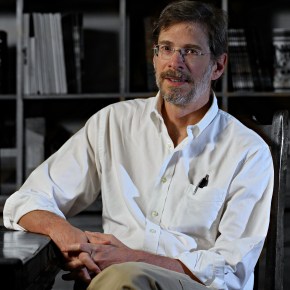
Tom Randolph, who has served as director of the CGIAR Research Program on Livestock and Fish for the last five years, has been newly appointed director of the CGIAR Research Program on Livestock Agri-food Systems, which begins operations in Jan 2017 (photo credit: ILRI/Stevie Mann). Continue reading
What stops greater consumption of meat, milk and eggs in low-income areas of Nairobi? Price, mostly
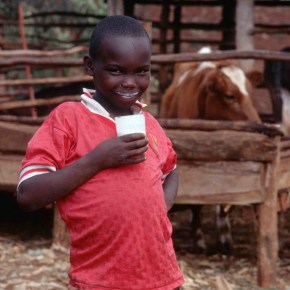
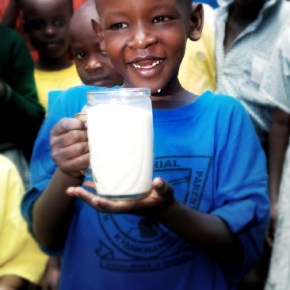
A new research paper by scientists at the International Livestock Research Institute (ILRI) and partner organizations confirms that milk, meat and eggs are widely consumed by poor people in Kenya’s capital city of Nairobi: these animal-source goods make up nearly 40% of the food budget and half of this is spent on dairy products. Economic analysis revealed a high propensity to consume animal-source foods and elasticities showed that, if their prices could be lowered, consumption of animal-source foods would rocket, benefiting both the nutritional status of poor consumers and the livelihoods of small-scale livestock producers. Continue reading
On selling insurance (not lottery tickets) to Africa’s struggling (stargazing) livestock herders–New York Times
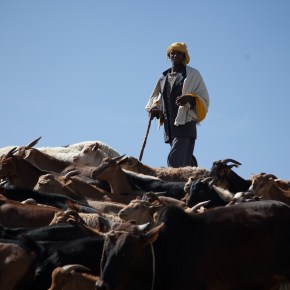
Insurance that pays out when forage coverage drops—known as index-based livestock insurance—is an elegant idea. Andrew Mude, an economist and principal scientist at ILRI, last month was awarded the Norman Borlaug Award for Field Research and Application. The award, a major prize in agricultural research, is given by the World Food Prize Foundation and financed by the Rockefeller Foundation. Tina Rosenberg covers the story in the New York Times. Continue reading
Unpacking the tensions between the nutritional and economic goals of pro-poor livestock development
Discussants at this event unpacked the tensions inherent between developing livestock markets to meet economic goals of the poor and meeting the nutritional needs of poor households raising livestock. Continue reading
‘Meating’ in the middle on the ‘meat vs vegetarian’ diet debate at the climate change summit this week
What might seem like a silver bullet to reduce greenhouse gas emissions risks undermining other development goals such as ending hunger, improving health and eliminating poverty. We cannot ignore the important role that animal-source foods play, especially in developing countries, when we talk about tackling climate change. Instead we need to find a middle ground. Continue reading
Kenyan accepts 2016 Norman Borlaug Award for Field Research and Application at World Food Prize Event in Iowa
Andrew Mude, an economist and principal scientist at ILRI, is being presented with the 2016 Norman Borlaug Award for Field Research and Application today, 12 Oct 2016, for his work leading an innovative livestock insurance program that employs satellite data to help protect livestock herding communities in the Horn of Africa from the devastating effects of drought. Continue reading
Improving food safety and human health through agricultural research: CGIAR future plans
A useful summary of the future plans of the CGIAR Research Program on Agriculture for Nutrition and Health (A4NH), led by the International Food Policy Research Institute (IFPRI), based in Washington, DC, has been published. Two of the five flagships of this multi-institutional research program are led or co-led by the International Livestock Research Institute (ILRI), based in Nairobi, Kenya. Future work of these two flagships is described below. Continue reading
Cloned bull could contribute to development of disease-resistant African cattle
A note in a scientific journal gives an update on long-term research to develop African cattle resistant to the Africa animal disease known as trypanosomiasis. The aim of this research is to help reduce widespread poverty and hunger on the continent by improving livestock livelihoods. Continue reading