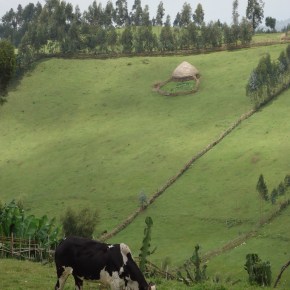
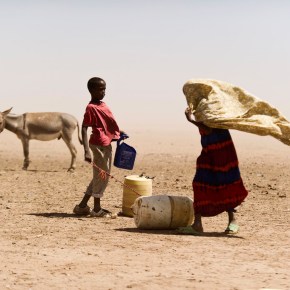
A new study reveals conditions linked to the emergence and spread of deadly bird flu and maps the areas of Asia at greatest risk of the spread of the new virus strain. A dangerous strain of avian influenza, H7N9, that’s causing severe illness and deaths in China may be inhabiting a small fraction of its potential range and appears at risk of spreading to other suitable areas of India, Bangladesh, Vietnam, Indonesia and the Philippines, according to a new study published today in the journal Nature Communications. Continue reading
Category Archives: CRPs
Assessing societal changes from changing dairy value chains in Sahelian pastoral communities
ILRI’s Jo Cadilhon introduces a method being tried out in Senegal to measure the social impacts of dairy supply chain innovation in pastoralist societies.
Continue reading
New UK funding for disease surveillance will improve health and farming in Kenya
The University of Liverpool has been given funding to start a surveillance program to reduce the incidence of diseases transmitted between people and livestock in western Kenya. The £3.6 million grant will train veterinary and medical technicians to monitor farms, markets and slaughterhouses. They will use a mobile data collection system to generate a comprehensive database of the prevalence and economic impact of these diseases. The information generated will be used to provide evidence for government health policy in the area. Continue reading
New maps for navigating a sea of changes in livestock production
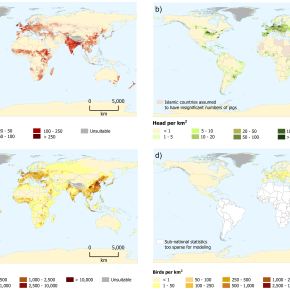
A collaborative effort by some of the world’s leading agriculture experts has produced a new set of maps published today in the journal PLoS ONE that provides the most detailed rendition ever produced of the billions of cattle, pigs, poultry and other livestock living in the world today. Continue reading
Hard numbers: Making the business case for massive investments in ‘One Health’ to protect ‘One World’
The time has come to make the bigger case for massive investment in One Health to transform the management of neglected and emerging zoonoses and to save the lives of millions of people and hundreds of millions of animals whose production supports and nourishes billions of impoverished people per annum. Continue reading
Getting (the band) back together: US climate report sees reconnecting crops to livestock as smart adaption strategy
The new National Climate Assessment released recently by President Obama’s Global Change Research Program contains dour predictions about the impact of climate change on livestock production in the United States. How can the country’s livestock sector adapt to these changes? One strategy suggested in the report will be familiar to experts at the International Livestock Research Institute (ILRI). It involves raising livestock and crops together and taking advantage of the synergies between the two. Continue reading
Aflatoxins in Kenya’s food chain: Overview of what researchers are doing to combat the threat to public health
Aflatoxins are toxic chemicals produced as by-products by fungi (moulds) that grow on maize, groundnuts and other food crops. These toxins also affect feedstuffs, which then contaminate milk, meat and eggs. The toxins occur everywhere in the world, but pose particularly high risks in tropical developing countries where certain staple foods, such as maize and sorghum, comprise a large part of the diets of the poor. Continue reading
Egyptian aquaculture: Farming tilapia, mullet and carp in the Nile Delta
Within the CGIAR Research Program on Livestock and Fish and embedded within a project on aquaculture development funded by the Swiss Agency for Development and Cooperation (SDC), IEIDEAS — ‘Improving Employment and Income through the Development of Egypt’s Aquaculture Sector’ — is a project implemented by CARE and WorldFish to secure a sustainable future for at least 100,000 people by upgrading Egypt’s aquaculture value chain. Continue reading
How to act in the face of uncertainty (and adapt to ‘wicked problems’) with ‘no regrets’ options–CGIAR PNAS paper
A 2013 paper, Addressing uncertainty in adaptation planning for agriculture, deserves a wide readership. The paper was published in 2013 in the prestigious US science journal Proceedings of the National Academy of Sciences (PNAS). It tackles ‘uncertainty’ in climate change research for development. If you can manage your way through the technical jargon, you get to this: The results demonstrate the potential for robust knowledge and actions in the face of uncertainty. Continue reading
Africa’s first ‘Islamic-compliant’ livestock insurance pays 100 herders in Kenya’s remote drylands of Wajir for drought-related livestock losses
Today, for the first time in Africa, an insurance policy that combines an Islamic-compliant financial instrument with innovative use of satellite imagery is compensating Muslim pastoralists for drought-induced losses suffered in Kenya’s northeastern Wajir County, where livestock are valued at Ksh46 billion (USD550 million). Continue reading