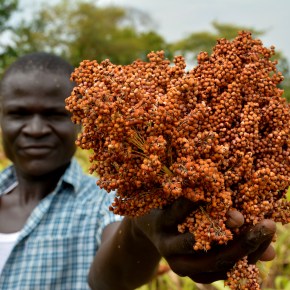
A new project is reconstructing Rwanda’s incomplete meteorological data record using cutting-edge climate science and developing climate information products and services based on the expressed needs of the country’s farmers and other end users. The work is carried out by RAB and Meteo Rwanda, in collaboration with CCAFS, IRI at Columbia University, ICRAF and ILRI, with funding from USAID. Continue reading
Category Archives: SLS
Sustainable Livestock Systems program
Livestock can significantly reduce greenhouse gases AND deliver benefits to the poor–Nature Climate Change
Mario Herrero, chief research scientist for Food Systems and the Environment at the Commonwealth Scientific and Industrial Research Organisation (CSIRO), in Australia, and colleagues have published a paper in Nature Climate Change on Greenhouse gas mitigation potentials in the livestock sector. Continue reading
Foods available to African farm households increase with market access and off-farm work
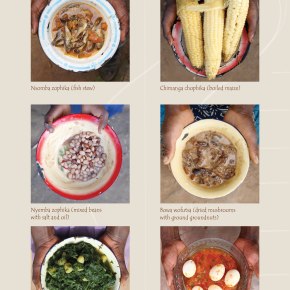
Common foods of Khulungira village, in central Malawi: Nsomba zophika (fish stew), chimanga chophika (boiled maize), nyemba zophika (mixed beans with salt and oil), bowa wofutsa (dried mushrooms with ground groundnuts), nkhwani wophatikiza ndi maungu anthete ndi kachewere wophika (pumpkin leaves, pumpkin blossoms and potatoes) and mazira ophika ndi phwetekere, anyezi, mafuta ndi mchere (boiled … Continue reading
Limiting use of antibiotics in livestock production to stem growing antimicrobial resistance in human pathogens
A commentary published in The Lancet last month supporting a series of five papers on antimicrobials recommends prohibiting use of antibiotics critically important for human medicine to promote the growth of livestock or to prevent routine livestock disease. The commentary was written by Tim Robinson, a principal scientist in spatial analysis at the International Livestock Research Institute (ILRI), and colleagues in partner organizations. Continue reading
Mobile technology-driven capacity development: Lessons from mNutrition and IBLI projects
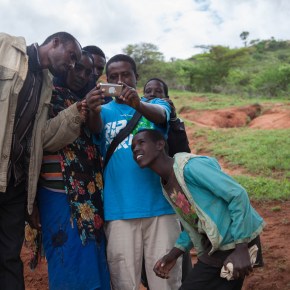
With global mobile technology growing exponentially, the opportunities for resource- and infrastructure-poor countries to rapidly expand learning are huge. Two projects managed by the International Livestock Research Institute (ILRI)—mNutrition and Index-Based Livestock Insurance (IBLI)—have seized this opportunity and developed mobile technology solutions to challenges they encountered. Continue reading
New Kenya value chains program to lift 300,000 plus households out of poverty
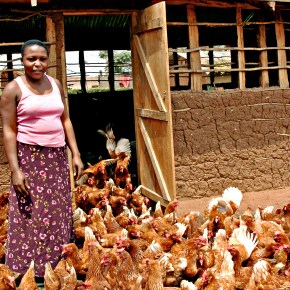
Starting in October 2015, ILRI, in partnership with two other CGIAR centres, has initiated a new three-year USD25 million program to help lift 317,000 households out of poverty, making them food secure and enabling their transition from subsistence to market-orientated farming. Continue reading
Can we eat meat and still reduce greenhouse gas emissions?
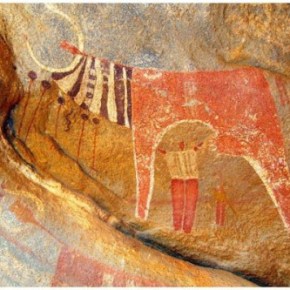
Cattle and figures, Laas Geel cave complex, Somaliland, Somalia. This opinion piece is written by Alain Vidal, director of strategic partnerships at CGIAR. Our global food production system—which includes, in addition to crop farming, raising livestock and deforesting lands to grow livestock feed and other crops—is responsible for about a quarter of the greenhouse gases produced … Continue reading
A couple of ‘missings’ for the Paris climate talks
In the days leading up to the start of the climate change talks in Paris (COP21) this week (30 Nov–11 Dec 2015), we at the International Livestock Research Institute (ILRI) have been busy responding to recent articles in the press advocating that ‘the world’ eat less meat to reduce greenhouse gases and other livestock ‘bads’. … Continue reading
Mixing it up—The information ‘black hole’ on crop+animal recipes for climate-smart and climate-resilient farms
We are unaware of any comprehensive studies undertaken in sub-Saharan Africa to explore how mixed farms will be affected by climate change and the cost and benefits of different adaptation options. Underestimating the importance of livestock in the mixed’ smallholder farming systems that are ubiquitous across the developing world weakens both emissions reduction and climate change adaptation efforts. Continue reading
Climate change impacts on livestock: ‘This information does not exist’
A new working paper from the CGIAR Research Program on Climate Change, Agriculture and Food Security (CCAFS) has been published on the impacts of climate change on livestock across Africa. Lead author of the new paper, Philip Thornton, is a scientist with the International Livestock Research Institute (ILRI). Continue reading