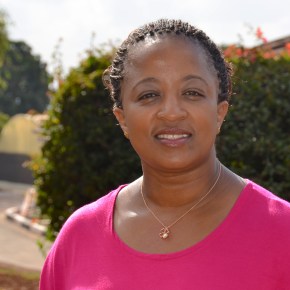
Ann Mureithi joined the International Livestock Research Institute (ILRI) as senior administrative officer, director general’s office, on 2 Feb 2015. Continue reading
Directorate / ILRI / POD / Staff
Ann Mureithi joined the International Livestock Research Institute (ILRI) as senior administrative officer, director general’s office, on 2 Feb 2015. Continue reading
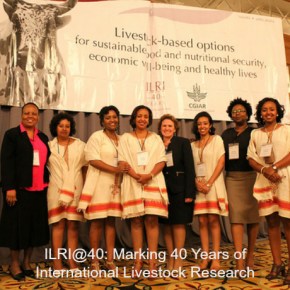
Highlights of blog posts, photos, tweets, posters and presentations from events organized by the International Livestock Research Institute (ILRI) from Sep through Dec 2014. Continue reading
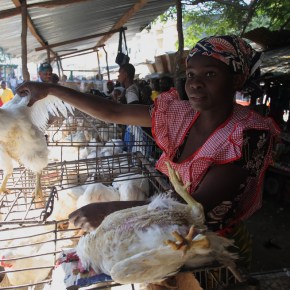
A new compilation of 25 studies in Africa finds that informal markets provide essential sources of food and income for millions of poor, with milk and meat that is often safer than supermarkets. Misguided efforts to control the alarming burden of food-related illnesses in low-income countries risk intensifying malnutrition and poverty — while doing little to improve food safety. Blunt crack-downs on informal milk and meat sellers that are a critical source of food and income for millions of people are not the solution. Continue reading
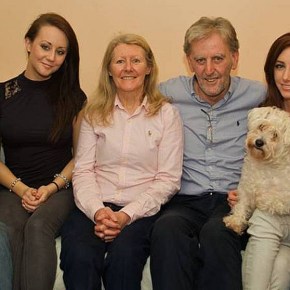
Noel Murphy died on Friday 16 January 2015, leaving the world devoid of a gentleman and scholar, and his friends and family bereft of a pillar of quiet strength, wisdom and thoughtfulness. Continue reading

Two new staff joined ILRI’s capacity development team, based in Addis Ababa. Continue reading
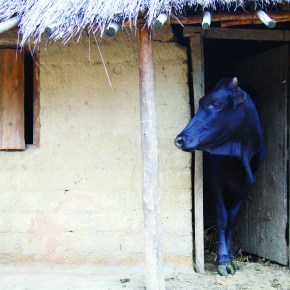
Livestock matters a great deal in developing countries, playing an increasingly important role in food security and economic development. In fact, the livestock subsector is growing faster than all other agriculture sectors in developing countries worldwide. And importantly in the International Year of Family Farming, the bulk of that livestock production is occurring on small family farms. Livestock farming offers unique features to support local livelihoods and economies, especially for women. Continue reading
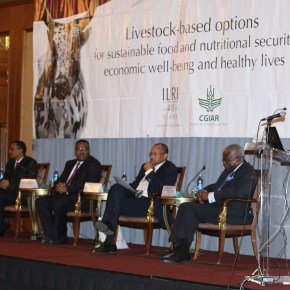
The International Livestock Research Institute (ILRI), which turned 40 years old in 2014, organized a series of events with old and new colleagues, partners and friends, and with them looked back on what we have accomplished in the past 40 years and fleshed out ideas for the next 40. Continue reading
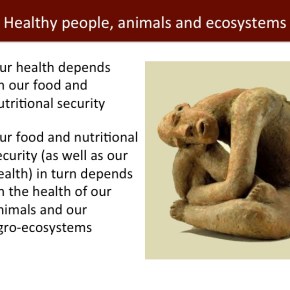
In case you missed it, here is the gist of a keynote presentation on ‘one-health’ made by Jimmy Smith, the director general of the International Livestock Research Institute (ILRI), at the 5th biennial conference of the International Association for Ecology & Health, held in Montreal, Canada, 11−15 Aug 2014. Smith’s presentation was titled: ‘Healthy people, animals and ecosystems for global food and nutritional security’. Continue reading
This January, Oxford University Press is publishing The Oxford Handbook of Food, Politics, and Society, a 904-page hardback volume addressing an issue that affects all of us: the intersection of food and politics. Among the 49 chapter authors of this new handbook are two members of staff at the International Livestock Research Institute (ILRI) who left the institute recently: Purvi Mehta-Bhatt and Pier Paulo Ficarelli. Their chapter covers ‘livestock in the food debate’. Continue reading

Iddo Dror prepared this case study with case writer Shreya Maheshwari and IBLI team leader Andrew Mude as the
basis for class discussion rather than to illustrate either effective or ineffective handling of an administrative situation.
This case was prepared in collaboration with the IBLI team and benefited from useful insights by a range of partners
and collaborators of the IBLI program. Continue reading
 ILRI news