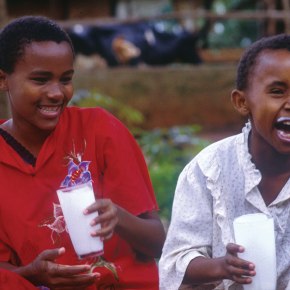
Starting in October 2015, ILRI, in partnership with two other CGIAR centres, has initiated a new three-year USD25 million program to help lift 317,000 households out of poverty, making them food secure and enabling their transition from subsistence to market-orientated farming. Continue reading
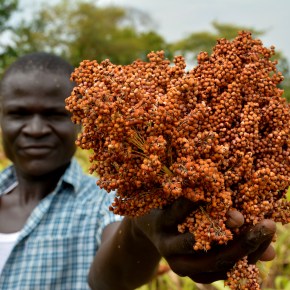
Author Archives: James Stapleton
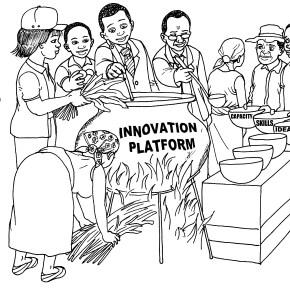
Capacity development, and innovation systems and platforms
Multi-stakeholder or innovation platforms are increasingly seen as a promising vehicle for agricultural innovation and development. In the field of agricultural research for development (AR4D), such platforms are an important element of a commitment to more intentional, structured and long-term engagement among sector stakeholders. See ILRI capacity development brief 5, Capacity development, and innovation systems … Continue reading
Developing future leaders in research, ILRI’s graduate fellows program
The International Livestock Research Institute (ILRI) graduate fellowship program has grown from strength to strength. In 2015, ILRI offered opportunities to more than 200 young scientists and graduate fellows from national agricultural research organizations (NARS), universities and other partner institutions globally. These emerging researchers undertake research for development activities within ILRI projects, access ILRI research facilities and are mentored by ILRI senior scientists, themselves engaged in cutting-edge agricultural research. Continue reading
Briefs on capacity development experiences at the International Livestock Research Institute
As part of an internal ‘capacity development’ week at the International Livestock Research Institute (ILRI) in December 2015, the institute launched a series of capacity development briefs covering different aspects of this work. Continue reading
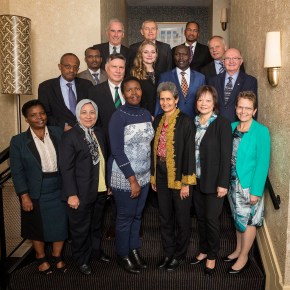
ILRI Board of Trustees meets in Washington DC
The 44th ILRI Board of Trustees meeting took place in Washington DC from 31 October to 4 November 2015. This latest meeting saw a number of changes on the ILRI board, as three members left, three joined, and Lindsay Falvey become board chair. Continue reading
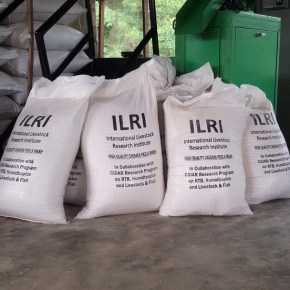
Processing African cassava peels, potentially a billion dollar business
With livestock production expected to more than double in the next 40 years, transforming cassava peels into high quality feed holds huge potential for African economies struggling to meet rapidly rising demand for animal-source products, according to research proposal recently published by three CGIAR centres. Continue reading
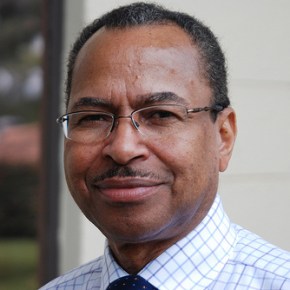
What’s driving Ethiopia’s fast development? Millions of smallholder farmers, of course
Industrialization is key to economic development, and agriculture—supplying raw materials for processing and value addition—is an essential component of that process. Comprising more than 40% of national GDP and producing the overwhelming majority of the Ethiopia’s food, smallholder farmers are at the centre of the country’s recent economic success. So declared the director general of the International Livestock Research Institute (ILRI), Jimmy Smith, in an agriculture panel discussion, this week, organized by the Economist magazine and held at the Sheraton Hotel in Addis Ababa. Continue reading
Unlocking the potential of Africa to scale livestock development, high-level conference
Improved livestock genetics, health and feed—guided by policies geared towards enabling a sustainable and business-friendly environment—are key to unlocking the potential of agriculture in Africa, Continue reading
Animal breeding and genetics in the Ethiopia livestock master plan
High population growth and rising living standards are putting pressure on Ethiopia’s livestock owners to increase the productivity of their animals. Improving the genetic potential of the country’s livestock is one of the keys—with better feeds and better health—to achieving food and nutrition security, and better lives through livestock. This latest research brief by ILRI and the Ministry of Agriculture (MoA), Animal breeding and genetics in the Ethiopia livestock master plan, outlines how quick-win genetic-based technologies—including artificial insemination (AI) with oestrous synchronization and community-based schemes to improve indigenous breeds as well—can significantly contribute to transformed value chains for cattle, small ruminants and poultry. Continue reading
Ethiopia livestock master plan: Livestock health priorities
Improved animal health services could hugely increase livestock productivity and the earnings of livestock keepers. As part of the Ethiopia livestock master plan, an analysis of animal health by the Livestock State Ministry (LSM) and ILRI outline the steps needed to transform the livestock sector, published as the latest ILRI brief: Livestock health priorities in the Ethiopia livestock master plan. Continue reading