Scientists from across the globe gathered at the University of Florida’s Institute of Food and Agricultural Sciences on 29–30 Mar 2017 to discuss ways to improve nutrition through animal-source foods in some of the most impoverished regions in the world. Chronically affecting 24 per cent of the world’s children, roughly 159 million in 2014, malnutrition is responsible for almost half of all child deaths worldwide. Jimmy Smith, director general of ILRI, was one of the keynote speakers at the opening of the Global Nutrition Symposium, the theme of which was ‘Nurturing development: Improving human nutrition with animal-source foods’. Continue reading
Author Archives: Susan MacMillan
Vietnam launches report on better managing risks to food safety
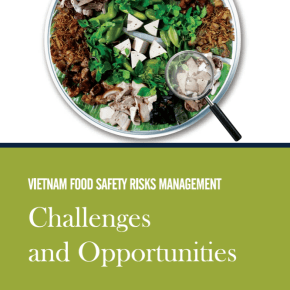
A report launched this week on managing risks to food safety in Vietnam was prepared by the World Bank and other research and development partners at the request of the Government of Vietnam. The International Livestock Research Institute (ILRI) was the lead technical partner in development of the report. Food Safety Risk Management in Vietnam: Challenges and opportunities was launched on 27 Mar 2017. Continue reading
Niall MacHugh
In sadness, the International Livestock Research Institute (ILRI) reports that Niall MacHugh, a long-term former scientist at ILRI and its predecessor, the International Laboratory for Research on Animal Diseases (ILRAD), died 21 Mar 2017. Continue reading
The legacy of Norman Borlaug: Alive and well at the International Livestock Research Institute
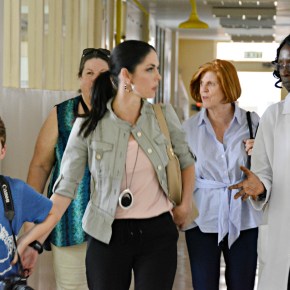
ILRI was honoured by a visit this week to ILRI by Julie Borlaug (left) and Jeannie Borlaug Laube, granddaugher and daughter of Norman Borlaug, respectively. Continue reading
A deep dive inside Vietnam’s pork foodshed to determine food safety issues and their practical resolutions
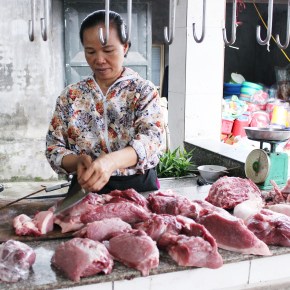
Pork meat sold in Vietnam has been found by researchers to commonly carry bacteria that could cause disease—but they also found that the risk of that meat sickening people is largely reduced due to the Vietnamese habit of buying very fresh meat and cooking it shortly thereafter. The research results indicate ways that the safety of pork meat can be even further improved in this fast-growing and -evolving market. The bottom line is that ensuring safe pork consumption in Vietnam is very important—and very doable. Continue reading
Making livestock foods safe—Lessons from Vietnam on what works—and what doesn’t
The experiences of developed countries, which now have relatively safe food, is that command-and-control approaches to food safety, which rely mainly on inspection and punishment, are less effective than approaches in which stakeholders are empowered and encouraged to self-regulate, motivated by the realisation that this is more profitable in the long term. Continue reading
New Nutrition Knowledge Bank gives direct access to expert nutritional advice via mobile phones
A new open-access Nutrition Knowledge Bank has been created as part of a GSMA mNutrition initiative to help tackle malnutrition in Africa and Asia. This collection of content on good nutritional practices includes factsheets and mobile messages for anyone to download and use. Funded by the UK Department for International Development (DFID), the mNutrition project aims to deliver nutrition information to 3 million people in 12 developing countries. Continue reading
CGIAR livestock support is enhancing community resilience in the face of on-going drought in the Horn of Africa
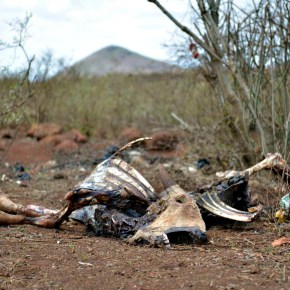
Widespread drought conditions in the Horn of Africa have intensified since the failure of the Oct–Dec 2016 rains. Areas of greatest concern cover much of Somalia, northeast and coastal Kenya, southeast Ethiopia and the Afar region, and South Sudan, which faces a serious food crisis due to protracted insecurity. One focus of the East African-headquartered International Livestock Research Institute (ILRI) is to help developing-country livestock communities enhance their resilience in the face of recurring droughts. ILRI belongs to CGIAR—a global research partnership of 15 centres and their partners working yo reduce poverty, enhance food and nutrition security and improve natural resources and ecosystem services. Continue reading
Record payouts being made by Kenya Government and insurers to protect herders facing historic drought
More than Ksh214 million is on tap for 12,000 pastoral households in six counties of northern Kenya through innovative policies that use satellite imagery to trigger payments for feed, veterinary supplies and water. Continue reading
Confronting the rising threat of antibiotic resistance in livestock
The article, originally published on Cambridge Core blog, was written by Tim Robinson of the International Livestock Research Institute (ILRI). Resistance to antimicrobials is developing faster than ever before due to decades of abusing these important drugs. A ‘post-antibiotic’ world looms as a result, the consequences of which would be many people and farm animals sickening and dying of what, until now, have been preventable or treatable infections. Continue reading