New map: Livestock and mixed crop-livestock systems in Africa
Africa / Agriculture / Books and Chapters / CCAFS / Crop-Livestock / Geodata / ILRI / ILRIComms / Knowledge and Information / Livestock Systems / SLS / Spotlight

New map: Livestock and mixed crop-livestock systems in Africa

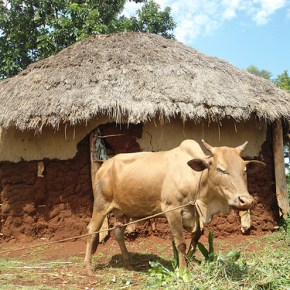
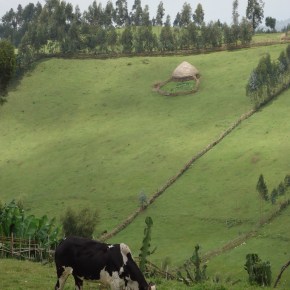
Livestock-producing agricultural systems cover 73 percent of Africa and stretch across several climates (Map 1). To some extent, these climates determine what type of farming is practiced. In Africa, livestock-producing systems are broken into two main categories: livestock and mixed crop-livestock. These systems exist in three common African climates: arid/semiarid, humid/subhumid, and temperate/tropical highlands. Continue reading

Realpolitik–Nairobi ‘Community of Practice’ communicators get real practice impacting policymakers
Agriculture / CapDev / East Africa / Environment / ILRI / ILRIComms / Kenya / Knowledge and Information / Policy / Spotlight

Realpolitik–Nairobi ‘Community of Practice’ communicators get real practice impacting policymakers

A community of practice for communications staff in research and development organizations (DevComms CoP) based in Nairobi participated in a ‘Science Communications for Policy Impact’ workshop following a conference, ‘Landscapes for People, Food and Nature’, at ICRAF on 3 July 2014. Continue reading

The International Livestock Research Institute turns 40–Join us at an ILRI@40 event!
Event / Food Security / Human Health / ILRI / ILRI40 / ILRIComms / Livelihoods / Livestock / Nutrition / Poverty / Pro-Poor Livestock / Research / Spotlight

The International Livestock Research Institute turns 40–Join us at an ILRI@40 event!

In 2014, to mark 40 years of its international research, the International Livestock Research Institute (ILRI) is facilitating a series of events that highlight the ways in which livestock research advances the global development agenda, specifically for sustainable food and nutritional security, economic well-being and healthy lives. Continue reading

Deadly strain of bird flu in China linked to live poultry markets; high-risk spots in Asia mapped–New study
A4NH / Agri-Health / Article / Asia / Bangladesh / Bird flu / CCAFS / China / Disease Control / Emerging Diseases / Epidemiology / Geodata / Human Health / HUMIDTROPICS / ILRI / India / Indonesia / Philippines / Poultry / SLS / Spotlight / Vietnam / Zoonotic Diseases

Deadly strain of bird flu in China linked to live poultry markets; high-risk spots in Asia mapped–New study

A new study reveals conditions linked to the emergence and spread of deadly bird flu and maps the areas of Asia at greatest risk of the spread of the new virus strain. A dangerous strain of avian influenza, H7N9, that’s causing severe illness and deaths in China may be inhabiting a small fraction of its potential range and appears at risk of spreading to other suitable areas of India, Bangladesh, Vietnam, Indonesia and the Philippines, according to a new study published today in the journal Nature Communications. Continue reading

New UK funding for disease surveillance will improve health and farming in Kenya
A4NH / Agri-Health / Brucellosis / Diagnostics / Disease Control / East Africa / Emerging Diseases / Epidemiology / Geodata / Human Health / ILRI / Kenya / LiveGene / Project / RVF / Spotlight / Zoonotic Diseases

New UK funding for disease surveillance will improve health and farming in Kenya

The University of Liverpool has been given funding to start a surveillance program to reduce the incidence of diseases transmitted between people and livestock in western Kenya. The £3.6 million grant will train veterinary and medical technicians to monitor farms, markets and slaughterhouses. They will use a mobile data collection system to generate a comprehensive database of the prevalence and economic impact of these diseases. The information generated will be used to provide evidence for government health policy in the area. Continue reading

New maps for navigating a sea of changes in livestock production
A4NH / Article / CCAFS / Geodata / HUMIDTROPICS / ILRI / Knowledge and Information / Livestock / Livestock Systems / SLS / Spotlight

New maps for navigating a sea of changes in livestock production

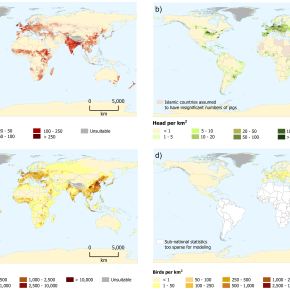
A collaborative effort by some of the world’s leading agriculture experts has produced a new set of maps published today in the journal PLoS ONE that provides the most detailed rendition ever produced of the billions of cattle, pigs, poultry and other livestock living in the world today. Continue reading

Hard numbers: Making the business case for massive investments in ‘One Health’ to protect ‘One World’
A4NH / Agri-Health / Agriculture / Article / Disease Control / Emerging Diseases / FSZ / Human Health / ILRIComms / Spotlight / Zoonotic Diseases

Hard numbers: Making the business case for massive investments in ‘One Health’ to protect ‘One World’

The time has come to make the bigger case for massive investment in One Health to transform the management of neglected and emerging zoonoses and to save the lives of millions of people and hundreds of millions of animals whose production supports and nourishes billions of impoverished people per annum. Continue reading

Getting (the band) back together: US climate report sees reconnecting crops to livestock as smart adaption strategy
Agriculture / Climate Change / Crop Residues / Crop-Livestock / Farming Systems / ILRI / ILRIComms / Intensification / LIVESTOCKFISH / Opinion Piece / Report / Spotlight / USA

Getting (the band) back together: US climate report sees reconnecting crops to livestock as smart adaption strategy

The new National Climate Assessment released recently by President Obama’s Global Change Research Program contains dour predictions about the impact of climate change on livestock production in the United States. How can the country’s livestock sector adapt to these changes? One strategy suggested in the report will be familiar to experts at the International Livestock Research Institute (ILRI). It involves raising livestock and crops together and taking advantage of the synergies between the two. Continue reading