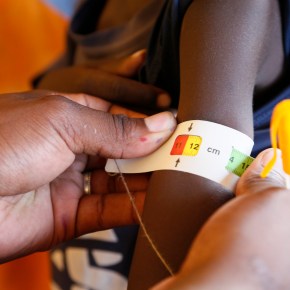
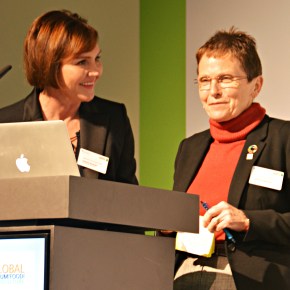
A senior delegation from the International Livestock Research Institute (ILRI) is supporting and engaging in this week’s (2830 Nov 2018) global conference on ‘Accelerating the End of Hunger and Malnutrition’, in Bangkok. Continue reading
Category Archives: Consumption
A new project promises to generate better dietary and health data for agriculture and nutrition interventions in Africa
The Food, Agriculture and Natural Resources Policy Analysis Network (FANRPAN) and the International Livestock Research Institute (ILRI) are implementing a project on ‘Improving Dietary and Health Data for Decision-making in Agriculture and Nutrition Actions in Africa’ with funding from the International Development Research Centre (IDRC). Continue reading
Call to improve food safety in low- and middle-income countries—From hazards to risks and from farm to fork
A new report strengthens the economic case for increased public investment and other policy attention on food safety in developing countries. It synthesizes evidence of the economic costs of unsafe food in relation to both domestic markets and trade, positions food safety as an integral part of economic development and food system modernization, and provides guidance on improving food safety awareness and behaviour from farm to fork. Continue reading
The elusive quest for the perfect chicken
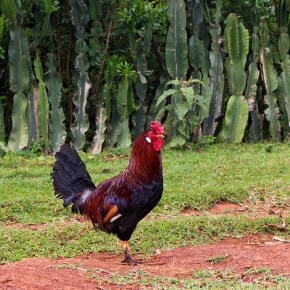
A team of researchers investigating chicken diseases in Ethiopia has discovered that there is far greater genetic diversity in that seemingly nondescript bird than meets the eye, a discovery that could help boost the productivity of small-scale chicken farms throughout Africa. The study was published in this month’s issue of Nature Sustainability by scientists from … Continue reading
Livestock-enhanced diets in the first 1,000 days of life: Pathways to better futures in low-income countries
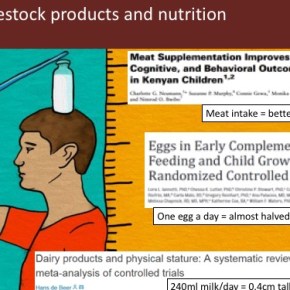
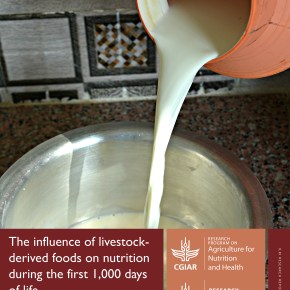
A new report was published this month on the value of ensuring consumption of meat, milk and eggs by infants up to two years of age and by expectant and new mothers in developing countries (the first 1,000 days). The report was published by ILRI and the Chatham House Centre on Global Health Security. Highlights of the findings of this joint ILRI-Chatham livestock study were presented at a side event at the EAT Stockholm Food Forum on 11 Jun 2018. Continue reading
Can livestock-enhanced diets of the poor in the first 1,000 days of life lead to healthy and sustainable futures?
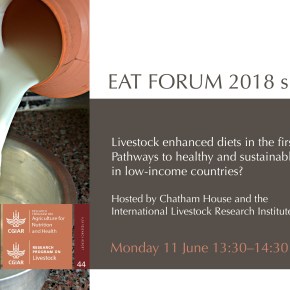
This year’s EAT 2018 Stockholm Food Forum (11–12 Jun 2018) explores ways to achieve healthy and sustainable diets for a growing global population. On Monday, 11 Jun 2018, Chatham House and ILRI will host a side event around the findings of an evidence review on the influence of livestock-derived foods—meat, milk and eggs—on the nutrition of women and of children during their first 1,000 days of life, from conception to age two. Continue reading
Why milk, meat and eggs can make a big difference to the world’s most nutritionally vulnerable people
Opinion piece by ILRI scientist Silvia Alonso on the ILRI-Chatham House report on the importance of livestock-derived foods in the first 1,000 days of life. Continue reading
Meat, milk, eggs can make a big difference in the first 1,000 days of life in low-income countries—New report
An extensive review of research found demonstrable nutritional benefits of providing children, particularly in countries in Africa and South Asia where undernutrition is highest, with livestock-derived foods such as meat, milk and eggs. Consumption of livestock-derived foods was typically found to be very low among poor families in those countries. The influence of livestock-derived foods on nutrition during the first 1,000 days of life, published by the International Livestock Research Institute (ILRI) and Chatham House, also concluded that it was possible to meet the nutritional needs of the most vulnerable through livestock-derived produce even if total global livestock production slowed down. Continue reading
Shirley Tarawali on convergence in consumption of milk, meat, eggs at the Global Forum for Food and Agriculture
Shirley Tarawali’s keynote presentation at a GFFA expert panel session focused on Food of animal origin: Demand and diversity. She said that global demand for livestock-derived foods is changing both in quantities—with demand flattening in rich countries but increasing in low- and middle-income countries—and in qualities, varying by region and commodity, and that meeting that rising demand for livestock-derived foods ‘sustainably, responsibly and efficiently’ requires two main things—(1) moderating the demand, wasting less, producing more and improving production efficiency while also (2) taking account of the diversity of livestock systems and producers to maximize opportunities to address the United Nation’s 17 Sustainable Development Goals. Continue reading
Lora Iannotti on livestock and animal-source foods at Berlin’s Global Forum for Food and Agriculture
Lora Iannotti described the role of animal-source foods in human nutrition. Iannotti, associate dean for public health at the Brown School at Washington University, in St Louis, Missouri, has considerable expertise in maternal and young child nutrition and nutrient deficiencies. Continue reading