Vaccinating farm animals helps drive up disposable incomes
AHH / Article / Corporate Report / ILRI / Kenya / PIL / Scaling / Spotlight / Tanzania / Vaccines

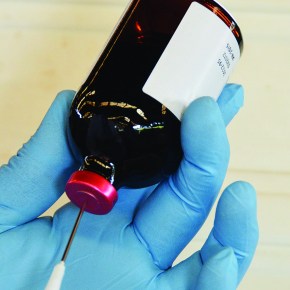
Vaccinating farm animals helps drive up disposable incomes

East Coast fever causes annual losses estimated at more than USD300 million and more than one million cattle deaths. Recent research-for-development approaches have accelerated the uptake of the ITM vaccine and demonstrated how its use is driving increased incomes for small-scale livestock farmers in Kenya and Tanzania. Continue reading

Improving control of a chicken disease supports the livelihoods of Kenya’s women
Africa / Article / BecA / Chickens / Corporate Report / ILRI / Kenya / Spotlight / Vaccines

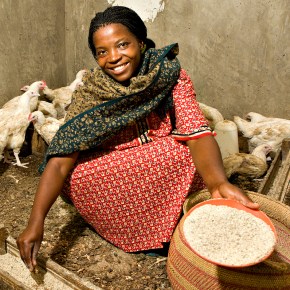
Improving control of a chicken disease supports the livelihoods of Kenya’s women

Poultry farming in Kenya is growing rapidly and remains largely dominated by women, who typically invest most of their earnings in feeding their families and educating their children. That is why controlling major poultry diseases is so important. Continue reading

The Women’s Empowerment in Livestock Index: Indicators for the start of a global, badly needed, conversation
Agriculture / East Africa / Gender / Impact Assessment / Livelihoods / Livestock / LIVESTOCKCRP / PIL / Pro-Poor Livestock / Research / Science paper / Spotlight / Tanzania / Women

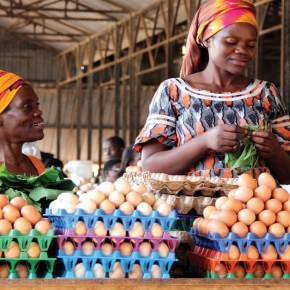
The Women’s Empowerment in Livestock Index: Indicators for the start of a global, badly needed, conversation

Recently, a team of scientists at the International Livestock Research Institute (ILRI), led by anthropologist Alessandra Galiè, in collaboration with Emory University, developed the Women’s Empowerment in Livestock Index (WELI), a new index to assess the empowerment of women in production systems in which livestock are important. Continue reading

ILRI corporate report 2016–2017 now available: Investing in sustainable development
Advocacy / CGIAR / Corporate Report / Directorate / Livestock / Spotlight

ILRI corporate report 2016–2017 now available: Investing in sustainable development

Rising demand for milk, meat and eggs in developing countries is opening up big new opportunities to establish and grow businesses and create jobs. While rapidly changing livestock systems pose a range of environmental, health and equity challenges across the highly heterogeneous livestock production systems worldwide, targeted investment in sustainable livestock research for development can produce more food, increase resilience in communities and the environment, and drive equitable and broad-based economic growth. Helping to ensure that hundreds of millions of poor small-scale livestock farmers, processors and marketers, many of whom are women, benefit from these opportunities will be crucial to achieving many of United Nations Sustainable Development Goals (SDGs). Continue reading

Introducing English and Swahili instructional videos on the patterns, signs, symptoms and control of Rift Valley fever
AHH / Animal Health / Cattle / Disease Control / Drylands / East Africa / Emerging Diseases / Epidemiology / Film and Video / Human Health / ILRI / Kenya / News clipping / Policy / RVF / Sheep / Spotlight / Vaccines

Introducing English and Swahili instructional videos on the patterns, signs, symptoms and control of Rift Valley fever

Originally posted on ILVAC:
Written by Bernard Bett Several outbreaks of Rift Valley fever in livestock and people have occurred in eastern Africa over the last three months or so. In the first week of June 2018, local media reported at least five fatal human cases in Kenya’s northern Wajir County. More suspected cases in…

Livestock-enhanced diets in the first 1,000 days of life: Pathways to better futures in low-income countries
A4NH / Advocacy / Agri-Health / AHH / Animal Products / Consumption / Food Security / Human Health / ILRI / Launch / LIVESTOCKCRP / Nutrition / Policy / Poverty / Presentation / Spotlight / Vulnerability / Women

Livestock-enhanced diets in the first 1,000 days of life: Pathways to better futures in low-income countries

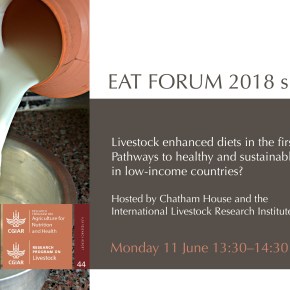
A new report was published this month on the value of ensuring consumption of meat, milk and eggs by infants up to two years of age and by expectant and new mothers in developing countries (the first 1,000 days). The report was published by ILRI and the Chatham House Centre on Global Health Security. Highlights of the findings of this joint ILRI-Chatham livestock study were presented at a side event at the EAT Stockholm Food Forum on 11 Jun 2018. Continue reading

Can livestock-enhanced diets of the poor in the first 1,000 days of life lead to healthy and sustainable futures?
A4NH / Advocacy / Agri-Health / AHH / Consumption / Food Security / GLAD / ILRI / Launch / LIVESTOCKCRP / Nutrition / Policy / Pro-Poor Livestock / Research / Spotlight / Women

Can livestock-enhanced diets of the poor in the first 1,000 days of life lead to healthy and sustainable futures?

This year’s EAT 2018 Stockholm Food Forum (11–12 Jun 2018) explores ways to achieve healthy and sustainable diets for a growing global population. On Monday, 11 Jun 2018, Chatham House and ILRI will host a side event around the findings of an evidence review on the influence of livestock-derived foods—meat, milk and eggs—on the nutrition of women and of children during their first 1,000 days of life, from conception to age two. Continue reading

How closing livestock yield gaps can enhance incomes, food security and the environment in Ethiopia and India
Animal Feeding / Animal Health / Animal Production / Dairying / East Africa / Ethiopia / Feeds / ILRI / India / Markets / Policy / Pro-Poor Livestock / Report / South Asia / Spotlight / Vaccines

How closing livestock yield gaps can enhance incomes, food security and the environment in Ethiopia and India

Estimates of livestock yield gaps are not available and these are necessary for developing feasible scenarios of how the production of different livestock commodities might evolve in the future, how systems might change and what would be the resource use implications and their costs, both for donors and for public and private entities in target countries. Continue reading

Why milk, meat and eggs can make a big difference to the world’s most nutritionally vulnerable people
A4NH / Advocacy / Agri-Health / AHH / Consumption / Food Security / Gender / GLAD / Human Health / ILRI / Nutrition / Opinion Piece / Policy / Spotlight / Women

Why milk, meat and eggs can make a big difference to the world’s most nutritionally vulnerable people

Opinion piece by ILRI scientist Silvia Alonso on the ILRI-Chatham House report on the importance of livestock-derived foods in the first 1,000 days of life. Continue reading

Meat, milk, eggs can make a big difference in the first 1,000 days of life in low-income countries—New report
A4NH / Advocacy / AHH / Consumption / Food Security / Gender / GLAD / Human Health / ILRI / Nutrition / Policy / Report / Spotlight / Women

Meat, milk, eggs can make a big difference in the first 1,000 days of life in low-income countries—New report

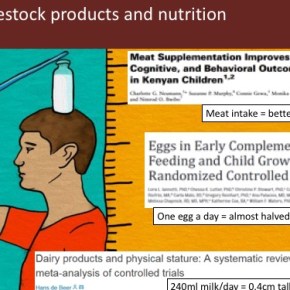
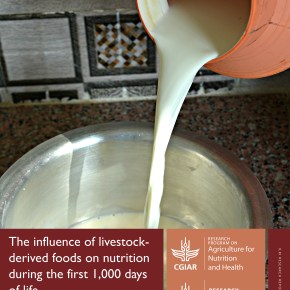
An extensive review of research found demonstrable nutritional benefits of providing children, particularly in countries in Africa and South Asia where undernutrition is highest, with livestock-derived foods such as meat, milk and eggs. Consumption of livestock-derived foods was typically found to be very low among poor families in those countries. The influence of livestock-derived foods on nutrition during the first 1,000 days of life, published by the International Livestock Research Institute (ILRI) and Chatham House, also concluded that it was possible to meet the nutritional needs of the most vulnerable through livestock-derived produce even if total global livestock production slowed down. Continue reading