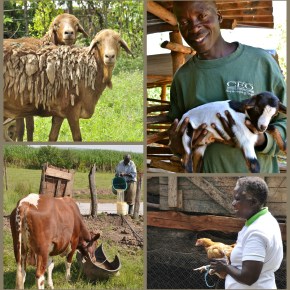
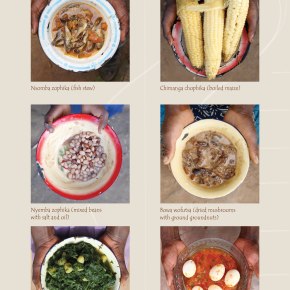
Common foods of Khulungira village, in central Malawi: Nsomba zophika (fish stew), chimanga chophika (boiled maize), nyemba zophika (mixed beans with salt and oil), bowa wofutsa (dried mushrooms with ground groundnuts), nkhwani wophatikiza ndi maungu anthete ndi kachewere wophika (pumpkin leaves, pumpkin blossoms and potatoes) and mazira ophika ndi phwetekere, anyezi, mafuta ndi mchere (boiled … Continue reading
Tag Archives: BMGF
What we talk about when we talk about ‘evidence-based’ advocacy communications
This year, a group of staff of the International Livestock Research Institute (ILRI) has started to think through more intentionally, and with more discipline, than before kinds of communications likely to be most effective in influencing decision-makers in livestock development. The latter is one of ILRI’s three strategic long-term goals (the other two are changing practices and increasing capacity)—but this is still relatively new territory for the research institute. Continue reading
Tanzania’s ‘Livestock Master Plan’ kicks off with a one-year training program for government officials
Eight staff from Tanzania’s Ministry of Livestock and Fisheries Development are undergoing a 14-month training and planning program assisted by experts from the International Livestock Research Institute (ILRI) with funding from the Bill & Melinda Gates Foundation. Continue reading
Towards more productive dairy cattle for Africa’s smallholders
Improving the genetic makeup of Africa’s dairy cattle has the potential increase farmer productivity and profitability, hence transform the lives of millions of dairy families across Africa. This latest program, African Dairy Genetic Gains (ADGG) program, led by the International Livestock Research Institute (ILRI), offers real opportunities to help smallholders improve their lives through livestock. It also contributes to ILRI’s global livestock genetics program—LiveGene. Continue reading
Climate-smart livestock farming in developing countries is boosted by a £10-million research award
Researchers at the Roslin Institute will be using funds from the Bill & Melinda Gates Foundation to investigate how genetic information can improve the health and productivity of farmed animals in tropical climates, which is a proven approach to climate change mitigation and adaptation. The Centre for Tropical Livestock Genetics and Health is an alliance between the Institute at the University of Edinburgh, Scotland’s Rural College (SRUC) and the Africa-headquartered International Livestock Research Institute (ILRI). The partner institutions are making additional contributions with a value of £10 million to support the initiative over the next five years. Continue reading
Animal breeding and genetics in the Ethiopia livestock master plan
High population growth and rising living standards are putting pressure on Ethiopia’s livestock owners to increase the productivity of their animals. Improving the genetic potential of the country’s livestock is one of the keys—with better feeds and better health—to achieving food and nutrition security, and better lives through livestock. This latest research brief by ILRI and the Ministry of Agriculture (MoA), Animal breeding and genetics in the Ethiopia livestock master plan, outlines how quick-win genetic-based technologies—including artificial insemination (AI) with oestrous synchronization and community-based schemes to improve indigenous breeds as well—can significantly contribute to transformed value chains for cattle, small ruminants and poultry. Continue reading
Ethiopia livestock master plan: Livestock health priorities
Improved animal health services could hugely increase livestock productivity and the earnings of livestock keepers. As part of the Ethiopia livestock master plan, an analysis of animal health by the Livestock State Ministry (LSM) and ILRI outline the steps needed to transform the livestock sector, published as the latest ILRI brief: Livestock health priorities in the Ethiopia livestock master plan. Continue reading
Creating an enabling environment for livestock development in Ethiopia
Despite significant progress in increasing livestock production in Ethiopia, analysis of livestock production and consumption by the Livestock State Ministry (LSM) and ILRI show a huge shortfall in the supply of livestock products. Detailed interdisciplinary research provides clear empirical evidence of the potential benefits of a comprehensive livestock master plan (LMP) for Ethiopia. In the absence of investment, these gaps will grow, causing food insecurity and other important economic and social repercussions. Continue reading
Ethiopia livestock master plan: Feed priorities
Investment in livestock agriculture in Ethiopia has the potential to halve poverty, improve the food security of rural people and make livestock an increasing contributor to GDP growth. The Ethiopia livestock master plan (LMP) sets out ambitious year 2020 targets for several livestock value chains—crossbred dairy cows, red meat-milk and feedlot, and poultry. The 2020 targets aim to increase meat, milk and egg production by 58%, 83% and 828% respectively above 2012/2013 totals. Continue reading
UK chief scientific adviser visits Kenya: Part 1—Legacy of British-ILRI partnerships in animal health research
There has been a long-term, consistent and highly productive engagement between research institutions and funding bodies of the United Kingdom and the International Livestock Research Institute (ILRI) and its predecessors, the International Laboratory for Research on Animal Diseases (ILRAD) and the International Livestock Centre for Africa (ILCA). Continue reading