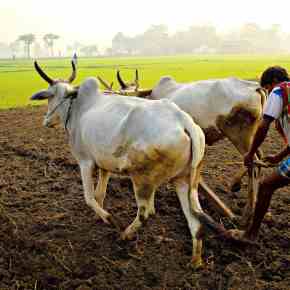
Fritz Schneider, chair of the Global Agenda for Sustainable Livestock (GASL), gave a short overview of livestock and the UN’s Sustainable Development Goals at GFFA. Continue reading
Category Archives: Consumption
Sustainable livestock futures—BMZ, GIZ and ILRI at the Global Forum for Food and Agriculture this week
For several days this week (18–20 Jan 2018), several scientific directors and staff of the International Livestock Research Institute (ILRI)—Jimmy Smith, Shirley Tarawali, Dieter Schillinger, Lutz Merbold and Kristina Roesel—will be participating with several ILRI partners in the Global Forum for Food and Agriculture (GFFA), held in Berlin, Germany. This annual German three-day international conference focuses on the future of the global agri-food industry. Now in its tenth year, the GFFA in 2018 is focusing on Shaping the Future of Livestock—Sustainably, Responsibly, Efficiently. Continue reading
A 360-degree ‘immersive dive’ into Uganda’s smallholder pig sector
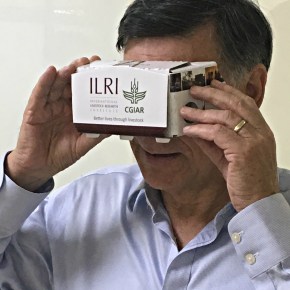
As part of ILRI’s quest to pilot new technologies for better communication of its work, the institute’s Capacity Development Unit recently worked with scientific and staff based in Uganda to produce CGIAR’s first-ever 360-degree video, which offers glimpses into an ordinary day in the life of a Ugandan pig farmer, trader and consumer. Continue reading
Livestock in developing countries—Misperceptions, facts and consequences
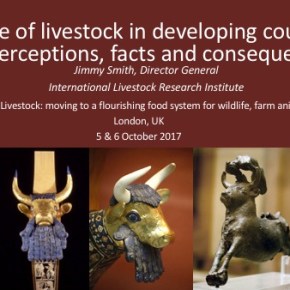
Jimmy Smith, the director general of the International Livestock Research Institute (ILRI), is in London today (5 Oct 2017), speaking at an Extinction and Livestock Conference organized by Compassion in World Farming and the World Wildlife Fund. Continue reading
Hanoi workshop held on providing safer pork products in Vietnam
A two-day workshop, 7–8 Sep 2017, on the topic of ‘Improving food safety along the pork value chain—lessons learned and ways forward’. The workshop consisted of two parts: (1) the closing of a project on ‘Reducing disease risks and improving food safety in smallholder pig value chains in Vietnam’, known as PigRISK, and (2) the launching of a project on ‘Market-based approaches to improving the safety of pork in Vietnam’, known as SafePORK Continue reading
From livestock smallholders to ‘smartholders’: Nurturing development with animal-source foods
Scientists from across the globe gathered at the University of Florida’s Institute of Food and Agricultural Sciences on 29–30 Mar 2017 to discuss ways to improve nutrition through animal-source foods in some of the most impoverished regions in the world. Chronically affecting 24 per cent of the world’s children, roughly 159 million in 2014, malnutrition is responsible for almost half of all child deaths worldwide. Jimmy Smith, director general of ILRI, was one of the keynote speakers at the opening of the Global Nutrition Symposium, the theme of which was ‘Nurturing development: Improving human nutrition with animal-source foods’. Continue reading
Vietnam launches report on better managing risks to food safety
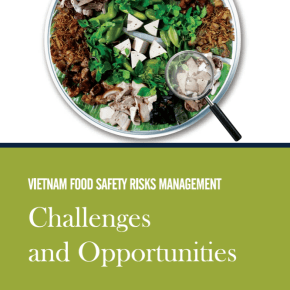
A report launched this week on managing risks to food safety in Vietnam was prepared by the World Bank and other research and development partners at the request of the Government of Vietnam. The International Livestock Research Institute (ILRI) was the lead technical partner in development of the report. Food Safety Risk Management in Vietnam: Challenges and opportunities was launched on 27 Mar 2017. Continue reading
A deep dive inside Vietnam’s pork foodshed to determine food safety issues and their practical resolutions
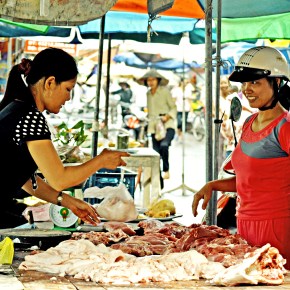
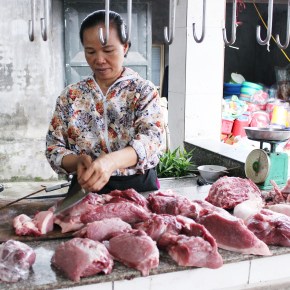
Pork meat sold in Vietnam has been found by researchers to commonly carry bacteria that could cause disease—but they also found that the risk of that meat sickening people is largely reduced due to the Vietnamese habit of buying very fresh meat and cooking it shortly thereafter. The research results indicate ways that the safety of pork meat can be even further improved in this fast-growing and -evolving market. The bottom line is that ensuring safe pork consumption in Vietnam is very important—and very doable. Continue reading
Making livestock foods safe—Lessons from Vietnam on what works—and what doesn’t
The experiences of developed countries, which now have relatively safe food, is that command-and-control approaches to food safety, which rely mainly on inspection and punishment, are less effective than approaches in which stakeholders are empowered and encouraged to self-regulate, motivated by the realisation that this is more profitable in the long term. Continue reading
Livestock environmental ‘hoofprints’: Five fast facts to remember—Shirley Tarawali at ‘Farming First’
In this guest post, originally published by Farming First, Shirley Tarawali, assistant director general of the International Livestock Research Institute (ILRI), takes a closer look at livestock’s impact on the environment, and what is being done to manage its environmental ‘hoofprint’. Continue reading