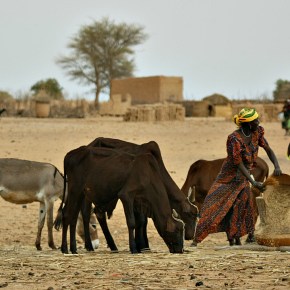
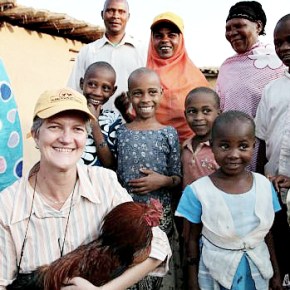
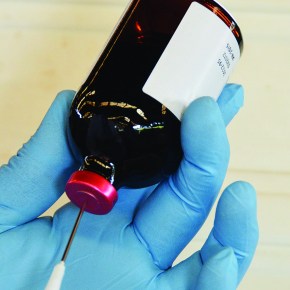
East Coast fever causes annual losses estimated at more than USD300 million and more than one million cattle deaths. Recent research-for-development approaches have accelerated the uptake of the ITM vaccine and demonstrated how its use is driving increased incomes for small-scale livestock farmers in Kenya and Tanzania. Continue reading
Category Archives: PIL
Policies, Institutons and Livelihoods program
The Women’s Empowerment in Livestock Index: Indicators for the start of a global, badly needed, conversation
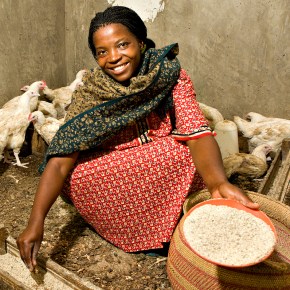
Recently, a team of scientists at the International Livestock Research Institute (ILRI), led by anthropologist Alessandra Galiè, in collaboration with Emory University, developed the Women’s Empowerment in Livestock Index (WELI), a new index to assess the empowerment of women in production systems in which livestock are important. Continue reading
Ethiopia sets out the futures for its growing poultry, dairy and meat subsectors
A new livestock sector analysis from the Ethiopia’s Livestock State Ministry (LSM) and Ministry of Livestock and Fisheries (MoLF) and the International Livestock Research Institute (ILRI) was recently published. This work was funded by the Bill & Melinda Gates Foundation (BMGF) to help Ethiopia in its fact-based planning. Continue reading
A 360-degree ‘immersive dive’ into Uganda’s smallholder pig sector
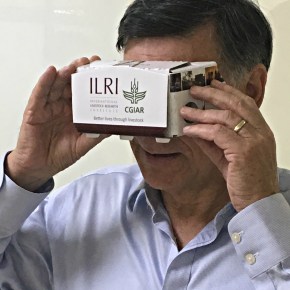
As part of ILRI’s quest to pilot new technologies for better communication of its work, the institute’s Capacity Development Unit recently worked with scientific and staff based in Uganda to produce CGIAR’s first-ever 360-degree video, which offers glimpses into an ordinary day in the life of a Ugandan pig farmer, trader and consumer. Continue reading
Tanzania livestock master plan projects the creation of nearly two million jobs
Development assistance has long since slipped down in the agenda of African officials. With rapid economic growth forecast, priorities now focus on increasing productivity and investment. And in Tanzania, where approximately 37% of the rural households possess cattle, chicken, goats, pigs and sheep, livestock is officially at the centre of that debate. Continue reading
Beyond meat and methane—Advocating for sustainable livestock production
A Global Livestock Advocacy for Development (GLAD) project is distilling evidence around livestock ‘goods’ and ‘bads’, reaching out to UN and other global policy processes and events, engaging global media and developing a group of champions—individuals capacitated to make the case for sustainable livestock. Continue reading
Capitalizing on women in livestock development—ILRI’s Jimmy Smith and Isabelle Baltenweck speak out
A recent opinion piece on women and livestock was written by Isabelle Baltenweck, an agricultural economist and deputy leader of ILRI’s Policies, Institutions and Livelihoods program. Her piece was published by the Thomson Reuters Foundation News. Continue reading
Lessons learnt out of Africa: 19 factors not to underestimate in rural livestock/agricultural research for development
Robyn Alders gave a particularly candid and interesting presentation at a seminar/webinar held on 4 May 2017 at ILRI on the subject of ‘Animal-source foods for nutrition impact: Evidence and good practices for informed project design’. This was the fourth in a Livestock and Household Nutrition Learning Series of seminars/webinars organized jointly by Land O’Lakes International Development and ILRI. Continue reading
Milk consumption project to tackle child malnutrition in Rwanda
A new ILRI-led Feed the Future Livestock Systems Innovations Lab (LSIL) project on ‘Enhancing milk quality and consumption for improved income and nutrition in Rwanda’ will contribute to efforts towards enhancing the quality and consumption of milk for improved income and nutrition in the country Continue reading
Uganda research-for-development work is helping to transform the country’s growing smallholder pig sector
The focus of the government of Uganda is to transform agriculture from subsistence to commercially oriented systems. The work being done by ILRI resonates with government’s objectives Continue reading