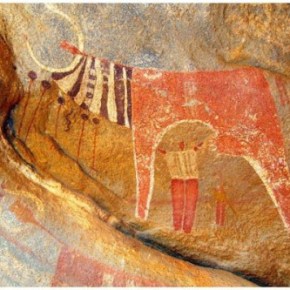
Cattle and figures, Laas Geel cave complex, Somaliland, Somalia. This opinion piece is written by Alain Vidal, director of strategic partnerships at CGIAR. Our global food production system—which includes, in addition to crop farming, raising livestock and deforesting lands to grow livestock feed and other crops—is responsible for about a quarter of the greenhouse gases produced … Continue reading
Category Archives: Livestock
No longer business as usual: Improved feeds transforming dairying in Zimbabwe
Farmers participating in the Zimbabwe Crop-Livestock Integration for Food Security (ZimCLIFS) project have increased their gross margins by up to 70%. The ongoing food security improvement project is targeting the country’s dairy farmers to help improve feed farming and overall dairy production. Continue reading
A couple of ‘missings’ for the Paris climate talks
In the days leading up to the start of the climate change talks in Paris (COP21) this week (30 Nov–11 Dec 2015), we at the International Livestock Research Institute (ILRI) have been busy responding to recent articles in the press advocating that ‘the world’ eat less meat to reduce greenhouse gases and other livestock ‘bads’. … Continue reading
Processing African cassava peels, potentially a billion dollar business
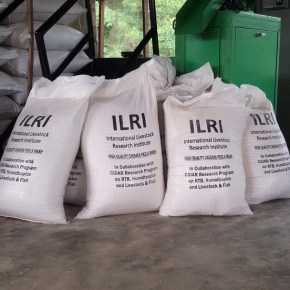
With livestock production expected to more than double in the next 40 years, transforming cassava peels into high quality feed holds huge potential for African economies struggling to meet rapidly rising demand for animal-source products, according to research proposal recently published by three CGIAR centres. Continue reading
What’s driving Ethiopia’s fast development? Millions of smallholder farmers, of course
Industrialization is key to economic development, and agriculture—supplying raw materials for processing and value addition—is an essential component of that process. Comprising more than 40% of national GDP and producing the overwhelming majority of the Ethiopia’s food, smallholder farmers are at the centre of the country’s recent economic success. So declared the director general of the International Livestock Research Institute (ILRI), Jimmy Smith, in an agriculture panel discussion, this week, organized by the Economist magazine and held at the Sheraton Hotel in Addis Ababa. Continue reading
ILRI’s Corporate Report 2014–2015 is out: Twenty-one stories of better lives through livestock
The board of trustees, management, scientists and support staff of the International Livestock Research Institute (ILRI) take pleasure in announcing publication of the institute’s corporate report for 2014 and 2015. Continue reading
Unlocking the potential of Africa to scale livestock development, high-level conference
Improved livestock genetics, health and feed—guided by policies geared towards enabling a sustainable and business-friendly environment—are key to unlocking the potential of agriculture in Africa, Continue reading
The sharp divide: Do we need animals to feed this world?
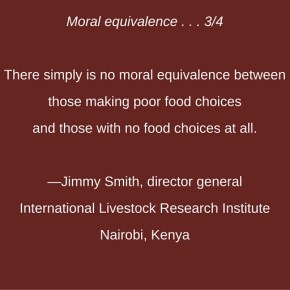
Livestock, the fastest-growing, highest-value and a highly controversial agriculture sector, is at a crossroads. Following a new set of 17 sustainable development goals, the current and potential roles of livestock systems in food and nutrition security and other aspects of sustainable development, including the environment, human health and livelihoods, continue to be debated. Opinions are sharply divided in the industrialized world between those who consider animals to be more part of the solution and those who consider them to be more part of the problem. Continue reading
Animal breeding and genetics in the Ethiopia livestock master plan
High population growth and rising living standards are putting pressure on Ethiopia’s livestock owners to increase the productivity of their animals. Improving the genetic potential of the country’s livestock is one of the keys—with better feeds and better health—to achieving food and nutrition security, and better lives through livestock. This latest research brief by ILRI and the Ministry of Agriculture (MoA), Animal breeding and genetics in the Ethiopia livestock master plan, outlines how quick-win genetic-based technologies—including artificial insemination (AI) with oestrous synchronization and community-based schemes to improve indigenous breeds as well—can significantly contribute to transformed value chains for cattle, small ruminants and poultry. Continue reading
Ethiopia livestock master plan: Livestock health priorities
Improved animal health services could hugely increase livestock productivity and the earnings of livestock keepers. As part of the Ethiopia livestock master plan, an analysis of animal health by the Livestock State Ministry (LSM) and ILRI outline the steps needed to transform the livestock sector, published as the latest ILRI brief: Livestock health priorities in the Ethiopia livestock master plan. Continue reading