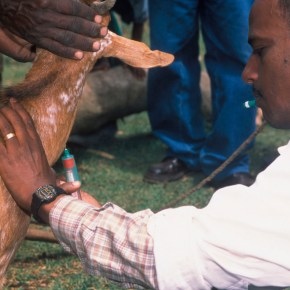
Twenty organizations, including ILRI, made up the Dynamic Drivers of Disease in Africa Consortium, which from 2012 to 2015 coordinated research exploring the relations among African ecosystems and zoonotic diseases—those transmitted between animals and people—that impinge on ecosystem, human and animal wellbeing. Continue reading

Category Archives: Animal Diseases
Reverse vaccinology identifies candidates for an improved vaccine against cattle pneumonia in Africa
We used a reverse vaccinology approach to identify 66 Mmm potential vaccine candidates. The selection and grouping of the antigens was based on the presence of specific antibodies in sera from CBPP-positive animals. The antigens were used to immunize male Boran cattle (Bos indicus) followed by a challenge with the Mmm strain Afadé. Continue reading
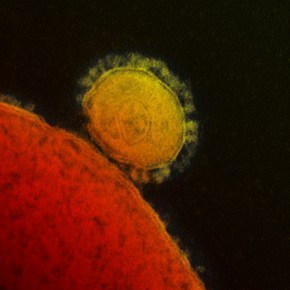
MERS-CoV antibodies found in two people in eastern Kenya
A new study published in the science journal Emerging Infectious Diseases reports that two individuals in Kenya have tested positive for the presence of antibodies to Middle East Respiratory Syndrome Corona Virus (MERS-CoV). Neither person is ill nor do they recall having any symptoms associated with MERS. There is no evidence of a public health threat and scientists concluded that the infections caused little or no clinical signs of illness. But they plan follow-up studies, as this is the first indication of a MERS-CoV infection that is not connected to primary infections in the Middle East. Continue reading
Vaccine development breakthrough for Rift Valley fever—new Nature Scientific Reports paper
With colleagues from the Jenner and Pirbright institutes in the UK, Nairobi’s Strathmore University and institutions in Saudi Arabia and Spain, scientists and technicians in a vaccine biosciences program of the International Livestock Research Institute (ILRI) in Nairobi, Kenya, have recently published a paper in Nature announcing a breakthrough in development of a ‘One Health’ vaccine that could protect both people and livestock from Rift Valley fever. Continue reading
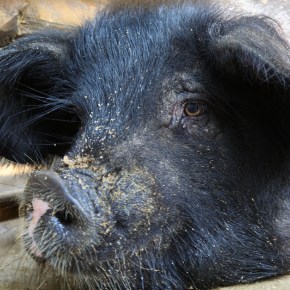
Vaccination proclamation: India protects the neglected ’living assets’ of its remote pig farmers
ILRI research to better control classical swine fever, also called hog cholera and pig plague, a highly contagious viral disease of pigs of all ages, usually killing the animals within two weeks of infection. The disease is endemic in the states of northeast India, where pig husbandry and meat eating are ubiquitous among the tribal communities that inhabit this remote region, isolated from the rest of India except through a slender corridor flanked by foreign territories. This article, one of a series being posted on the ILRI News blog, is one of 21 stories published in the ILRI Corporate Report 2014–2015, which you’ll find here: http://hdl.handle.net/10568/68631 Continue reading
Some of ILRI’s top livestock slide presentations in 2015
A few of the top livestock slide presentations made by ILRI staff in 2015 Continue reading
A look back at some of ILRI’s top livestock stories of 2015
Links to some of ILRI’s top stories of 2015 Continue reading
Is the ‘Third Epidemiological Transition’ upon us?
Zoonoses—diseases transferred from animals to humans—have been with humanity throughout history. But today’s growing scale of livestock production in developing countries to feed their fast-growing and fast-urbanizing populations is sparking debate about whether the livestock sector is contributing to a fundamental a shift in global disease mortality, something known as an ‘epidemiological transition’. If so, it would be the third such transition in human history. Continue reading
Ethiopia livestock master plan: Livestock health priorities
Improved animal health services could hugely increase livestock productivity and the earnings of livestock keepers. As part of the Ethiopia livestock master plan, an analysis of animal health by the Livestock State Ministry (LSM) and ILRI outline the steps needed to transform the livestock sector, published as the latest ILRI brief: Livestock health priorities in the Ethiopia livestock master plan. Continue reading
‘Soft’ science at ILRAD/ILRI: A lively look back at three decades of veterinary epidemiology for development
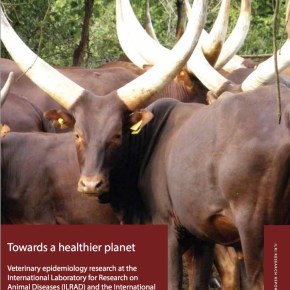
For almost thirty years, the International Laboratory for Research on Animal Diseases (ILRAD) then ILRI benefited from a strong research program in the epidemiological sciences. Over time, it progressively broadened its coverage in disease, disciplinary and geographic terms. The results of this work have now been assembled in this impact narrative, which carefully documents the wide range of issues addressed by the teams of researchers, and presents them in an illustrated and highly readable format. Continue reading