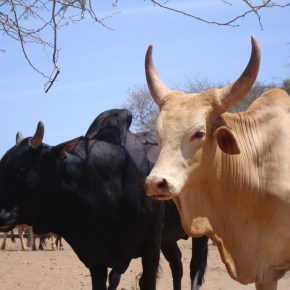
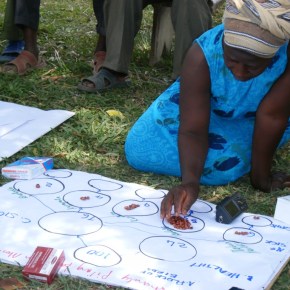
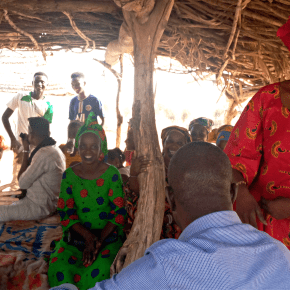
I’m a gender researcher working on a project to control peste des petits ruminants (PPR). I have wondered what our international agricultural research would be like if we researchers and the farmers/herders we work with and for could all understand each other perfectly. Continue reading
Category Archives: Disease Control
New project to improve agricultural productivity in Zimbabwe
A new European Union-funded ‘Livestock Production Systems in Zimbabwe’ (LIPS-Zim) project is working to increase agricultural productivity in the country’s agro-ecological Zones IV and V. It is promoting the adoption of climate-relevant innovations in livestock production systems and improving surveillance and control of livestock diseases. Launched on 1 January 2020, the LIPS-Zim project is implemented … Continue reading
A One-Health approach is needed to protect both people and the planet—ILRI and UNEP leaders
Op-ed by ILRI’s Jimmy Smith and UNEP’s Inger Andersen arguing that human health, animal health and environmental health are inextricably linked, originally published in the Mail & Guardian (South Africa). Continue reading
Joint UN-CGIAR assessment explains how animal-to-human pandemics like COVID-19 occur and how to prevent them in future
A scientific assessment from the UN Environment Programme (UNEP) and ILRI finds that unless countries take dramatic steps to curb zoonotic contagions, global outbreaks like COVID-19 will become more common. The assessment, Preventing the next pandemic: Zoonotic diseases and how to break the chain of transmission, published on 6 July, describes how 60 per cent of the 1,400 microbes known to infect humans originated in animals. Continue reading
Unite human, animal and environmental health to prevent the next pandemic, says ILRI/UN report
The ‘Preventing the next pandemic: zoonotic diseases and how to break the chain of transmission,’ report is a joint effort by the United Nations Environment Programme (UNEP) and ILRI. Continue reading
World’s largest public agricultural research network launches COVID-19 Hub to support global scientific response
The CGIAR COVID-19 Hub, coordinated by CGIAR, the world’s largest publicly funded agricultural research network, in collaboration with the London School of Hygiene & Tropical Medicine (LSHTM), will bring together the latest science on agriculture and health to inform a research-based response to the pandemic. The Hub will compile relevant work from across the CGIAR system and partners around the world as well as share future breakthroughs and identify opportunities for new research. Continue reading
Woman veterinarian pioneers public-private partnership to improve veterinary service delivery in Ethiopia
To ensure better and rationalized veterinary service delivery that addresses local needs, the Health of Ethiopian Animals for Rural Development (HEARD) project has established public-private partnership task forces in Ethiopia’s Amhara, Oromia and Somali regions. Continue reading
Expanding capacity for participatory disease surveillance in Uganda
In an effort to support animal disease surveillance in Uganda, Vétérinaires Sans Frontières (VSF) Germany in collaboration with the Ministry of Agriculture, Animal Industry and Fisheries (MAAIF) and the International Livestock Research Institute (ILRI), facilitated a five-day participatory disease surveillance training of 48 animal health experts in Uganda on 9-13 March 2020. Continue reading
A bridge not too far: To prevent pandemics, close the human and animal health divide
Veterinarians as well as wildlife biologists, livestock farmers, and zookeepers remain a largely untapped resource for combatting diseases that threaten people. Continue reading
Diagnostic tests for COVID-19: How useful are they?
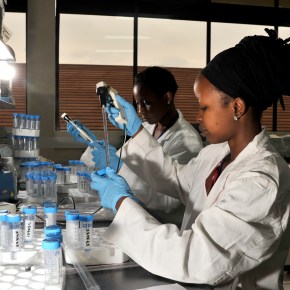
PCR tests can accurately detect viral RNA in an individual only during the acute phase of the infection. After this short window passes, other tests are needed to determine if an individual has ever been exposed to the virus in the past. There is a critical need for these other tests, which detect antibodies made to specific viruses and other pathogens. These ‘serological assays’ complement the PCR test and are an essential tool in better managing the ongoing pandemic. Continue reading