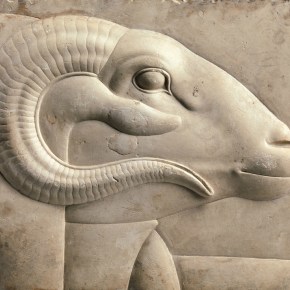
A new study offers novel insights into rapid genomic adaptations to extreme environments in sheep and other animals and provides a valuable resource for future research on livestock breeding in response to climate change. Continue reading
Category Archives: Genetics
Balancing the plate: Jimmy Smith opens ‘Private Sector Mechanism Partnerships Forum on Livestock’
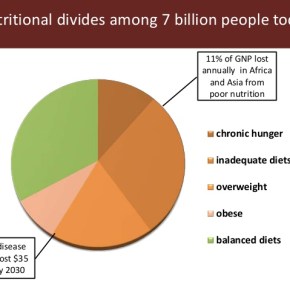
Private-Sector Mechanism Partnerships Forum on Livestock, 30 June 2016, IFAD, Rome: Luncheon on the ‘Zero Hunger Challenge’, Keynote address, ‘Balancing the Plate’, by Jimmy Smith, Continue reading
Elite cultivars of the livestock feeding kind–‘FORAGES for the FUTURE’
Just announced: Publication of the first issue of a newsletter produced by the Global Crop Diversity Trust that is a first step in fulfilling on a new strategy for tropical and subtropical forage diversity and use. Continue reading
Culture of the cow: Curds in the city—Better living through smallholder dairying in northern India
This is the third in a series of articles on ‘Curds and goats, lives and livelihoods—A dozen stories from northern and eastern India’. Continue reading
Elite buffaloes and other exemplars of advanced Indian dairy science at the National Dairy Research Institute
Shrestha, a spirited buffalo bull, greeted Jimmy Smith, director general of the International Livestock Research Institute (ILRI), with a low grunt during a visit Smith and his delegation recently made at the National Dairy Research Institute (NDRI), India’s pre-eminent dairy research centre, located in the northern city of Karnal and the prosperous state of Haryana. Continue reading
Towards more productive dairy cattle for Africa’s smallholders
Improving the genetic makeup of Africa’s dairy cattle has the potential increase farmer productivity and profitability, hence transform the lives of millions of dairy families across Africa. This latest program, African Dairy Genetic Gains (ADGG) program, led by the International Livestock Research Institute (ILRI), offers real opportunities to help smallholders improve their lives through livestock. It also contributes to ILRI’s global livestock genetics program—LiveGene. Continue reading
Climate-smart livestock farming in developing countries is boosted by a £10-million research award
Researchers at the Roslin Institute will be using funds from the Bill & Melinda Gates Foundation to investigate how genetic information can improve the health and productivity of farmed animals in tropical climates, which is a proven approach to climate change mitigation and adaptation. The Centre for Tropical Livestock Genetics and Health is an alliance between the Institute at the University of Edinburgh, Scotland’s Rural College (SRUC) and the Africa-headquartered International Livestock Research Institute (ILRI). The partner institutions are making additional contributions with a value of £10 million to support the initiative over the next five years. Continue reading
Why communicate agricultural science to non-specialists? A brief for livestock geneticists
At a recent workshop co-hosted by an NGO called Biosciences for Farming in Africa (B4FA) and the International Livestock Research Institute (ILRI), in Nairobi, Kenya, ILRI communications staff Susan MacMillan made a short presentation on why the 20-plus animal geneticists in the room should bother communicating their science to non-specialists. The big picture ‘A … Continue reading
Animal breeding and genetics in the Ethiopia livestock master plan
High population growth and rising living standards are putting pressure on Ethiopia’s livestock owners to increase the productivity of their animals. Improving the genetic potential of the country’s livestock is one of the keys—with better feeds and better health—to achieving food and nutrition security, and better lives through livestock. This latest research brief by ILRI and the Ministry of Agriculture (MoA), Animal breeding and genetics in the Ethiopia livestock master plan, outlines how quick-win genetic-based technologies—including artificial insemination (AI) with oestrous synchronization and community-based schemes to improve indigenous breeds as well—can significantly contribute to transformed value chains for cattle, small ruminants and poultry. Continue reading
New DNA analysis of Asian sheep reveals unique diversity crucial to contemporary food and climate concerns
At a time when the price of mutton is climbing and wool crashing, a groundbreaking new study has used advanced genetic sequencing technology to rewrite the history of sheep breeding and trading along the ancient Silk Road—insights that can help contemporary herders in developing countries preserve or recover valuable traits crucial to their food and economic security. The new findings regarding one of the first animals ever domesticated will be published in the October print edition of the journal Molecular Biology and Evolution. They are the product of an unprecedented collaboration involving scientists in China, Iran, Pakistan, Indonesia, Nepal, Finland, and the United Kingdom. The team analysed the complete mitochondrial DNA of 42 domesticated native sheep breeds from Azerbaijan, Moldova, Serbia, Ukraine, Russia, Kazakhstan, Poland, Finland, China and the United Kingdom, along with two wild sheep species from Kazakhstan. Continue reading