Scientists, politicians and donor agents are gathering today at a high-level meeting in New York called CGIAR Development Dialogues. The aim of CGIAR, a global alliance of agricultural science for a food-secure future, in hosting this conference is to sharpen the world’s attention on the vital roles of agriculture, livestock, fisheries, landscapes and food systems in sustainable development. Continue reading
Author Archives: Susan MacMillan
Mixing crops and livestock: Means for global food and nutritional security
A slide presentation ILRI director general Jimmy Smith presented last July on why we should care about the world’s ‘so-called ‘mixed’ crop-and-livestock agricultural systems. Continue reading
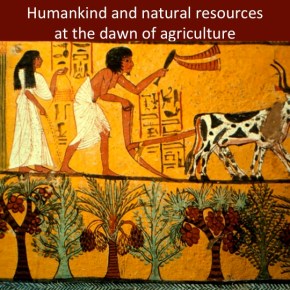
Natural resources: Abundant or scarce? (That would depend on just how ‘natural’ we think human resources are)
The topic of this year’s Tropentag International Conference, being held in Prague, Czech Republic, and which opened today, is ‘Bridging the gap between increasing knowledge and decreasing resources’. Jimmy Smith, director general of the International Livestock Research Institute (ILRI), gave a keynote presentation at the opening titled The interplay of knowledge and natural resources: Health, wealth and environmental benefits of livestock. Continue reading
Livestock options to meet development goals: ILRI side event at Tropentag Conference in Prague
A side event at the Tropentag 2014 International Conference, being held at the Czech University of Life Sciences, Prague, Czech Republic, is being organized tomorrow, 18 Sep 2014, from 1400–1530, by the International Livestock Research Institute (ILRI). Continue reading
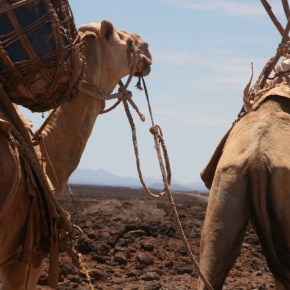
New studies on MERS coronavirus and camels in eastern Africa published
Two new papers on MERS (Middle Eastern respiratory syndrome) coronavirus and camels in Eastern Africa have been published in the science journal ‘Emerging Infectious Diseases’; three of the authors are ILRI scientists. Continue reading
Scottish and Kenya scientists in new alliance to improve animal breeding and health in developing countries
Challenges faced by livestock farmers in tropical developing countries are the focus of a new alliance involving researchers from Scotland and Africa. The new Centre for Tropical Livestock Genetics and Health will initially focus on the use of genetic information to improve the health and productivity of farmed animals in tropical climates. Continue reading
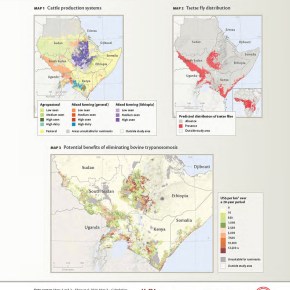
New map: Benefits of controlling trypanosomosis in the Horn of Africa
Using the Horn of Africa as an example, the maps illustrate different steps in a methodology developed to estimate and map the economic benefits to livestock keepers of controlling a disease (Shaw et al. 2014). Cattle are first assigned to different production systems as shown in Map 1, illustrating for example, where mixed farming is heavily dependent on the use of draft oxen in Ethiopia, areas of Sudan and South Sudan where oxen use is much lower, and the strictly pastoral areas of Somalia and Kenya. Continue reading
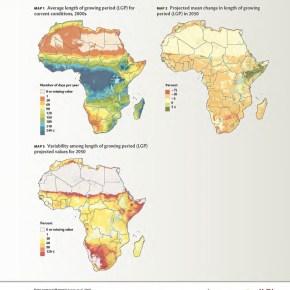
New map: Impacts of climate change on length of growing periods in Africa
Impacts of climate change on length of growing periods in Africa by Philip Thornton The International Food Policy Research Institute (IFPRI) has published an atlas illustrating the current state of African smallholder agriculture. The Atlas of African Agriculture Research and Development comprises a series of maps and short analyses that showcase and locate the continent’s diverse agricultural … Continue reading
New map: Rainfall and rainfall variability in Africa
An average of less than 1,000 millimeters of rain falls per year across most of Africa (Map 1). Rainfall tends to decrease with distance from the equator and is negligible in the Sahara (north of about latitude 16°N), in eastern Somalia, and in the southwest of the continent in Namibia and South Africa. Rainfall is most abundant on the eastern seaboard of Madagascar; portions of the highlands in eastern Africa; large areas of the Congo Basin and central Africa; and parts of coastal western Africa including Liberia, Sierra Leone, and Guinea. Continue reading
New map: Ruminant livestock distribution in Africa
Ruminant livestock are raised across large parts of Africa where environmental conditions allow. Cattle, sheep, and goats are the most widespread, while camels are restricted to drier areas, particularly in the Horn of Africa and the arid parts of western Africa. These maps of ruminant distribution should, however, be used in conjunction with the livestock production systems map to better understand the systems and climate zones where ruminant livestock are found. The role of livestock varies greatly depending on the production system. Continue reading