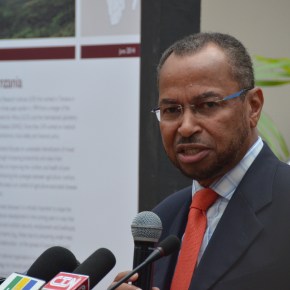
In Jun 2014 three agricultural economists working with the International Livestock Research Institute presented case studies at the World Forum of the International Food and Agribusiness Management Association (IFAMA) in Cape Town, South Africa. The main lesson from the two cases presented is that by training farmers, processors and other stakeholders supporting agribusiness development, African talent can create new products and innovative processes that help feed African markets with African products. Continue reading
Category Archives: Agriculture
ILRI-Tanzania country office opens in Dar es Salaam
The Minister for Livestock and Fisheries Development in Tanzania, Hon Titus Mlengeya (MP) officially opened the ILRI-Tanzania country office on Friday 13 Jun 2014 in Dar es Salaam. Continue reading
Hard numbers: Making the business case for massive investments in ‘One Health’ to protect ‘One World’
The time has come to make the bigger case for massive investment in One Health to transform the management of neglected and emerging zoonoses and to save the lives of millions of people and hundreds of millions of animals whose production supports and nourishes billions of impoverished people per annum. Continue reading
Getting (the band) back together: US climate report sees reconnecting crops to livestock as smart adaption strategy
The new National Climate Assessment released recently by President Obama’s Global Change Research Program contains dour predictions about the impact of climate change on livestock production in the United States. How can the country’s livestock sector adapt to these changes? One strategy suggested in the report will be familiar to experts at the International Livestock Research Institute (ILRI). It involves raising livestock and crops together and taking advantage of the synergies between the two. Continue reading
How to act in the face of uncertainty (and adapt to ‘wicked problems’) with ‘no regrets’ options–CGIAR PNAS paper
A 2013 paper, Addressing uncertainty in adaptation planning for agriculture, deserves a wide readership. The paper was published in 2013 in the prestigious US science journal Proceedings of the National Academy of Sciences (PNAS). It tackles ‘uncertainty’ in climate change research for development. If you can manage your way through the technical jargon, you get to this: The results demonstrate the potential for robust knowledge and actions in the face of uncertainty. Continue reading
Pig farming in Uganda–Big options, and big research, take hold
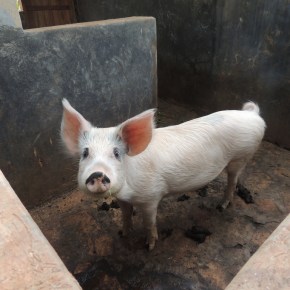
This 2-minute film presents a ‘day in the life’ of a research-for-development project working to improve smallholder pig production in Uganda. The film highlights the big opportunities as well as challenges faced by small-scale pig producers in this East African country. Continue reading
Ugandans and pork: A story that needs telling
Without becoming more visible, and gaining greater attention by researchers, government policymakers, non-governmental organizations and entrepreneurs, Uganda’s pig sector potential is unlikely to be fully exploited anytime soon. Continue reading
‘Bio-control’=effective control of aflatoxins poisoning Kenya’s staple food crops
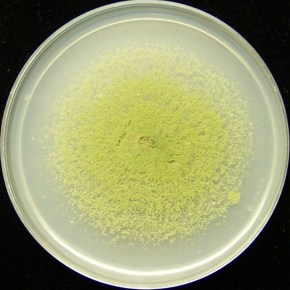
Biocontrol is one way of managing aflatoxins by targeting the fungus that produces aflatoxin while the crop is still in the field. Continue reading
Dairy feed project to reduce aflatoxin contamination in Kenya’s milk
Mycotoxins, such as aflatoxin, are toxins found in food that can cause illness and be lethal in high doses. These toxins are formed by strains of moulds that infest susceptible grains such as maize and sorghum. Dairy cows that eat contaminated feed can yield contaminated milk. Milk is a major food in Kenya. Understanding how, … Continue reading
Reducing the vulnerability of dryland pastoralism
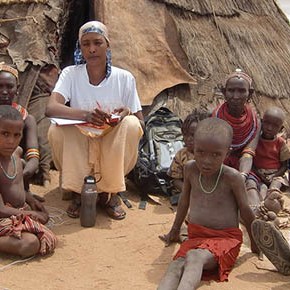
Expert opinion agrees that the best way to tap into the potential of the drylands is to build on the foundation of their livestock economies rather than ignoring them or seeking to replace them. Continue reading