In the lead up to the High-Level Meeting on Antimicrobial Resistance to be held in the margins of the 71st session of the United Nations General Assembly, attended by heads of state and government at the UN’s New York City headquarters on 21 Sep 2016, scientists from ILRI and partner organizations have published a must-read article on the ‘One Health’ as well as ‘One World’ aspects of the rapid rise of antimicrobial resistance in pathogenic organisms. Continue reading

Category Archives: CRPs
Pandemic proofing the world: An epidemiologist in Nairobi on preventing the next Zika virus
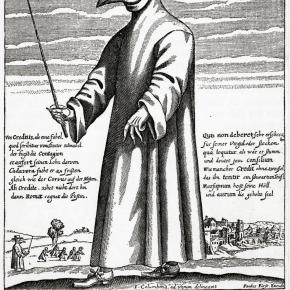
As the world becomes more well, people — particularly people in the West — seem to be more worried about health and disease, especially about the possibility of global pandemics (that is, widespread outbreaks) of newly emerging infectious diseases. Are these first-world fears? Or is there good reason why everyone should be concerned about coming plagues? And, if so, what should we be doing differently to protect ourselves better from newly emerging diseases? Continue reading
Badass Chinese sheep quickly evolved adaptations to extreme plateau and desert environments—New study
A new study offers novel insights into rapid genomic adaptations to extreme environments in sheep and other animals and provides a valuable resource for future research on livestock breeding in response to climate change. Continue reading
Kenyan cattle found to have much smaller faecal carbon footprints than those used in climate change inventories
Greenhouse gases emitted by Kenyan cattle excreta are found to be much lower than estimates derived from models in industrialized countries. Continue reading
Vaccine research on Africa’s cattle-killing East Coast fever: A short (somewhat potted but handsomely illustrated) history
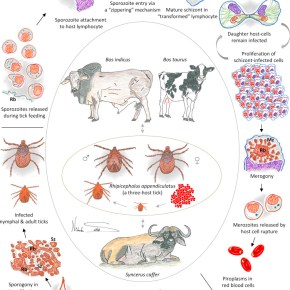
Tremendous research progress has been made over the last ten years to better control the deadly African disease of cattle known as East Coast fever. This disease is caused by a single-celled organism, Theileria parva, which is carried by some tick species. Cattle become infected when a tick carrying the parasite takes a blood-meal from the animal over several days. Continue reading
Livestock for better nutrition and disease control–One Health Colloquium held this week at Chatham House
Today and tomorrow (31 May–1 Jun 2016), Chatham House, the Livestock Global Alliance (LGA), the One Health Platform and other One Health partners are convening senior policymakers, academics, multilateral development agencies, business leaders and other private-sector stakeholders to discuss livestock’s role in poverty reduction, sustainable livestock production systems, innovations in livestock vaccines and diagnostics and the value of establishing national and regional One Health centres to provide advice on links among agriculture, sustainable livestock systems and human development. Continue reading
‘Zoonotic’ diseases take the spotlight of UN environmental talks this week and next in Nairobi, Kenya
Diseases transmitted between animals and people—which cause 60% of all human infectious diseases—are a ‘frontier issue’ at the second session of the United Nations Environment Assembly (UNEA2), being held this week and next at the United Nations Environment Programme (UNEP), in Nairobi, Kenya. Continue reading
‘One Health for the Real World’ (or, ‘real livestock for real global wellbeing’)
Twenty organizations, including ILRI, made up the Dynamic Drivers of Disease in Africa Consortium, which from 2012 to 2015 coordinated research exploring the relations among African ecosystems and zoonotic diseases—those transmitted between animals and people—that impinge on ecosystem, human and animal wellbeing. Continue reading
Reverse vaccinology identifies candidates for an improved vaccine against cattle pneumonia in Africa
We used a reverse vaccinology approach to identify 66 Mmm potential vaccine candidates. The selection and grouping of the antigens was based on the presence of specific antibodies in sera from CBPP-positive animals. The antigens were used to immunize male Boran cattle (Bos indicus) followed by a challenge with the Mmm strain Afadé. Continue reading
CGIAR Rwanda Climate Services for Agriculture project launches today, #WorldMetDay
A new project is reconstructing Rwanda’s incomplete meteorological data record using cutting-edge climate science and developing climate information products and services based on the expressed needs of the country’s farmers and other end users. The work is carried out by RAB and Meteo Rwanda, in collaboration with CCAFS, IRI at Columbia University, ICRAF and ILRI, with funding from USAID. Continue reading