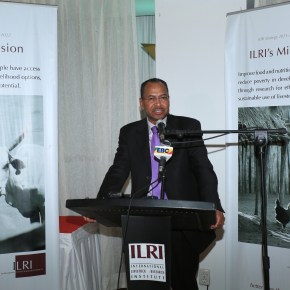
On 29 August 2016, the Kenya Agricultural and Livestock Research Organization (KALRO) and the International Livestock Research Institute signed a memorandum of agreement that will pave way for deepening their collaboration in agricultural research for development. Continue reading
Category Archives: East Africa
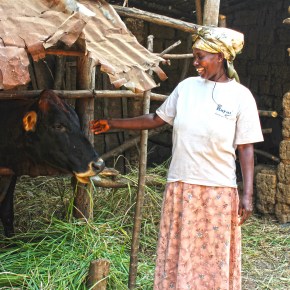
Kenyan cattle found to have much smaller faecal carbon footprints than those used in climate change inventories
Greenhouse gases emitted by Kenyan cattle excreta are found to be much lower than estimates derived from models in industrialized countries. Continue reading
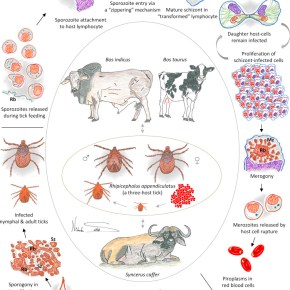
Vaccine research on Africa’s cattle-killing East Coast fever: A short (somewhat potted but handsomely illustrated) history
Tremendous research progress has been made over the last ten years to better control the deadly African disease of cattle known as East Coast fever. This disease is caused by a single-celled organism, Theileria parva, which is carried by some tick species. Cattle become infected when a tick carrying the parasite takes a blood-meal from the animal over several days. Continue reading
Serious rain: East Africa’s annual Easter resurrection
Exactly four days following Easter Sunday this year, the ‘long rains’ arrived in Nairobi, watering the earth, flooding the streets, pounding the rooftops. All night that night, and all night the following nights, the kusi monsoon, blowing inland from across the Indian Ocean, has delivered the beating rain. Continue reading
CGIAR Rwanda Climate Services for Agriculture project launches today, #WorldMetDay
A new project is reconstructing Rwanda’s incomplete meteorological data record using cutting-edge climate science and developing climate information products and services based on the expressed needs of the country’s farmers and other end users. The work is carried out by RAB and Meteo Rwanda, in collaboration with CCAFS, IRI at Columbia University, ICRAF and ILRI, with funding from USAID. Continue reading
Tanzania ‘Livestock Master Plan’ project launched
Tanzania’s livestock sector will benefit from a recently started project targeting to transform it by guiding investments in the four main value chains comprising red meat, milk and products; poultry, eggs and pig meat. Continue reading
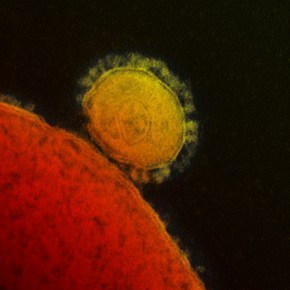
MERS-CoV antibodies found in two people in eastern Kenya
A new study published in the science journal Emerging Infectious Diseases reports that two individuals in Kenya have tested positive for the presence of antibodies to Middle East Respiratory Syndrome Corona Virus (MERS-CoV). Neither person is ill nor do they recall having any symptoms associated with MERS. There is no evidence of a public health threat and scientists concluded that the infections caused little or no clinical signs of illness. But they plan follow-up studies, as this is the first indication of a MERS-CoV infection that is not connected to primary infections in the Middle East. Continue reading
Protecting crop and feed diversity enhances food security while reducing greenhouse gases
Crop diversity can be conserved and shared. Scientists know how to do it and at a very limited cost to the world community. It requires global leadership and stronger partnerships and the building of capacities of scientists in the developing world. No country is self-sufficient; successful breeding is highly dependent on functioning multilateralism, according to Marie Haga, executive director of the Global Crop Diversity Trust. Continue reading
Vaccine development breakthrough for Rift Valley fever—new Nature Scientific Reports paper
With colleagues from the Jenner and Pirbright institutes in the UK, Nairobi’s Strathmore University and institutions in Saudi Arabia and Spain, scientists and technicians in a vaccine biosciences program of the International Livestock Research Institute (ILRI) in Nairobi, Kenya, have recently published a paper in Nature announcing a breakthrough in development of a ‘One Health’ vaccine that could protect both people and livestock from Rift Valley fever. Continue reading
Ethiopia-CGIAR country consultation meeting identifies five action areas for enhanced collaboration
Five concrete areas of collaboration have been recommended in a meeting of CGIAR centres and national partners and key stakeholders in a move to better align CGIAR activities with the national Growth and Transformation Plan II (GTP 2015-2020). Continue reading