Crop diversity can be conserved and shared. Scientists know how to do it and at a very limited cost to the world community. It requires global leadership and stronger partnerships and the building of capacities of scientists in the developing world. No country is self-sufficient; successful breeding is highly dependent on functioning multilateralism, according to Marie Haga, executive director of the Global Crop Diversity Trust. Continue reading
Category Archives: Regions
Celebrating 15 years of African agricultural biosciences excellence
The #CelebrateBecA event brought together global, regional and local actors in agricultural biosciences research for development to mark the Hub’s achievements and deliberate on further ways to scale its programs and impacts to advance African agriculture and food and nutritional security. Click through the story pages above to get an overview of the celebrations and plenary presentations, or view the same storify on ILRI’s Storify site. Continue reading
Vaccine development breakthrough for Rift Valley fever—new Nature Scientific Reports paper
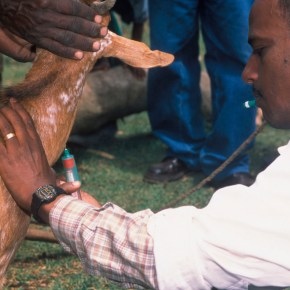
With colleagues from the Jenner and Pirbright institutes in the UK, Nairobi’s Strathmore University and institutions in Saudi Arabia and Spain, scientists and technicians in a vaccine biosciences program of the International Livestock Research Institute (ILRI) in Nairobi, Kenya, have recently published a paper in Nature announcing a breakthrough in development of a ‘One Health’ vaccine that could protect both people and livestock from Rift Valley fever. Continue reading
Is there value for innovation platforms? New Volta study suggests interesting insights
A new paper attempts to test a new conceptual framework for evaluating innovation platforms for agrifood value chains. Data collected validate a possible link between the structure of the platforms, the conduct of their members and the resulting market performance through reducing the transaction costs of search and information. Continue reading
Updated: ILRI-DAAD PhD scholarships 2016
ILRI is collaborating with the German Academic Exchange Service (DAAD) to offer up to eight in region PhD scholarships in 2016 through a co-funding arrangement. Continue reading
The BecA-ILRI Hub celebrates 15 years of biosciences in and for Africa
Coming up next week is an event marking the 15th anniversary of the Biosciences eastern and central Africa-International Livestock Research (BecA-ILRI) Hub, located in Nairobi, Kenya, and working with partners across the continent as well as with bioscience institutions worldwide. Continue reading
Vaccination proclamation: India protects the neglected ’living assets’ of its remote pig farmers
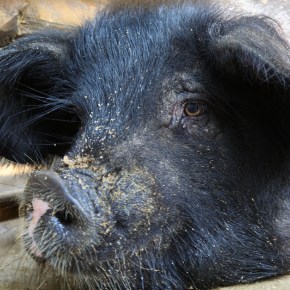
ILRI research to better control classical swine fever, also called hog cholera and pig plague, a highly contagious viral disease of pigs of all ages, usually killing the animals within two weeks of infection. The disease is endemic in the states of northeast India, where pig husbandry and meat eating are ubiquitous among the tribal communities that inhabit this remote region, isolated from the rest of India except through a slender corridor flanked by foreign territories. This article, one of a series being posted on the ILRI News blog, is one of 21 stories published in the ILRI Corporate Report 2014–2015, which you’ll find here: http://hdl.handle.net/10568/68631 Continue reading
Foods available to African farm households increase with market access and off-farm work
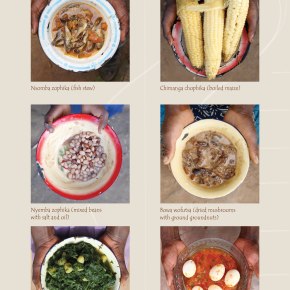
Common foods of Khulungira village, in central Malawi: Nsomba zophika (fish stew), chimanga chophika (boiled maize), nyemba zophika (mixed beans with salt and oil), bowa wofutsa (dried mushrooms with ground groundnuts), nkhwani wophatikiza ndi maungu anthete ndi kachewere wophika (pumpkin leaves, pumpkin blossoms and potatoes) and mazira ophika ndi phwetekere, anyezi, mafuta ndi mchere (boiled … Continue reading
Ethiopia-CGIAR country consultation meeting identifies five action areas for enhanced collaboration
Five concrete areas of collaboration have been recommended in a meeting of CGIAR centres and national partners and key stakeholders in a move to better align CGIAR activities with the national Growth and Transformation Plan II (GTP 2015-2020). Continue reading
Fragments d’ILRI : Traiter la peau du manioc, pour un milliard de dollars
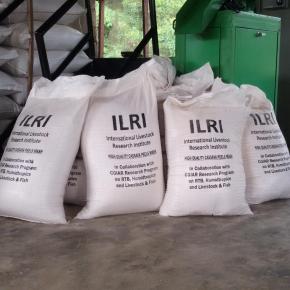
La production d’animaux d’élevage devrait doubler dans les 40 années à venir et le traitement de la peau du manioc pour en tirer du fourrage de qualité pourrait s’avérer une stratégie de choix pour les économies africaines qui n’arrivent pas à combler la demande de produits d’origine animale, selon une étude récemment publiée par trois centres CGIAR. Continue reading