Can we eat meat and still reduce greenhouse gas emissions?
Animal Products / CCAFS / CGIAR / Consumption / Environment / Food Security / ILRI / Livestock / Mazingira / Opinion Piece / Pro-Poor Livestock / SLS / Spotlight

Can we eat meat and still reduce greenhouse gas emissions?

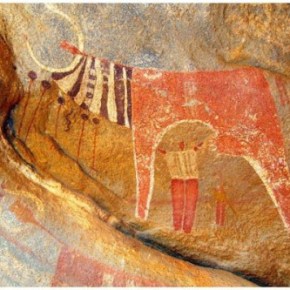
Cattle and figures, Laas Geel cave complex, Somaliland, Somalia. This opinion piece is written by Alain Vidal, director of strategic partnerships at CGIAR. Our global food production system—which includes, in addition to crop farming, raising livestock and deforesting lands to grow livestock feed and other crops—is responsible for about a quarter of the greenhouse gases produced … Continue reading
A couple of  ‘missings’ for the Paris climate talks
CCAFS / Climate Change / Communications / Consumption / Directorate / Environment / Human Health / ILRI / ILRIComms / Livestock / Opinion Piece / Policy / Pro-Poor Livestock / SLS / Spotlight
A couple of ‘missings’ for the Paris climate talks

In the days leading up to the start of the climate change talks in Paris (COP21) this week (30 Nov–11 Dec 2015), we at the International Livestock Research Institute (ILRI) have been busy responding to recent articles in the press advocating that ‘the world’ eat less meat to reduce greenhouse gases and other livestock ‘bads’. … Continue reading

Climate-smart livestock farming in developing countries is boosted by a £10-million research award
Africa / Agriculture / Animal Breeding / Article / Award / Biodiversity / Biotechnology / Breeds / Cattle / Chickens / Climate Change / CTLGH / Directorate / Genetics / Goats / ILRI / Indigenous Breeds / LiveGene / LIVESTOCKFISH / Pro-Poor Livestock / Project / Research / Sheep / Small Ruminants / Spotlight / UK

Climate-smart livestock farming in developing countries is boosted by a £10-million research award

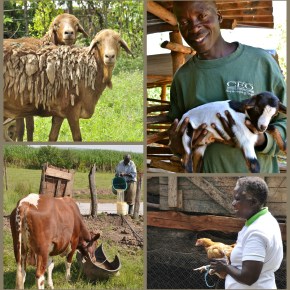
Researchers at the Roslin Institute will be using funds from the Bill & Melinda Gates Foundation to investigate how genetic information can improve the health and productivity of farmed animals in tropical climates, which is a proven approach to climate change mitigation and adaptation. The Centre for Tropical Livestock Genetics and Health is an alliance between the Institute at the University of Edinburgh, Scotland’s Rural College (SRUC) and the Africa-headquartered International Livestock Research Institute (ILRI). The partner institutions are making additional contributions with a value of £10 million to support the initiative over the next five years. Continue reading

Aflatoxin levels in cow milk and feed in the Addis Ababa milk shed—New study
A4NH / Aflatoxins / Agri-Health / Animal Feeding / Article / Cattle / Consumption / Dairying / Disease Control / East Africa / Ethiopia / Food Safety / FSZ / Human Health / ILRI / Spotlight

Aflatoxin levels in cow milk and feed in the Addis Ababa milk shed—New study

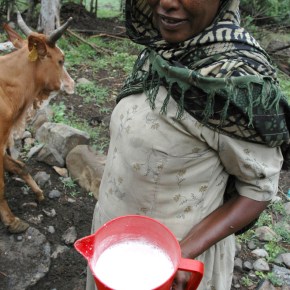
Ethiopian farmer with fresh milk from her cow (photo credit: ILRI/Apollo Habtamu). This article is written by ILRI scientists Dawit Gizachew, Barbara Szonyi, Azage Tegegne, Jean Hanson and Delia Grace Editor’s note: A statement in the article below, comparing various levels of risk, offended some of our readers. We thank those readers who let us … Continue reading

Animal breeding and genetics in the Ethiopia livestock master plan
Animal Breeding / ASSP / Ethiopia / Genetics / ILRI / Livestock / Policy / Research / Spotlight

Animal breeding and genetics in the Ethiopia livestock master plan

High population growth and rising living standards are putting pressure on Ethiopia’s livestock owners to increase the productivity of their animals. Improving the genetic potential of the country’s livestock is one of the keys—with better feeds and better health—to achieving food and nutrition security, and better lives through livestock. This latest research brief by ILRI and the Ministry of Agriculture (MoA), Animal breeding and genetics in the Ethiopia livestock master plan, outlines how quick-win genetic-based technologies—including artificial insemination (AI) with oestrous synchronization and community-based schemes to improve indigenous breeds as well—can significantly contribute to transformed value chains for cattle, small ruminants and poultry. Continue reading