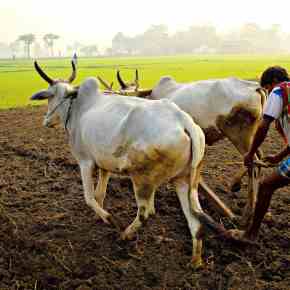
The experience of the International Livestock Research Institute (ILRI) and partner geneticists in 2015–2016 clearly demonstrates the positive benefits to smallholder farmers of the application of new breeding and genomic approaches, leading to more productive and climate- and disease resilient livestock. However, it is when these new technologies are combined with improved management practices that they are translated into enhanced food security and higher incomes for smallholder farmers. These are the findings from the genetics research and interventions, presented in the ILRI Corporate report 2015–2016 highlights on Livestock genetics and breeding. Continue reading
Category Archives: Story Type
Sustainable livestock systems – highlights from ILRI’s corporate report 2015–2016
In 2015–2016, the International Livestock Research Institute (ILRI) and partners revealed extraordinary findings that the greenhouse gas (GHG) emissions from cattle in Kenya maybe up to 10 times lower than previous estimates, clearly making the case for improving Africa-specific understanding of GHG emissions to develop better-targeted climate change mitigation and adaption strategies. Continue reading
Policies, value chains and livelihoods – highlights from ILRI’s corporate report 2015–2016
The experience of the International Livestock Research Institute (ILRI) and partner scientists in 2015–2016 highlights how research and policy analysis guide prioritization of livestock investments and interventions that transform livestock value chains enabling men and women smallholder farmers to improve their lives. However, building on solid research, it is the training of key stakeholders and research support which delivers direct benefits to value chains actors and poor consumers of animal-source foods. Continue reading
Confronting the rising threat of antibiotic resistance in livestock
The article, originally published on Cambridge Core blog, was written by Tim Robinson of the International Livestock Research Institute (ILRI). Resistance to antimicrobials is developing faster than ever before due to decades of abusing these important drugs. A ‘post-antibiotic’ world looms as a result, the consequences of which would be many people and farm animals sickening and dying of what, until now, have been preventable or treatable infections. Continue reading
ILRI Corporate report 2015–2016 is now available: capitalizing on the livestock revolution
The Board of Trustees, management and staff of the International Livestock Research Institute (ILRI) take great pleasure in announcing the publication of the ILRI Corporate report 2015–2016. Continue reading
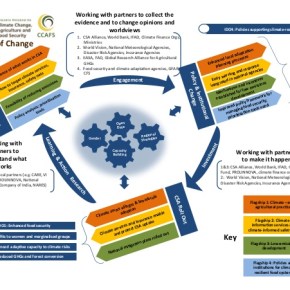
A ‘theory of change’ for agricultural research for development
The following are highlights of a new CGIAR paper advancing ways to make agricultural science make a bigger difference to development outcomes. We describe a theory-of-change approach to an agricultural research for development program. Continue reading
Top 10 viewed ILRI News blog articles of 2016
Take a look below at the top ten viewed articles published in 2016 on the ILRI News blog. Continue reading
Livestock for sustainable and equitable development—Selected top advocacy communications of 2016
This year, with a pilot project funded by the Bill & Melinda Gates Foundation starting in Sep 2016, the International Livestock Research Institute (ILRI) stepped up its advocacy work supporting livestock development for a more sustainable and equitable world. The following are among ILRI’s top advocacy communications of 2016. Continue reading
Livestock environmental ‘hoofprints’: Five fast facts to remember—Shirley Tarawali at ‘Farming First’
In this guest post, originally published by Farming First, Shirley Tarawali, assistant director general of the International Livestock Research Institute (ILRI), takes a closer look at livestock’s impact on the environment, and what is being done to manage its environmental ‘hoofprint’. Continue reading
Access vs excess to antibiotics: The dual antimicrobial resistance issue facing the world
This opinion piece, written by ILRI scientist and program leader Delia Grace, was originally published by Devex on 16 Dec 2016. The numbers when it comes to drug resistance are apocalyptic. Already responsible for up to 700,000 deaths a year, the number of victims could reach 10 million by 2050, making superbugs a bigger killer than cancer is today if urgent action is not taken. Continue reading