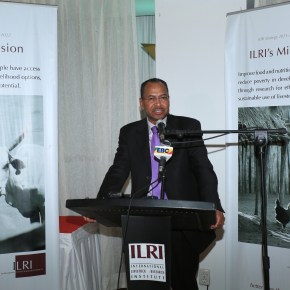
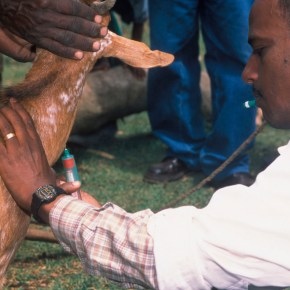
The Feed the Future Innovation Lab for Livestock Systems, led by the University of Florida, is currently organizing a number of stakeholder consultation meetings to identify high-priority needs in the six countries it will cover (Burkina Faso, Cambodia, Ethiopia, Mali, Nepal, Rwanda). ILRI is a close partner in this new initiative and it helped organize the Ethiopia consultation meeting in Feb 2016. Continue reading
Category Archives: Story Type
Tanzania ‘Livestock Master Plan’ project launched
Tanzania’s livestock sector will benefit from a recently started project targeting to transform it by guiding investments in the four main value chains comprising red meat, milk and products; poultry, eggs and pig meat. Continue reading
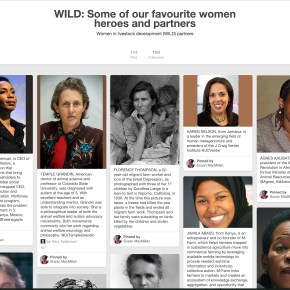
Some of our favourite WILD* women heroes and partners
We’re celebrating some of our favourite women heroes and partners at the International Livestock Research Institute (ILRI) in honour of International Women’s Day, 8 Mar 2016 Continue reading
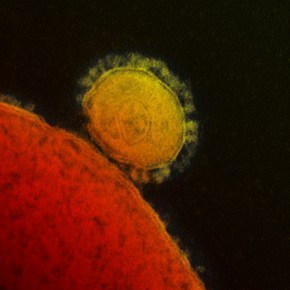
MERS-CoV antibodies found in two people in eastern Kenya
A new study published in the science journal Emerging Infectious Diseases reports that two individuals in Kenya have tested positive for the presence of antibodies to Middle East Respiratory Syndrome Corona Virus (MERS-CoV). Neither person is ill nor do they recall having any symptoms associated with MERS. There is no evidence of a public health threat and scientists concluded that the infections caused little or no clinical signs of illness. But they plan follow-up studies, as this is the first indication of a MERS-CoV infection that is not connected to primary infections in the Middle East. Continue reading
ILRI’s Shirley Tarawali joins global livestock industry leaders to discuss beef’s role in feeding the world
Shirley Tarawali, assistant director general of the International Livestock Research Institute (ILRI), will today (Friday, 4 Mar 2016) join global livestock industry leaders to discuss ‘Beef’s role in feeding the world’ at the International Livestock Congress (ILC), in Houston, USA. Continue reading
Protecting crop and feed diversity enhances food security while reducing greenhouse gases
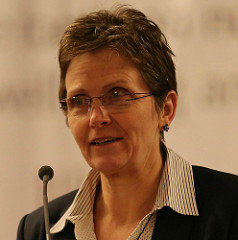
Crop diversity can be conserved and shared. Scientists know how to do it and at a very limited cost to the world community. It requires global leadership and stronger partnerships and the building of capacities of scientists in the developing world. No country is self-sufficient; successful breeding is highly dependent on functioning multilateralism, according to Marie Haga, executive director of the Global Crop Diversity Trust. Continue reading
Livestock and the Sustainable Development Goals
CGIAR livestock scientists are working actively to help the world meet the SDGs. We are intentionally tailoring our livestock-related knowledge products, technologies, institutional arrangements and policy support to provide new options for meeting specific SDGs by addressing developing world livestock problems and opportunities. Continue reading
Persuasion: Towards a calculus of influence in livestock research for development
In November last year (2015), a group of livestock-related communications professionals from non-governmental, regional and international institutions met for 2.5 days in Addis Ababa to begin to think through ‘advocacy-oriented’ kinds of communications to support sustainable livestock development in poor countries worldwide. Continue reading
Celebrating 15 years of African agricultural biosciences excellence
The #CelebrateBecA event brought together global, regional and local actors in agricultural biosciences research for development to mark the Hub’s achievements and deliberate on further ways to scale its programs and impacts to advance African agriculture and food and nutritional security. Click through the story pages above to get an overview of the celebrations and plenary presentations, or view the same storify on ILRI’s Storify site. Continue reading
Vaccine development breakthrough for Rift Valley fever—new Nature Scientific Reports paper
With colleagues from the Jenner and Pirbright institutes in the UK, Nairobi’s Strathmore University and institutions in Saudi Arabia and Spain, scientists and technicians in a vaccine biosciences program of the International Livestock Research Institute (ILRI) in Nairobi, Kenya, have recently published a paper in Nature announcing a breakthrough in development of a ‘One Health’ vaccine that could protect both people and livestock from Rift Valley fever. Continue reading