In recent weeks, ILRI has signed collaborative research agreements in China, India and Vietnam. These build on several years of past engagement and aim to deepen ILRI’s work in these and other countries in Asia. Continue reading
Category Archives: ILRI
Creating an enabling environment for livestock development in Ethiopia
Despite significant progress in increasing livestock production in Ethiopia, analysis of livestock production and consumption by the Livestock State Ministry (LSM) and ILRI show a huge shortfall in the supply of livestock products. Detailed interdisciplinary research provides clear empirical evidence of the potential benefits of a comprehensive livestock master plan (LMP) for Ethiopia. In the absence of investment, these gaps will grow, causing food insecurity and other important economic and social repercussions. Continue reading
Mixing it up—The information ‘black hole’ on crop+animal recipes for climate-smart and climate-resilient farms
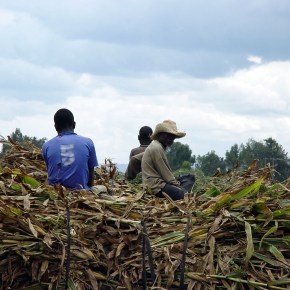
We are unaware of any comprehensive studies undertaken in sub-Saharan Africa to explore how mixed farms will be affected by climate change and the cost and benefits of different adaptation options. Underestimating the importance of livestock in the mixed’ smallholder farming systems that are ubiquitous across the developing world weakens both emissions reduction and climate change adaptation efforts. Continue reading
Ethiopia livestock master plan: Feed priorities
Investment in livestock agriculture in Ethiopia has the potential to halve poverty, improve the food security of rural people and make livestock an increasing contributor to GDP growth. The Ethiopia livestock master plan (LMP) sets out ambitious year 2020 targets for several livestock value chains—crossbred dairy cows, red meat-milk and feedlot, and poultry. The 2020 targets aim to increase meat, milk and egg production by 58%, 83% and 828% respectively above 2012/2013 totals. Continue reading
New DNA analysis of Asian sheep reveals unique diversity crucial to contemporary food and climate concerns
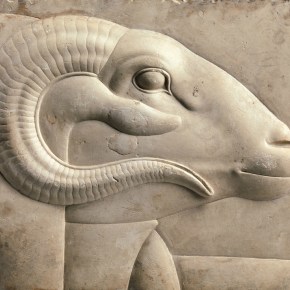
At a time when the price of mutton is climbing and wool crashing, a groundbreaking new study has used advanced genetic sequencing technology to rewrite the history of sheep breeding and trading along the ancient Silk Road—insights that can help contemporary herders in developing countries preserve or recover valuable traits crucial to their food and economic security. The new findings regarding one of the first animals ever domesticated will be published in the October print edition of the journal Molecular Biology and Evolution. They are the product of an unprecedented collaboration involving scientists in China, Iran, Pakistan, Indonesia, Nepal, Finland, and the United Kingdom. The team analysed the complete mitochondrial DNA of 42 domesticated native sheep breeds from Azerbaijan, Moldova, Serbia, Ukraine, Russia, Kazakhstan, Poland, Finland, China and the United Kingdom, along with two wild sheep species from Kazakhstan. Continue reading
New study recommends continued research on the possible role pigs could play in transmitting Ebola in Uganda
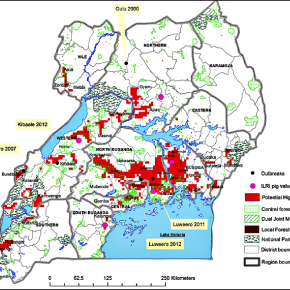
A new risk assessment paper, Assessing the potential role of pigs in the epidemiology of the Ebola virus in Uganda, was published in the science journal Transboundary and Emerging Diseases on 27 Aug 2015. The authors are scientists at the International Livestock Research Institute (ILRI). Presently, there is no solid evidence that pigs have any role in the past outbreaks of Ebola virus disease. But the risk assessment paper indicates that further research on the role pigs may play in Ebola virus transmission in Uganda is warranted. Continue reading
Ethiopia recognizes ILRI contribution to the country’s livestock sector growth and transformation
Livestock production accounts for approximately one third of the global water footprint, and Ethiopia is no different. A scarce commodity in the country, water availability has been aggravated by climatic fluctuations and rapid economic growth. With the potential consequences for human health of a lack of quality drinking water, as well as for the country’s development, there is a strong case for enhancing the role of research for development in understanding better how limited water resources can be used. Continue reading
Ways forward for food safety in countries bearing the brunt of the world’s food-borne diseases
A new paper on food safety in low- and middle-income countries was published today by ILRI’s Delia Grace. The paper is based on a longer learning resource commissioned for the UK Department for International Development (DFID), which will be out shortly. Both publications reflect what ILRI and its partners have learned over the last 10 years since adopting a framework of risk analysis for assessing, managing and communicating about food safety. Continue reading
Bridging ‘biobanking’ and biomedical research across Europe and Africa: ‘B3Africa’ launched in Cape Town
The first meeting of a new project, ‘B3Africa, short for ‘Bridging Biobanking and Biomedical Research across Europe and Africa’, was held this week (24–25 Aug 2015) at the University of the Western Cape, in Cape Town, South Africa. Continue reading
‘Soft’ science at ILRAD/ILRI: A lively look back at three decades of veterinary epidemiology for development
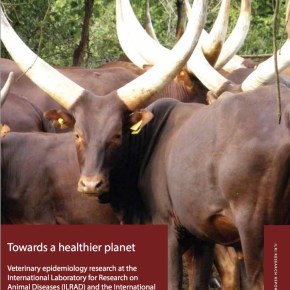
For almost thirty years, the International Laboratory for Research on Animal Diseases (ILRAD) then ILRI benefited from a strong research program in the epidemiological sciences. Over time, it progressively broadened its coverage in disease, disciplinary and geographic terms. The results of this work have now been assembled in this impact narrative, which carefully documents the wide range of issues addressed by the teams of researchers, and presents them in an illustrated and highly readable format. Continue reading