Links to some of ILRI’s top stories of 2015 Continue reading
Animal Diseases / Animal Feeding / Article / Food Safety / Food Security / Human Health / ILRI / ILRIComms / Livelihoods / Livestock / Spotlight
Links to some of ILRI’s top stories of 2015 Continue reading
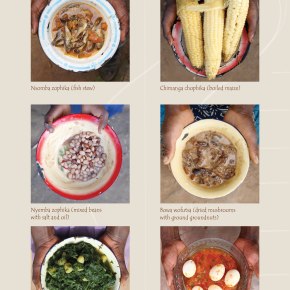
Common foods of Khulungira village, in central Malawi: Nsomba zophika (fish stew), chimanga chophika (boiled maize), nyemba zophika (mixed beans with salt and oil), bowa wofutsa (dried mushrooms with ground groundnuts), nkhwani wophatikiza ndi maungu anthete ndi kachewere wophika (pumpkin leaves, pumpkin blossoms and potatoes) and mazira ophika ndi phwetekere, anyezi, mafuta ndi mchere (boiled … Continue reading

Many rural households in Zimbabwe rely on food aid to meet their nutritional needs. This problem, often aggravated by unemployment and falls in income, threatens the livelihoods of low income and food-insecure populations. Continue reading
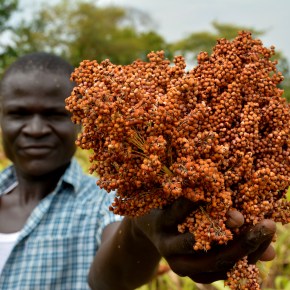
Starting in October 2015, ILRI, in partnership with two other CGIAR centres, has initiated a new three-year USD25 million program to help lift 317,000 households out of poverty, making them food secure and enabling their transition from subsistence to market-orientated farming. Continue reading

Farmers participating in the Zimbabwe Crop-Livestock Integration for Food Security (ZimCLIFS) project have increased their gross margins by up to 70%. The ongoing food security improvement project is targeting the country’s dairy farmers to help improve feed farming and overall dairy production. Continue reading

Jimmy Smith, director general of the International Livestock Research Institute (ILRI), gave a keynote presentation at the International Federation for Animal Health–Europe conference Healthy Animals, Healthy Food, a Healthy Future, held in Brussels on 11 Jun 2015. Continue reading

Jimmy Smith, director general of the International Livestock Research Institute (ILRI), gave one of three keynote presentations at the recent Agricultural Research Congress, held in Karnal, India, at the National Dairy Research Institute, from 3 to 6 Feb 2015. Continue reading
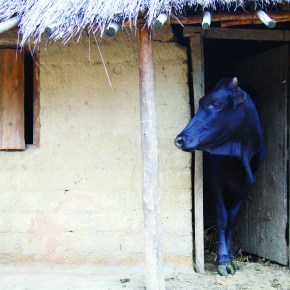
Livestock matters a great deal in developing countries, playing an increasingly important role in food security and economic development. In fact, the livestock subsector is growing faster than all other agriculture sectors in developing countries worldwide. And importantly in the International Year of Family Farming, the bulk of that livestock production is occurring on small family farms. Livestock farming offers unique features to support local livelihoods and economies, especially for women. Continue reading
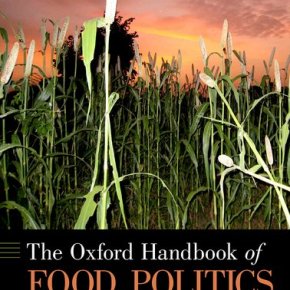
This January, Oxford University Press is publishing The Oxford Handbook of Food, Politics, and Society, a 904-page hardback volume addressing an issue that affects all of us: the intersection of food and politics. Among the 49 chapter authors of this new handbook are two members of staff at the International Livestock Research Institute (ILRI) who left the institute recently: Purvi Mehta-Bhatt and Pier Paulo Ficarelli. Their chapter covers ‘livestock in the food debate’. Continue reading
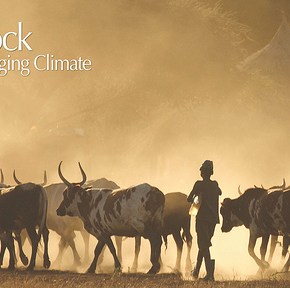
Agricultural management can do only so much to increase the resilience, diversification and risk management of the developing world’s livestock-keeping communities. Their successful adaptation to climate change depends heavily also on their being supported by enabling policy and other environments. What that in turn depends on is reliable evidence of just how big a difference livestock adaptations can make to household incomes and food security provided in timely ways and appropriate formats. Continue reading
 ILRI news