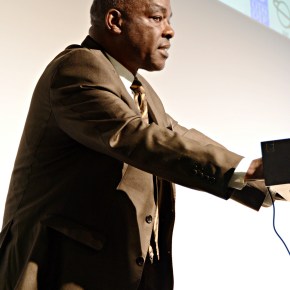
The following remarks, published last week by Devex during the fourth meeting of the United Nations Environment Assembly, were made by Andrew Tuimur, chief administrative secretary at the Kenya Ministry of Agriculture, Livestock, Fisheries and Irrigation and a member of the ILRI Board of Trustees. Continue reading

Category Archives: Pastoralism
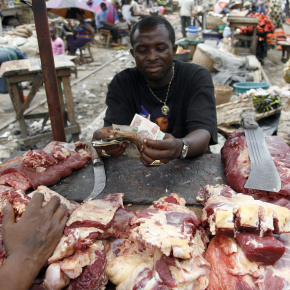
Raising the steaks
A new article in African Business Magazine provides a comprehensive overview of the risks and opportunities presented by Africa’s livestock sector and features extensive analysis from ILRI Director General Jimmy Smith. Continue reading
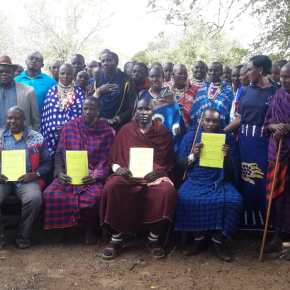
Joint village land use planning secures over 95,000 hectares of grazing lands for livestock keepers in Tanzania’s Kiteto District
Originally posted on Sustainable livestock systems:
The Tanzania Agricultural and Livestock Policy of 1997 identifies overstocking and overgrazing, as well as a lack of innovative options for meeting the needs of mobile and sedentary pastoralists as some of the major challenges facing the nation’s pastoralists. To date, these challenges affect the quality of life of…
When ‘Do no harm’ is harder than ‘doing good’
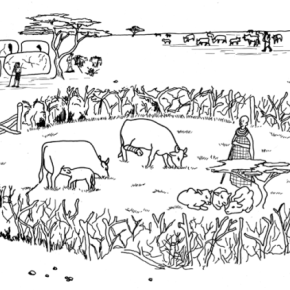
Agricultural researchers working to enhance traditional pasture conservation by Tanzania’s pastoral Maasai communities are systematically addressing gendered norms and roles to ensure that they don’t end up hurting more than helping these communities. Continue reading
Kenyan President Kenyatta headlines national conference at ILRI Nairobi on innovations in Kenya’s agricultural sector
Kenya President Uhuru Kenyatta addressed the 400 guests at the national conference of the Feed the Future Kenya Accelerating Value Chain Development project at ILRI on 27 Apr 2018. Continue reading
Kenya’s Robin Mbae on livestock and climate change at Berlin’s Global Forum for Food and Agriculture
Robin Mbae, deputy director of livestock production at the Kenya Ministry of Agriculture, Livestock and Fisheries, describes Kenya’s planning and implementation of interventions to address the impacts of climate change on the livestock sector and vice versa. Continue reading
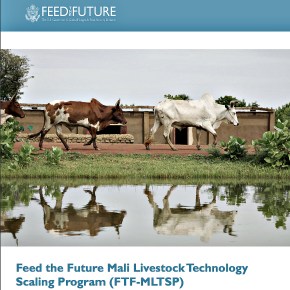
Scaling up use of livestock technologies in Mali—progress of a Feed the Future program
The most recent progress report from the Feed the Future Mali Livestock Technology Scaling Program describes some successes and swift progress made in recent months towards achieving these goals as well as some new challenges the program is facing. Continue reading
Largest-ever micro-insurance payout made to Ethiopian pastoralists
More than 2,250 pastoralists received insurance payouts following the extremely poor rains this year in southern Ethiopia. Low levels of rainfall have led to the loss of approximately 300,000 livestock in 2017 in the Borana zone of the southern Oromia region. The insurance payouts of more than ETB5.233 million (USD220,000) was the largest-ever micro-insurance indemnity made in Ethiopia. Each insured pastoralist received an average of ETB2,255 (USD96), which will allow the herders to purchase feeds for their surviving animals and to restock their herds. Continue reading
Livestock-wildlife trade-offs for pastoral livelihoods in the conservancies of the Masai Mara
A new research paper, Trade-offs for climate-resilient pastoral livelihoods in wildlife conservancies in the Mara ecosystem, Kenya, was recently published in Pastoralism: Research, Policy and Practice, May 2017. The paper is co-authored by Claire Bedelian, of the International Livestock Research Institute (ILRI), Overseas Development Institute (ODI), and University College London (UCL), and Joseph Ogutu, of ILRI and the University of Hohenheim. Continue reading
ILRI’s Index-Based Livestock Insurance and Takaful Insurance of Africa win ‘2017 Insurance Innovation Award’
ILRI’s Index Based Livestock Insurance (IBLI) program and Takaful Insurance of Africa are this year’s winners of the prestigious Insurance Innovations Award 2017. The announcement was made at the African Reinsurance Corporation (Africa Re)’s Insurance Awards gala dinner held on Monday 22 May 2017, at the Serena Kigo Hotel, in Kampala, Uganda. Continue reading