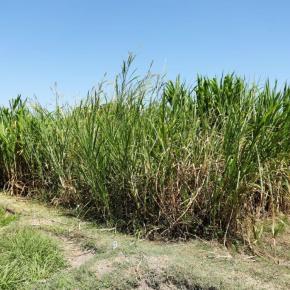
A recent study, published in Nature’s Scientific Reports, has identified significant diversity in a Napier grass collection. Continue reading
Category Archives: Feeds
How closing livestock yield gaps can enhance incomes, food security and the environment in Ethiopia and India
Estimates of livestock yield gaps are not available and these are necessary for developing feasible scenarios of how the production of different livestock commodities might evolve in the future, how systems might change and what would be the resource use implications and their costs, both for donors and for public and private entities in target countries. Continue reading
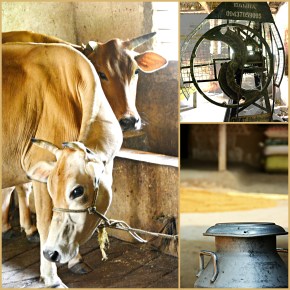
Cereal straws and stovers for sustainable livestock futures: When crop biomass becomes livestock gold
Michael Blümmel, deputy program leader for the Feed and Forage Development program at ILRI, is lead author on a new paper that explores the big benefits of treating cereal straws and stovers—the ‘residues’ of cereal crops after their grain has been harvested—to release their sugars, thereby turning these crop residues into nourishing feed for ruminant farm animals—cows, water buffaloes, goats and sheep. Continue reading
Gates Foundation grants Feed the Future Innovation Lab for Livestock Systems USD8.7 million to improve human nutrition in Burkina Faso and Ethiopia
The University of Florida has been awarded USD8.7 million from the Bill & Melinda Gates Foundation to fund livestock research over the next five years to tackle high rates of food insecurity and undernutrition in two of Africa’s landlocked nations—Burkina Faso, in the west, and Ethiopia, in the east. Continue reading
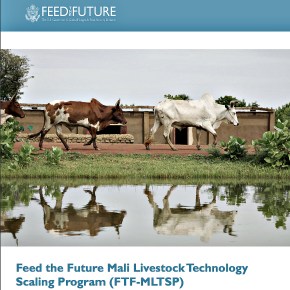
Scaling up use of livestock technologies in Mali—progress of a Feed the Future program
The most recent progress report from the Feed the Future Mali Livestock Technology Scaling Program describes some successes and swift progress made in recent months towards achieving these goals as well as some new challenges the program is facing. Continue reading
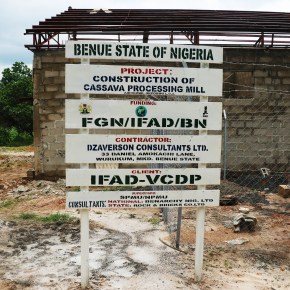
New factories in Nigeria transform cassava peels into livestock feed, creating jobs and incomes for women
A delegation comprising IFAD staff visited the Value Chain Development Programme (VCDP) cassava processing sites at Lokongoma, Wushishi (Niger State) and Idogodo, Okpokwu (Benue State) in late July, 2017 to discuss progress with this important project. Continue reading
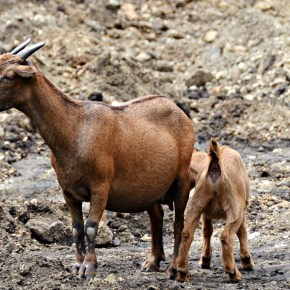
Lifetime performance of West African dwarf goats under different feeding systems
An article in ‘Animal’ compares the lifetime performance (mortality, maturity, nutrition, birth weight etc.) of West African Dwarf goats kept under various feeding systems. Continue reading
India’s Odisha State and ILRI join forces to improve livestock feeding and mechanization
A three-year ILRI-Odisha State project, ‘Feed and Fodder Production in Different Agro-Climatic Zones and its Utilization for Livestock of Odisha,’ which is worth more than USD2 million (INR18.08 crore), will map feed and fodder supply and demand, improve feeding practices and build capacity of key players in the feed value chain in the state. Continue reading
Livestock for food security and nutrition—Committee on World Food Security policy recommendations
The following policy recommendations build on the main findings of the CFS High Level Panel of Expert’s Jul 2016 report #10, on Sustainable agricultural development for food security and nutrition: What roles for livestock? The sustainable development of agriculture, including livestock, is essential for poverty reduction and the achievement of food security and nutrition. Continue reading
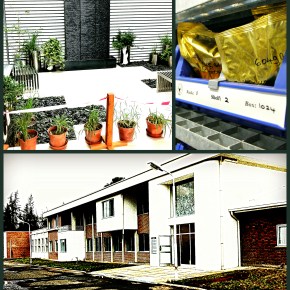
ILRI opens state-of-the-art genebank and bioscience facilities in Ethiopia
The International Livestock Research Institute (ILRI) officially opens state-of-the-art facilities for genebank and bioscience research on 24 April 2017. The facilities will help protect a crucial component of the planet’s biodiversity—the diverse grasses and legumes that feed the world’s food animals. Research conducted here on livestock feed materials improves the sustainability and productivity of the livestock sector in many low-income countries across the world. Continue reading