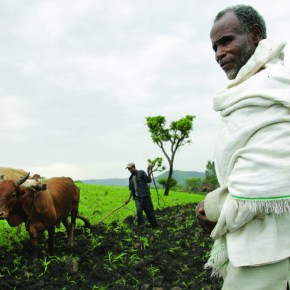
Driven by rising incomes, demand for animal-source foods in Africa and Asia is expected to increase up to 200% by 2030. Efficient crop and livestock production and natural resource use will drive employment, environmental, nutrition and income gains in a subsector likely to be dominated by smallholders. Continue reading
Category Archives: Africa
DNA sequencing of indigenous African cattle reveals vital clues to increasing productivity
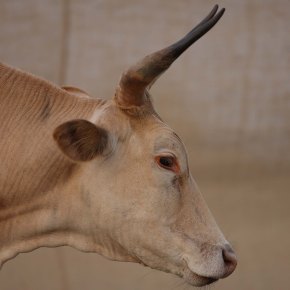
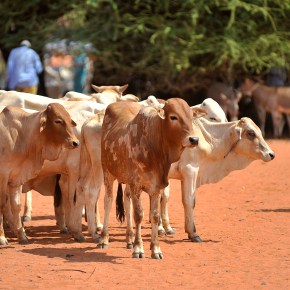
Important sources of meat, milk, traction and manure across Africa, cattle will become even more significant as demand for meat and milk is expected to more than double in sub-Saharan Africa from 2000 to 2030. Continue reading
Science helps tailor livestock-related climate change mitigation strategies in Africa
The implementation of effective mitigation strategies relies on accurate GHG emission data. But what if the underlying assumptions upon which these GHG emission estimates are based are inaccurate? Continue reading
Minister headlines Arusha livestock fair
The minister’s speech extolled the benefits of a sustainable livestock sector and affirmed the government’s commitment to raising the profile of animal-sourced foods Continue reading
Improving control of a chicken disease supports the livelihoods of Kenya’s women
Poultry farming in Kenya is growing rapidly and remains largely dominated by women, who typically invest most of their earnings in feeding their families and educating their children. That is why controlling major poultry diseases is so important. Continue reading
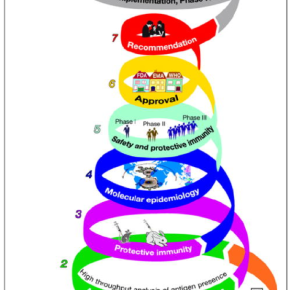
‘Living tools’ at the frontier of vaccine development—A Keystone Symposium workshop by Vish Nene
Vish Nene, one of the scientific organizers of the conference and a co-leader of the Animal and Human Health program at the International Livestock Research Institute (ILRI), headquartered in Nairobi, Kenya, gave a particularly lucid talk at the pre-meeting workshop on Novel tools and genomics approaches supporting vaccine development. The following is a transcript of Nene’s talk, lightly edited for clarity and brevity. Continue reading
‘Legacy Award’ bestowed on Jean Hanson, ILRI’s forage genebank gatekeeper for the last three decades
Along with six other distinguished scientists, Hanson today, 25 Feb 2018, received an inaugural ‘Legacy Award’ from the Global Crop Diversity Trust, which bestowed this award on Hanson for dedicating her career to forage conservation. Continue reading
Animal health and welfare, two cornerstones of sustainable, responsible and effective food production
Highlights of keynote speakers at a high-level panel on the future of animal health and welfare organized by the World Organisation for Animal Health (OIE) as part of the tenth Global Forum for Food and Agriculture (GFFA), which was held in Berlin from 18 to 20 Jan 2018. Continue reading
DFID/UKAid provides £4 million for genetics and health research to aid sustainable livestock production in Africa
Research to improve the health and productivity of farmed animals in tropical climates has received a £4 million boost from the UK Government. The investment from DFID was announced by the Secretary of State for International Development, Penny Mordaunt, during a visit to the University of Edinburgh. It will support research in the Centre for Tropical Livestock Genetics and Health—a joint venture between the University of Edinburgh’s Roslin Institute, SRUC, ILRI, the latter of which has major research facilities in Kenya and Ethiopia. Continue reading
Largest-ever micro-insurance payout made to Ethiopian pastoralists
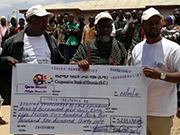
More than 2,250 pastoralists received insurance payouts following the extremely poor rains this year in southern Ethiopia. Low levels of rainfall have led to the loss of approximately 300,000 livestock in 2017 in the Borana zone of the southern Oromia region. The insurance payouts of more than ETB5.233 million (USD220,000) was the largest-ever micro-insurance indemnity made in Ethiopia. Each insured pastoralist received an average of ETB2,255 (USD96), which will allow the herders to purchase feeds for their surviving animals and to restock their herds. Continue reading