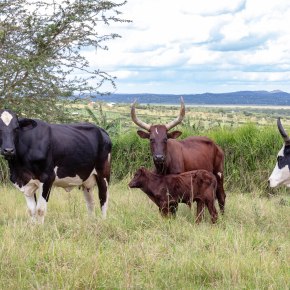
Today, policymakers, researchers and academics, donors, civil society, as well as government and private sector representatives from Uganda, Kenya and Germany meet to boost investment in Uganda’s livestock. Continue reading
Category Archives: Animal Health
ILRI annual report goes online
ILRI has has published its annual report for 2018, and for the first time in its publication history, the report is primarily online. Continue reading
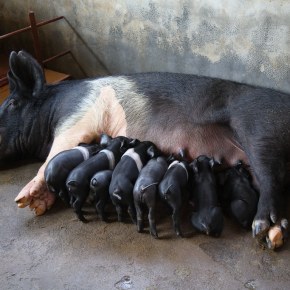
More research on African swine fever is urgently needed: No cure, no vaccine and no treatment yet exists for this lethal pig disease
At ILRI, African swine fever research began in early 2000 with a focus on the epidemiology and socio-economic impacts of the disease. ILRI scientists and partners are currently working on developing vaccines for the disease using the CRISPR-cas genome editing system. Continue reading
The elusive quest for the perfect chicken
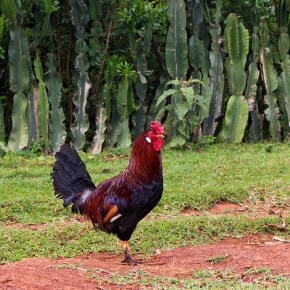
A team of researchers investigating chicken diseases in Ethiopia has discovered that there is far greater genetic diversity in that seemingly nondescript bird than meets the eye, a discovery that could help boost the productivity of small-scale chicken farms throughout Africa. The study was published in this month’s issue of Nature Sustainability by scientists from … Continue reading
German agroecological livestock research investments are benefiting both people and the planet
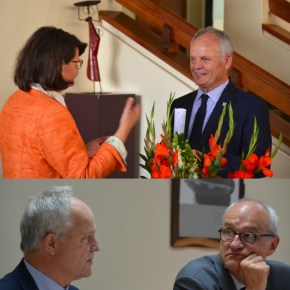
ILRI was honoured this week (3 Sep 2018) to host a high-level German delegation including Maria Flachsbarth, parliamentary state secretary to Germany’s federal minister for economic cooperation and development, and Stefan Schmitz, deputy director of the Federal Ministry of Economic Cooperation and Development (BMZ), as well as senior staff of the Kenya Ministry of Agriculture, Livestock, Fisheries and Irrigation, including Andrew Tuimur, chief administrative secretary, and Ann Onyango, agriculture secretary; and representatives from several other CGIAR centres working in Kenya, including Tony Simons, director general of ICRAF, and representatives from the Nairobi-based International Centre of Insect Physiology and Ecology (icipe). Continue reading
Deadly African swine fever arrives in China, the world’s largest producer of pigs
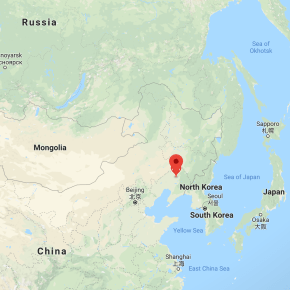
Long feared, it’s now finally happened. African swine fever (ASF), an infectious and highly lethal viral disease of pigs, has for the first time reared its head in China. Just two weeks ago, African swine fever was confirmed as the cause of death of pigs on a small farm in Shenyang City, in Liaoning Province, located in the northeast, bordering North Korea and the Yellow Sea. Continue reading
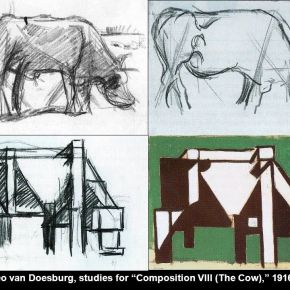
In Tanzania, a better cow is the way to a better future
Farmers who participate in the breeding programs and collect routine data on their cows’ health, growth and productivity receive personalized coaching and advice from livestock outreach specialists via routine visits and SMS messages on their phones. Continue reading
Reducing use of antimicrobial drugs in livestock in low-income countries: Two scientists reflect on options
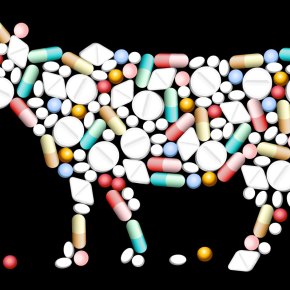
Delia Grace Randolph, a veterinary epidemiologist and food safety expert who co-leads the Animal and Human Health program at ILRI, was interviewed recently by Wilton Park, a non-profit discussion centre in the UK. The event at which Grace spoke was a workshop held 11–13 Apr 2018 in West Sussex on Innovations to reduce the use of antimicrobials in food-producing animals in low- and middle-income countries. Continue reading
Introducing English and Swahili instructional videos on the patterns, signs, symptoms and control of Rift Valley fever
Originally posted on ILVAC:
Written by Bernard Bett Several outbreaks of Rift Valley fever in livestock and people have occurred in eastern Africa over the last three months or so. In the first week of June 2018, local media reported at least five fatal human cases in Kenya’s northern Wajir County. More suspected cases in…
How closing livestock yield gaps can enhance incomes, food security and the environment in Ethiopia and India
Estimates of livestock yield gaps are not available and these are necessary for developing feasible scenarios of how the production of different livestock commodities might evolve in the future, how systems might change and what would be the resource use implications and their costs, both for donors and for public and private entities in target countries. Continue reading