Estimates of livestock yield gaps are not available and these are necessary for developing feasible scenarios of how the production of different livestock commodities might evolve in the future, how systems might change and what would be the resource use implications and their costs, both for donors and for public and private entities in target countries. Continue reading
Category Archives: East Africa
Kenyan President Kenyatta headlines national conference at ILRI Nairobi on innovations in Kenya’s agricultural sector
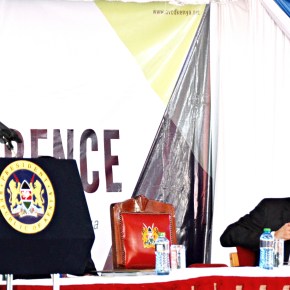
Kenya President Uhuru Kenyatta addressed the 400 guests at the national conference of the Feed the Future Kenya Accelerating Value Chain Development project at ILRI on 27 Apr 2018. Continue reading
Art underlines the precious value of poultry genetic research
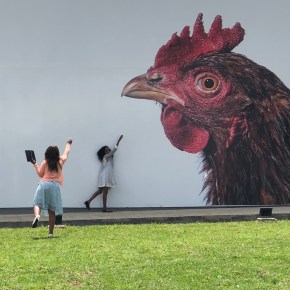
‘The Incubated Worlds art exhibition clearly communicates the importance of poultry production, genetic diversity and the interdependence of communities worldwide. The facility will be more than a place of research, but also of learning and innovation for farmers, poultry businesses, associations, cooperatives and communities’, said Siboniso Moyo, the ILRI director general’s representative in Ethiopia. Continue reading
Art and science bring poultry genetics to life in Ethiopia while celebrating local diversity in all its forms
Art and science unite to serve Ethiopian farmers—’Incubated Worlds’ explores genetic diversity of poultry to boost nutrition and incomes. Continue reading
Ethiopia sets out the futures for its growing poultry, dairy and meat subsectors
A new livestock sector analysis from the Ethiopia’s Livestock State Ministry (LSM) and Ministry of Livestock and Fisheries (MoLF) and the International Livestock Research Institute (ILRI) was recently published. This work was funded by the Bill & Melinda Gates Foundation (BMGF) to help Ethiopia in its fact-based planning. Continue reading
New advanced poultry facility combines art and science to boost nutrition and incomes in Ethiopia
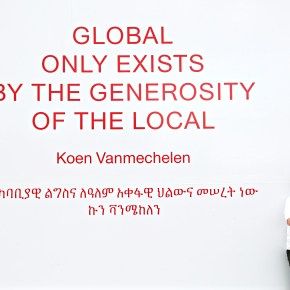
On 26 April 2018, the International Livestock Research Institute (ILRI) and partner scientists and government officials join forces with Belgian artist Koen Vanmechelen to launch the research facility and art installation, Incubated Worlds, a unique combination of art and science that aims to improve nutrition and incomes in East Africa with disease-resistant, climate-resilient poultry. Continue reading
Ugandan Emma Naluyima describes her thriving pig+crop farm at the Global Forum for Food and Agriculture
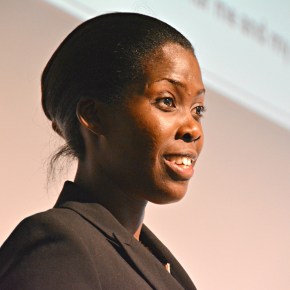
Emma Naluyima is a smallholder farmer and private veterinarian in Uganda who has integrated crop growing and livestock raising to build a thriving, profitable and environmentally friendly farm enterprise for her and her family. Continue reading
Kenya’s Robin Mbae on livestock and climate change at Berlin’s Global Forum for Food and Agriculture
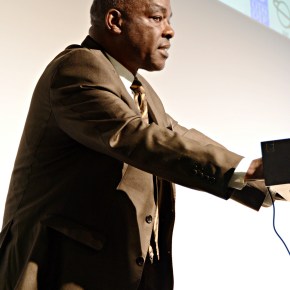
Robin Mbae, deputy director of livestock production at the Kenya Ministry of Agriculture, Livestock and Fisheries, describes Kenya’s planning and implementation of interventions to address the impacts of climate change on the livestock sector and vice versa. Continue reading
ILRI’s Kapiti livestock research station—and Kenyan and global public goods—imperiled by land grabs in Kenya
Over the past several weeks, illegal attempts to grab land have escalated at Kapiti Plains Estate (‘Kapiti’, or ‘Kapiti research station’), located about 60 km southeast of Nairobi along Mombasa Road, in Machakos County. Members of groups involved in the illegal sales have started trespassing and building illegal structures on Kapiti research station. No land at Kapiti is for sale. Continue reading
Gates Foundation grants Feed the Future Innovation Lab for Livestock Systems USD8.7 million to improve human nutrition in Burkina Faso and Ethiopia
The University of Florida has been awarded USD8.7 million from the Bill & Melinda Gates Foundation to fund livestock research over the next five years to tackle high rates of food insecurity and undernutrition in two of Africa’s landlocked nations—Burkina Faso, in the west, and Ethiopia, in the east. Continue reading