The fourth in a series of articles on ‘Curds and goats, lives and livelihoods—A dozen stories from northern and eastern India’.
PART 4: Culture of the cow: Curds of the village—Building better brands and lives through peri-urban dairying Continue reading
Category Archives: Animal Production
Culture of the cow: Curds in the city—Better living through smallholder dairying in northern India
This is the third in a series of articles on ‘Curds and goats, lives and livelihoods—A dozen stories from northern and eastern India’. Continue reading
Elite buffaloes and other exemplars of advanced Indian dairy science at the National Dairy Research Institute
Shrestha, a spirited buffalo bull, greeted Jimmy Smith, director general of the International Livestock Research Institute (ILRI), with a low grunt during a visit Smith and his delegation recently made at the National Dairy Research Institute (NDRI), India’s pre-eminent dairy research centre, located in the northern city of Karnal and the prosperous state of Haryana. Continue reading
Livestock can significantly reduce greenhouse gases AND deliver benefits to the poor–Nature Climate Change
Mario Herrero, chief research scientist for Food Systems and the Environment at the Commonwealth Scientific and Industrial Research Organisation (CSIRO), in Australia, and colleagues have published a paper in Nature Climate Change on Greenhouse gas mitigation potentials in the livestock sector. Continue reading
Florida and ILRI start consultations on new ‘Feed the Future Innovation Lab for Livestock Systems’
The Feed the Future Innovation Lab for Livestock Systems, led by the University of Florida, is currently organizing a number of stakeholder consultation meetings to identify high-priority needs in the six countries it will cover (Burkina Faso, Cambodia, Ethiopia, Mali, Nepal, Rwanda). ILRI is a close partner in this new initiative and it helped organize the Ethiopia consultation meeting in Feb 2016. Continue reading
Foods available to African farm households increase with market access and off-farm work
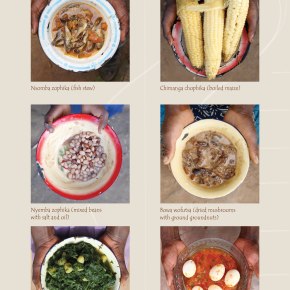
Common foods of Khulungira village, in central Malawi: Nsomba zophika (fish stew), chimanga chophika (boiled maize), nyemba zophika (mixed beans with salt and oil), bowa wofutsa (dried mushrooms with ground groundnuts), nkhwani wophatikiza ndi maungu anthete ndi kachewere wophika (pumpkin leaves, pumpkin blossoms and potatoes) and mazira ophika ndi phwetekere, anyezi, mafuta ndi mchere (boiled … Continue reading
Tanzania’s ‘Livestock Master Plan’ kicks off with a one-year training program for government officials
Eight staff from Tanzania’s Ministry of Livestock and Fisheries Development are undergoing a 14-month training and planning program assisted by experts from the International Livestock Research Institute (ILRI) with funding from the Bill & Melinda Gates Foundation. Continue reading
No longer business as usual: Improved feeds transforming dairying in Zimbabwe
Farmers participating in the Zimbabwe Crop-Livestock Integration for Food Security (ZimCLIFS) project have increased their gross margins by up to 70%. The ongoing food security improvement project is targeting the country’s dairy farmers to help improve feed farming and overall dairy production. Continue reading
What’s driving Ethiopia’s fast development? Millions of smallholder farmers, of course
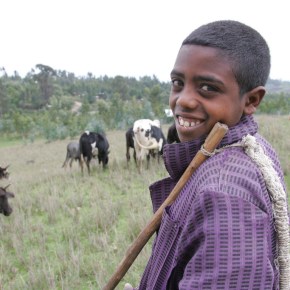
Industrialization is key to economic development, and agriculture—supplying raw materials for processing and value addition—is an essential component of that process. Comprising more than 40% of national GDP and producing the overwhelming majority of the Ethiopia’s food, smallholder farmers are at the centre of the country’s recent economic success. So declared the director general of the International Livestock Research Institute (ILRI), Jimmy Smith, in an agriculture panel discussion, this week, organized by the Economist magazine and held at the Sheraton Hotel in Addis Ababa. Continue reading
Kenya’s native goats and sheep, expertly crossbred, are key to helping farmers cope with climate change
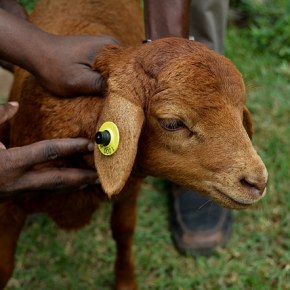
Smallholder farmers and pastoral herders in East Africa are the target of an ongoing joint project of ILRI, the Jomo Kenyatta University of Agriculture and Technology (JKUAT) and the CGIAR Research Program on Climate Change, Agriculture and Food Security (CCAFS). Continue reading