MERS-CoV antibodies found in two people in eastern Kenya
A4NH / Agri-Health / Article / Camels / Disease Control / East Africa / Emerging Diseases / Epidemiology / FSZ / Human Health / ILRI / ILVAC / Kenya / LIVESTOCKFISH / MERS / Spotlight / Zoonotic Diseases

MERS-CoV antibodies found in two people in eastern Kenya

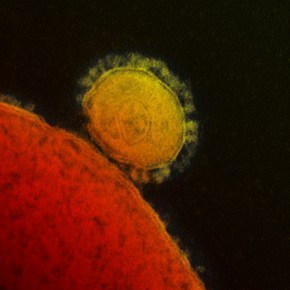
A new study published in the science journal Emerging Infectious Diseases reports that two individuals in Kenya have tested positive for the presence of antibodies to Middle East Respiratory Syndrome Corona Virus (MERS-CoV). Neither person is ill nor do they recall having any symptoms associated with MERS. There is no evidence of a public health threat and scientists concluded that the infections caused little or no clinical signs of illness. But they plan follow-up studies, as this is the first indication of a MERS-CoV infection that is not connected to primary infections in the Middle East. Continue reading

ILRI’s Shirley Tarawali joins global livestock industry leaders to discuss beef’s role in feeding the world
Agriculture / Directorate / Food Security / ILRI / Livestock / Livestock Systems / Presentation / Research / Spotlight / USA

ILRI’s Shirley Tarawali joins global livestock industry leaders to discuss beef’s role in feeding the world

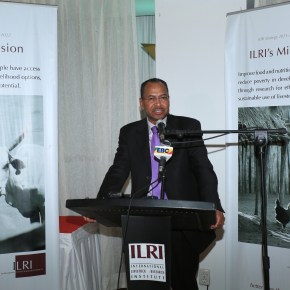
Shirley Tarawali, assistant director general of the International Livestock Research Institute (ILRI), will today (Friday, 4 Mar 2016) join global livestock industry leaders to discuss ‘Beef’s role in feeding the world’ at the International Livestock Congress (ILC), in Houston, USA. Continue reading

Protecting crop and feed diversity enhances food security while reducing greenhouse gases
Agriculture / Biodiversity / Climate Change / Countries / East Africa / Ethiopia / Event Report / FFD / Food Security / Forages / ILRI

Protecting crop and feed diversity enhances food security while reducing greenhouse gases

Crop diversity can be conserved and shared. Scientists know how to do it and at a very limited cost to the world community. It requires global leadership and stronger partnerships and the building of capacities of scientists in the developing world. No country is self-sufficient; successful breeding is highly dependent on functioning multilateralism, according to Marie Haga, executive director of the Global Crop Diversity Trust. Continue reading

Celebrating Ethiopia’s biodiversity: high-level seminar at ILRI on 23 February
Agriculture / Biodiversity / Countries / Ethiopia / FFD / ILRI

Celebrating Ethiopia’s biodiversity: high-level seminar at ILRI on 23 February

Ethiopia has long been recognised as a biodiversity hotspot, one of the eight centres of global crop diversity. Barley, coffee, sorghum and some wild types of wheat all originated in these fertile lands. Recognizing the importance of this diversity to guaranteeing global food security, the Ethiopian Biodiversity Institute, the Global Crop Diversity Trust and the International Livestock Research Institute hold a high-level seminar on 23 Feb 2016 at 6 pm. Continue reading

Africa / Ghana / ILRI / Innovation Systems / Knowledge and Information / Markets / PIL / PIM / Value Chains / West Africa

Is there value for innovation platforms? New Volta study suggests interesting insights

A new paper attempts to test a new conceptual framework for evaluating innovation platforms for agrifood value chains. Data collected validate a possible link between the structure of the platforms, the conduct of their members and the resulting market performance through reducing the transaction costs of search and information. Continue reading

Unlocking the potential of Ethiopia’s livestock sector: growth, jobs and environmental sustainability
Agriculture / Article / ASSP / Countries / Ethiopia / ILRI / Livestock / Policy

Unlocking the potential of Ethiopia’s livestock sector: growth, jobs and environmental sustainability

Ethiopia is well-placed to lead Africa in harnessing the contribution of the livestock sector to maximize food and nutritional security, reduce poverty and develop sustainable farming. The recent publication of the Ethiopia livestock master plan indicates that it is gearing up to do so. Continue reading

Vaccination proclamation: India protects the neglected ’living assets’ of its remote pig farmers
Agri-Health / Agriculture / Animal Diseases / Asia / ASSP / Corporate Report / CSF / India / Livelihoods / LIVESTOCKFISH / Pigs / South Asia / Spotlight

Vaccination proclamation: India protects the neglected ’living assets’ of its remote pig farmers

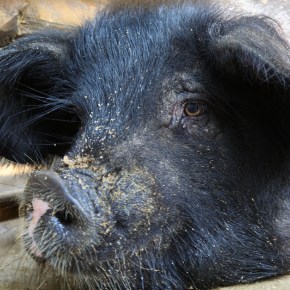
ILRI research to better control classical swine fever, also called hog cholera and pig plague, a highly contagious viral disease of pigs of all ages, usually killing the animals within two weeks of infection. The disease is endemic in the states of northeast India, where pig husbandry and meat eating are ubiquitous among the tribal communities that inhabit this remote region, isolated from the rest of India except through a slender corridor flanked by foreign territories. This article, one of a series being posted on the ILRI News blog, is one of 21 stories published in the ILRI Corporate Report 2014–2015, which you’ll find here: http://hdl.handle.net/10568/68631 Continue reading

Ethiopia-CGIAR country consultation meeting identifies five action areas for enhanced collaboration
Africa / Agriculture / CGIAR / Directorate / East Africa / English / Ethiopia / ILRI / Policy / Research

Ethiopia-CGIAR country consultation meeting identifies five action areas for enhanced collaboration

Five concrete areas of collaboration have been recommended in a meeting of CGIAR centres and national partners and key stakeholders in a move to better align CGIAR activities with the national Growth and Transformation Plan II (GTP 2015-2020). Continue reading

Fragments d’ILRI : Traiter la peau du manioc, pour un milliard de dollars
Animal Feeding / ASSP / Feeds / French / HUMIDTROPICS / ILRI / LIVESTOCKFISH / Nigeria / PIL / RTB / Tanzania / Uganda / West Africa

Fragments d’ILRI : Traiter la peau du manioc, pour un milliard de dollars

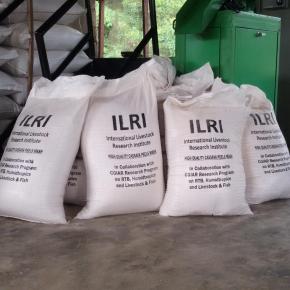
La production d’animaux d’élevage devrait doubler dans les 40 années à venir et le traitement de la peau du manioc pour en tirer du fourrage de qualité pourrait s’avérer une stratégie de choix pour les économies africaines qui n’arrivent pas à combler la demande de produits d’origine animale, selon une étude récemment publiée par trois centres CGIAR. Continue reading