Vish Nene, one of the scientific organizers of the conference and a co-leader of the Animal and Human Health program at the International Livestock Research Institute (ILRI), headquartered in Nairobi, Kenya, gave a particularly lucid talk at the pre-meeting workshop on Novel tools and genomics approaches supporting vaccine development. The following is a transcript of Nene’s talk, lightly edited for clarity and brevity. Continue reading
Category Archives: Genetics
DFID/UKAid provides £4 million for genetics and health research to aid sustainable livestock production in Africa
Research to improve the health and productivity of farmed animals in tropical climates has received a £4 million boost from the UK Government. The investment from DFID was announced by the Secretary of State for International Development, Penny Mordaunt, during a visit to the University of Edinburgh. It will support research in the Centre for Tropical Livestock Genetics and Health—a joint venture between the University of Edinburgh’s Roslin Institute, SRUC, ILRI, the latter of which has major research facilities in Kenya and Ethiopia. Continue reading
Pig farmers to earn more through new genetics project in Uganda
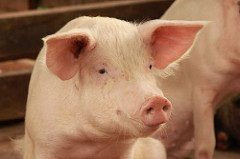
A newly launched pig genetics project seeks to increase the productivity and profitability of the Ugandan smallholder pig enterprises by developing a genetic improvement strategy to ensure the availability and accessibility of appropriate pig breeds. Continue reading
Livestock for food security and nutrition—Committee on World Food Security policy recommendations
The following policy recommendations build on the main findings of the CFS High Level Panel of Expert’s Jul 2016 report #10, on Sustainable agricultural development for food security and nutrition: What roles for livestock? The sustainable development of agriculture, including livestock, is essential for poverty reduction and the achievement of food security and nutrition. Continue reading
Niall MacHugh
In sadness, the International Livestock Research Institute (ILRI) reports that Niall MacHugh, a long-term former scientist at ILRI and its predecessor, the International Laboratory for Research on Animal Diseases (ILRAD), died 21 Mar 2017. Continue reading
Livestock genetics and breeding – highlights from ILRI’s corporate report 2015–2016
The experience of the International Livestock Research Institute (ILRI) and partner geneticists in 2015–2016 clearly demonstrates the positive benefits to smallholder farmers of the application of new breeding and genomic approaches, leading to more productive and climate- and disease resilient livestock. However, it is when these new technologies are combined with improved management practices that they are translated into enhanced food security and higher incomes for smallholder farmers. These are the findings from the genetics research and interventions, presented in the ILRI Corporate report 2015–2016 highlights on Livestock genetics and breeding. Continue reading
Medicine Nobel Laureate Peter Doherty is patron of the International Livestock Research Institute
Peter Doherty is today patron of two institutes: the Peter Doherty Institute for Infection and Immunity, a joint venture between the University of Melbourne and the Royal Melbourne Hospital researching infectious diseases in humans that became operational in 2014, and the International Livestock Research Institute (ILRI), for whose predecessor, the International Laboratory for Research on Animal Diseases (ILRAD), Doherty served for several years as a board member overseeing the science program. Continue reading
A first look at ILRI’s new research programs: Livestock Genetics
A first look at a revamped ILRI research program: Livestock Genetics Continue reading
India and Vietnam in South-South collaboration on shared pig breeds, production systems and cultures
Nagaland launches a comprehensive state pig-breeding policy, the first of its kind in India, developed through participatory and consultative processes. Continue reading
Cloned bull could contribute to development of disease-resistant African cattle
A note in a scientific journal gives an update on long-term research to develop African cattle resistant to the Africa animal disease known as trypanosomiasis. The aim of this research is to help reduce widespread poverty and hunger on the continent by improving livestock livelihoods. Continue reading