The fourth in a series of articles on ‘Curds and goats, lives and livelihoods—A dozen stories from northern and eastern India’.
PART 4: Culture of the cow: Curds of the village—Building better brands and lives through peri-urban dairying Continue reading
Category Archives: Regions
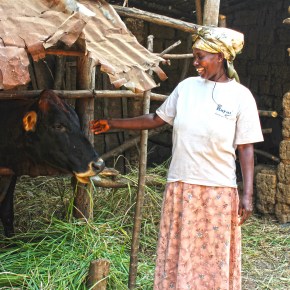
Culture of the cow: Curds in the city—Better living through smallholder dairying in northern India
This is the third in a series of articles on ‘Curds and goats, lives and livelihoods—A dozen stories from northern and eastern India’. Continue reading
Serious rain: East Africa’s annual Easter resurrection
Exactly four days following Easter Sunday this year, the ‘long rains’ arrived in Nairobi, watering the earth, flooding the streets, pounding the rooftops. All night that night, and all night the following nights, the kusi monsoon, blowing inland from across the Indian Ocean, has delivered the beating rain. Continue reading
Reverse vaccinology identifies candidates for an improved vaccine against cattle pneumonia in Africa
We used a reverse vaccinology approach to identify 66 Mmm potential vaccine candidates. The selection and grouping of the antigens was based on the presence of specific antibodies in sera from CBPP-positive animals. The antigens were used to immunize male Boran cattle (Bos indicus) followed by a challenge with the Mmm strain Afadé. Continue reading
Elite buffaloes and other exemplars of advanced Indian dairy science at the National Dairy Research Institute
Shrestha, a spirited buffalo bull, greeted Jimmy Smith, director general of the International Livestock Research Institute (ILRI), with a low grunt during a visit Smith and his delegation recently made at the National Dairy Research Institute (NDRI), India’s pre-eminent dairy research centre, located in the northern city of Karnal and the prosperous state of Haryana. Continue reading
Colourful convocation: Jimmy Smith addresses graduates of India’s prestigious National Dairy Research Institute
ILRI Director General Jimmy Smith was in Haryana, India, to give the convocation address (aka ‘the commencement speech’ in North America) at NDRI’s 14th graduation ceremony. Smith was also being awarded an honorary degree (honoris causa) for his contributions to livestock research for development. Continue reading
CGIAR Rwanda Climate Services for Agriculture project launches today, #WorldMetDay
A new project is reconstructing Rwanda’s incomplete meteorological data record using cutting-edge climate science and developing climate information products and services based on the expressed needs of the country’s farmers and other end users. The work is carried out by RAB and Meteo Rwanda, in collaboration with CCAFS, IRI at Columbia University, ICRAF and ILRI, with funding from USAID. Continue reading
Florida and ILRI start consultations on new ‘Feed the Future Innovation Lab for Livestock Systems’
The Feed the Future Innovation Lab for Livestock Systems, led by the University of Florida, is currently organizing a number of stakeholder consultation meetings to identify high-priority needs in the six countries it will cover (Burkina Faso, Cambodia, Ethiopia, Mali, Nepal, Rwanda). ILRI is a close partner in this new initiative and it helped organize the Ethiopia consultation meeting in Feb 2016. Continue reading
Tanzania ‘Livestock Master Plan’ project launched
Tanzania’s livestock sector will benefit from a recently started project targeting to transform it by guiding investments in the four main value chains comprising red meat, milk and products; poultry, eggs and pig meat. Continue reading
MERS-CoV antibodies found in two people in eastern Kenya
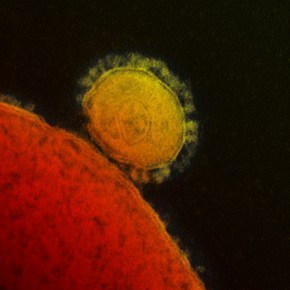
A new study published in the science journal Emerging Infectious Diseases reports that two individuals in Kenya have tested positive for the presence of antibodies to Middle East Respiratory Syndrome Corona Virus (MERS-CoV). Neither person is ill nor do they recall having any symptoms associated with MERS. There is no evidence of a public health threat and scientists concluded that the infections caused little or no clinical signs of illness. But they plan follow-up studies, as this is the first indication of a MERS-CoV infection that is not connected to primary infections in the Middle East. Continue reading