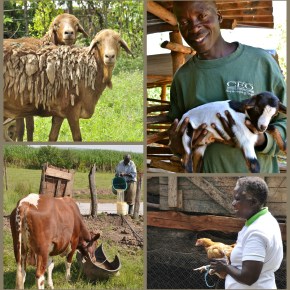
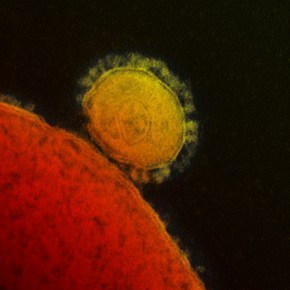
A new study published in the science journal Emerging Infectious Diseases reports that two individuals in Kenya have tested positive for the presence of antibodies to Middle East Respiratory Syndrome Corona Virus (MERS-CoV). Neither person is ill nor do they recall having any symptoms associated with MERS. There is no evidence of a public health threat and scientists concluded that the infections caused little or no clinical signs of illness. But they plan follow-up studies, as this is the first indication of a MERS-CoV infection that is not connected to primary infections in the Middle East. Continue reading
Category Archives: Species
Vaccination proclamation: India protects the neglected ’living assets’ of its remote pig farmers
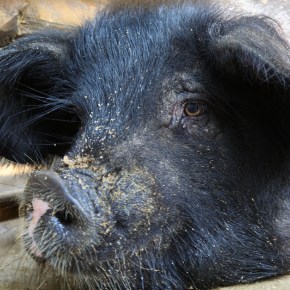
ILRI research to better control classical swine fever, also called hog cholera and pig plague, a highly contagious viral disease of pigs of all ages, usually killing the animals within two weeks of infection. The disease is endemic in the states of northeast India, where pig husbandry and meat eating are ubiquitous among the tribal communities that inhabit this remote region, isolated from the rest of India except through a slender corridor flanked by foreign territories. This article, one of a series being posted on the ILRI News blog, is one of 21 stories published in the ILRI Corporate Report 2014–2015, which you’ll find here: http://hdl.handle.net/10568/68631 Continue reading
Fragments d’ILRI: Le plan directeur pour l’élevage en Ethiopie devrait aider 2.36 millions de ménages à sortir de la pauvreté
Depuis 20 ans, le gouvernement éthiopien compte sur une réelle transformation du secteur agricole, mais l’absence d’un plan directeur en a retardé la mise en œuvre. Cependant un nouveau projet de recherche interdisciplinaire, que Barry Shapiro – chercheur à l’Institut International pour la Recherche sur l’Elevage (ILRI) – a présenté au Ministère de l’Agriculture (MdA) à Addis Abeba, révèle les bénéfices potentiels d’un Plan Directeur pour l’Elevage (PDE, LMP en anglais) en Ethiopie. Continue reading
High-level EC-IFAD delegation tours smallholder pig projects in Uganda
Simon Lubega (left), manager of the Wambizzi Pig Cooperative Abattoir, in Uganda, in discussion with the EC’s Roberto Ridolfi (right) and other stakeholders during a tour of his biogas plant (photo credit: ILRI/Brian Kawuma). This article is written by Brian Kawuma, communications officer for ILRI in Uganda. Members of the Uganda country team of the … Continue reading
No longer business as usual: Improved feeds transforming dairying in Zimbabwe
Farmers participating in the Zimbabwe Crop-Livestock Integration for Food Security (ZimCLIFS) project have increased their gross margins by up to 70%. The ongoing food security improvement project is targeting the country’s dairy farmers to help improve feed farming and overall dairy production. Continue reading
Climate-smart livestock farming in developing countries is boosted by a £10-million research award
Researchers at the Roslin Institute will be using funds from the Bill & Melinda Gates Foundation to investigate how genetic information can improve the health and productivity of farmed animals in tropical climates, which is a proven approach to climate change mitigation and adaptation. The Centre for Tropical Livestock Genetics and Health is an alliance between the Institute at the University of Edinburgh, Scotland’s Rural College (SRUC) and the Africa-headquartered International Livestock Research Institute (ILRI). The partner institutions are making additional contributions with a value of £10 million to support the initiative over the next five years. Continue reading
Roots, tubers and banana plants: Next-generation pig feeds for Uganda
The authors call for further exploration of strategies to conserve root, tuber and banana crop residues during the harvest period to reduce waste and improve incomes for smallholder pig farmers in Uganda. Continue reading
Aflatoxin levels in cow milk and feed in the Addis Ababa milk shed—New study
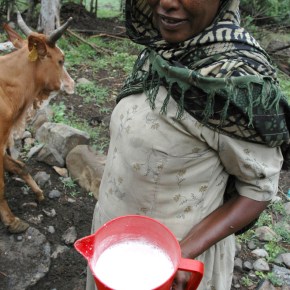
Ethiopian farmer with fresh milk from her cow (photo credit: ILRI/Apollo Habtamu). This article is written by ILRI scientists Dawit Gizachew, Barbara Szonyi, Azage Tegegne, Jean Hanson and Delia Grace Editor’s note: A statement in the article below, comparing various levels of risk, offended some of our readers. We thank those readers who let us … Continue reading
New DNA analysis of Asian sheep reveals unique diversity crucial to contemporary food and climate concerns
At a time when the price of mutton is climbing and wool crashing, a groundbreaking new study has used advanced genetic sequencing technology to rewrite the history of sheep breeding and trading along the ancient Silk Road—insights that can help contemporary herders in developing countries preserve or recover valuable traits crucial to their food and economic security. The new findings regarding one of the first animals ever domesticated will be published in the October print edition of the journal Molecular Biology and Evolution. They are the product of an unprecedented collaboration involving scientists in China, Iran, Pakistan, Indonesia, Nepal, Finland, and the United Kingdom. The team analysed the complete mitochondrial DNA of 42 domesticated native sheep breeds from Azerbaijan, Moldova, Serbia, Ukraine, Russia, Kazakhstan, Poland, Finland, China and the United Kingdom, along with two wild sheep species from Kazakhstan. Continue reading
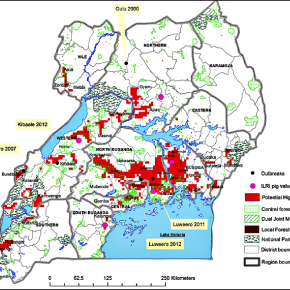
New study recommends continued research on the possible role pigs could play in transmitting Ebola in Uganda
A new risk assessment paper, Assessing the potential role of pigs in the epidemiology of the Ebola virus in Uganda, was published in the science journal Transboundary and Emerging Diseases on 27 Aug 2015. The authors are scientists at the International Livestock Research Institute (ILRI). Presently, there is no solid evidence that pigs have any role in the past outbreaks of Ebola virus disease. But the risk assessment paper indicates that further research on the role pigs may play in Ebola virus transmission in Uganda is warranted. Continue reading