A new report strengthens the economic case for increased public investment and other policy attention on food safety in developing countries. It synthesizes evidence of the economic costs of unsafe food in relation to both domestic markets and trade, positions food safety as an integral part of economic development and food system modernization, and provides guidance on improving food safety awareness and behaviour from farm to fork. Continue reading

Category Archives: Agri-Health
German agroecological livestock research investments are benefiting both people and the planet
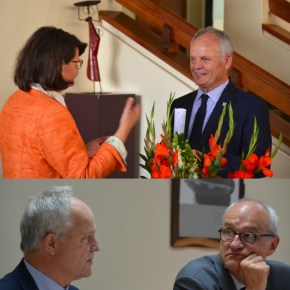
ILRI was honoured this week (3 Sep 2018) to host a high-level German delegation including Maria Flachsbarth, parliamentary state secretary to Germany’s federal minister for economic cooperation and development, and Stefan Schmitz, deputy director of the Federal Ministry of Economic Cooperation and Development (BMZ), as well as senior staff of the Kenya Ministry of Agriculture, Livestock, Fisheries and Irrigation, including Andrew Tuimur, chief administrative secretary, and Ann Onyango, agriculture secretary; and representatives from several other CGIAR centres working in Kenya, including Tony Simons, director general of ICRAF, and representatives from the Nairobi-based International Centre of Insect Physiology and Ecology (icipe). Continue reading
Deadly African swine fever arrives in China, the world’s largest producer of pigs
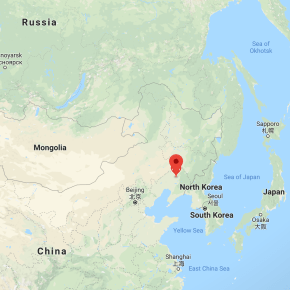
Long feared, it’s now finally happened. African swine fever (ASF), an infectious and highly lethal viral disease of pigs, has for the first time reared its head in China. Just two weeks ago, African swine fever was confirmed as the cause of death of pigs on a small farm in Shenyang City, in Liaoning Province, located in the northeast, bordering North Korea and the Yellow Sea. Continue reading
Reducing use of antimicrobial drugs in livestock in low-income countries: Two scientists reflect on options
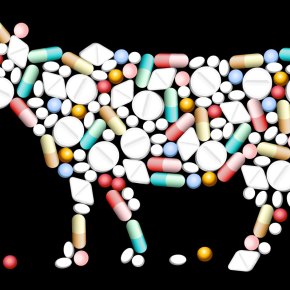
Delia Grace Randolph, a veterinary epidemiologist and food safety expert who co-leads the Animal and Human Health program at ILRI, was interviewed recently by Wilton Park, a non-profit discussion centre in the UK. The event at which Grace spoke was a workshop held 11–13 Apr 2018 in West Sussex on Innovations to reduce the use of antimicrobials in food-producing animals in low- and middle-income countries. Continue reading
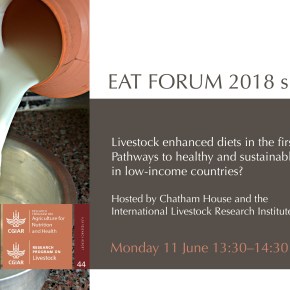
Livestock-enhanced diets in the first 1,000 days of life: Pathways to better futures in low-income countries
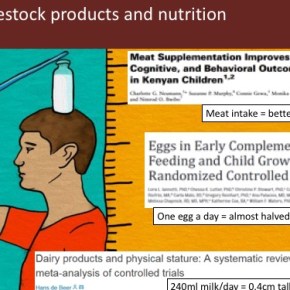
A new report was published this month on the value of ensuring consumption of meat, milk and eggs by infants up to two years of age and by expectant and new mothers in developing countries (the first 1,000 days). The report was published by ILRI and the Chatham House Centre on Global Health Security. Highlights of the findings of this joint ILRI-Chatham livestock study were presented at a side event at the EAT Stockholm Food Forum on 11 Jun 2018. Continue reading
Can livestock-enhanced diets of the poor in the first 1,000 days of life lead to healthy and sustainable futures?
This year’s EAT 2018 Stockholm Food Forum (11–12 Jun 2018) explores ways to achieve healthy and sustainable diets for a growing global population. On Monday, 11 Jun 2018, Chatham House and ILRI will host a side event around the findings of an evidence review on the influence of livestock-derived foods—meat, milk and eggs—on the nutrition of women and of children during their first 1,000 days of life, from conception to age two. Continue reading
Why milk, meat and eggs can make a big difference to the world’s most nutritionally vulnerable people
Opinion piece by ILRI scientist Silvia Alonso on the ILRI-Chatham House report on the importance of livestock-derived foods in the first 1,000 days of life. Continue reading
Kenyan President Kenyatta headlines national conference at ILRI Nairobi on innovations in Kenya’s agricultural sector
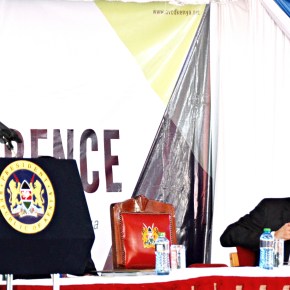
Kenya President Uhuru Kenyatta addressed the 400 guests at the national conference of the Feed the Future Kenya Accelerating Value Chain Development project at ILRI on 27 Apr 2018. Continue reading
On the need for expanding sustainability frameworks and veterinary vision in developing countries
A new science paper argues for broadening traditional approaches to livestock sustainability and veterinary vision in developing countries. Two of the three livestock science authors—Brian Perry and Tim Robinson—have formerly worked at the International Livestock Research Institute (ILRI) while the third—Delia Grace—co-leads ILRI’s Animal and Human Health program. Continue reading
Lora Iannotti on livestock and animal-source foods at Berlin’s Global Forum for Food and Agriculture
Lora Iannotti described the role of animal-source foods in human nutrition. Iannotti, associate dean for public health at the Brown School at Washington University, in St Louis, Missouri, has considerable expertise in maternal and young child nutrition and nutrient deficiencies. Continue reading