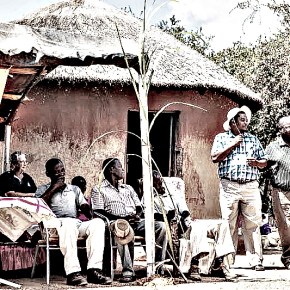
Partners and funders of a research-for-development project in rural Zimbabwe called ‘ZimCLIFS’ yesterday (18 Sep 2017) convened in the capital, Harare, to take stock of how small-scale mixed crop-and-livestock farmers improved their food and nutritional security and their livelihoods in four main districts (Goromonzi, Murewa, Gwanda and Nkayi, from 2012 to 2017) and in two spillover districts (Mutoko and Uzumba, from 2015 to 2017). Continue reading
Category Archives: Crop-Livestock
New factories in Nigeria transform cassava peels into livestock feed, creating jobs and incomes for women
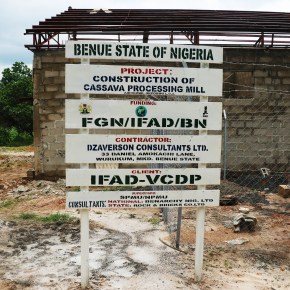
A delegation comprising IFAD staff visited the Value Chain Development Programme (VCDP) cassava processing sites at Lokongoma, Wushishi (Niger State) and Idogodo, Okpokwu (Benue State) in late July, 2017 to discuss progress with this important project. Continue reading
Lessons learnt out of Africa: 19 factors not to underestimate in rural livestock/agricultural research for development
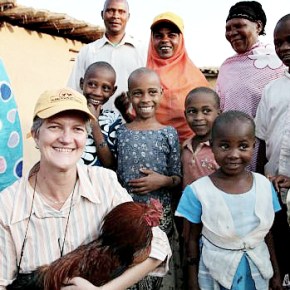
Robyn Alders gave a particularly candid and interesting presentation at a seminar/webinar held on 4 May 2017 at ILRI on the subject of ‘Animal-source foods for nutrition impact: Evidence and good practices for informed project design’. This was the fourth in a Livestock and Household Nutrition Learning Series of seminars/webinars organized jointly by Land O’Lakes International Development and ILRI. Continue reading
Brachiaria grass can help Kenya’s dryland food producers improve their soils and yields under a changing climate
Results of a recent study by the Biosciences eastern and central Africa-International Livestock Research Institute Hub (BecA-ILRI Hub) and the Kenya Agricultural and Livestock Research Organization (KALRO), both based in Nairobi, indicate that the many people farming in Kenya’s semi-arid regions would profit in many ways from planting drought-tolerant Brachiaria grass. Continue reading
From livestock smallholders to ‘smartholders’: Nurturing development with animal-source foods
Scientists from across the globe gathered at the University of Florida’s Institute of Food and Agricultural Sciences on 29–30 Mar 2017 to discuss ways to improve nutrition through animal-source foods in some of the most impoverished regions in the world. Chronically affecting 24 per cent of the world’s children, roughly 159 million in 2014, malnutrition is responsible for almost half of all child deaths worldwide. Jimmy Smith, director general of ILRI, was one of the keynote speakers at the opening of the Global Nutrition Symposium, the theme of which was ‘Nurturing development: Improving human nutrition with animal-source foods’. Continue reading
Livestock environmental ‘hoofprints’: Five fast facts to remember—Shirley Tarawali at ‘Farming First’
In this guest post, originally published by Farming First, Shirley Tarawali, assistant director general of the International Livestock Research Institute (ILRI), takes a closer look at livestock’s impact on the environment, and what is being done to manage its environmental ‘hoofprint’. Continue reading
A first look at ILRI’s new research programs: Feed and Forage Development
A first look at a revamped ILRI research program: Feed and Forage Development Continue reading
Odisha Odyssey: A look at the emerging commercial dairy value chains in eastern India
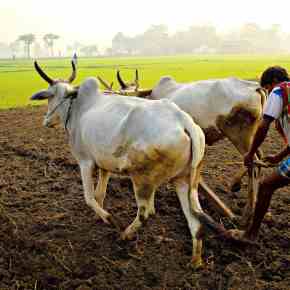
In recent years, ILRI scientists have been working with institutional partners and local farmer organizations in Odisha, a large eastern state of India on the Bay of Bengal, on research to improve the feed and fodder resources readily available to smallholder livestock keepers. ILRI conducted this collaborative research through a collaborative CGIAR Cereal Systems Initiative for South Asia (CSISA) aiming to increase and sustain small farm productivity in selected regions of Bangladesh, India and Nepal.
As part of an ILRI photojournalism trip to India undertaken in early Mar 2016, the authors visited a town on the outskirts of Bhadrak, a city in northern Odisha, to capture a bit of what the ILRI-led CSISA work has accomplished for small-scale dairy farmers in the area. Continue reading
Forage farming changes lives of Zimbabwe smallholder farmers
Many rural households in Zimbabwe rely on food aid to meet their nutritional needs. This problem, often aggravated by unemployment and falls in income, threatens the livelihoods of low income and food-insecure populations. Continue reading
Mixing it up—The information ‘black hole’ on crop+animal recipes for climate-smart and climate-resilient farms
We are unaware of any comprehensive studies undertaken in sub-Saharan Africa to explore how mixed farms will be affected by climate change and the cost and benefits of different adaptation options. Underestimating the importance of livestock in the mixed’ smallholder farming systems that are ubiquitous across the developing world weakens both emissions reduction and climate change adaptation efforts. Continue reading